Worldly Partners
Arvind with Sam Zell
In addition to leading Worldly, Arvind is a professor who has received a university all-star teaching award and brings deep real-world insight into the classroom. Each year, the course features conversations and lectures with distinguished guests who share candid perspectives from senior levels of business leadership, offering students exposure to industry thinking and practical insights within an academic setting. Guest participation is strictly for educational purposes only.
The videos and individuals shown are for illustrative and informational purposes only. The appearance of any person does not constitute an endorsement, testimonial, or recommendation of Worldly Partners, nor does discussion of specific companies constitute investment advice. No individual shown is being compensated for their appearance, and their statements (if any) are not representative of the experience of any clients or investors. Nothing presented should be construed as individualized investment advice.
Sam Zell
Sam Zell: Go for Greatness Insights on Risk, Resilience, and the Art of the Deal
In this Distinguished Speaker Series event, Sam Zell reflects on the “inflection points” that shaped his career and the mentors who taught him to focus on downside risk. He offers a masterclass in entrepreneurship, discussing the “Sam-isms” that define his approach, from the belief that “liquidity equals value” to the conviction that every business leader must be, at heart, a salesman.
Full transcript
Getting started in real estate
Arvind Navaratnam (00:00:00):
It’s a great honor to have you with us today, Sam. Thanks so much for being here. The students have read your book, Zeckendorf’s book, and your articles, as well as watched your interviews online. And they prepared questions that we have bucketed and organized into topics for our chat to squeeze the most out of our very precious time with you today. In the interest of time, let’s jump right in, right to the early days. Can you talk about two key inflection points early in your life and how they changed you? These moments are when you pitched yourself as an apartment manager in Ann Arbor. And then the second is the story of Mrs. D.
Sam Zell (00:00:48):
Well, I had a friend. And his friend and I were both on the central committee of a campus activity called Sophomore Show. And we got to be good friends. And he lived in a house. And one night I went over to see him and he explained to me that the owner of the house had been there the night before and that he had bought the property next door. And as soon as the school year was going to be over he was going to knock down these two buildings, two single family houses, and build a 15-unit apartment project. And I looked at my friend and I said, “Gee. We’re students.”
Arvind Navaratnam (00:01:39):
Right.
Sam Zell (00:01:39):
“We know what kids want. Why don’t we pitch them? And we’ll manage the building and we’ll each get an apartment for free, and we’ll take care of the building.” And he looked at me and he said, “Well, who’s going to turn over what at that time was a $1 million investment?” I have two college kids. I said, “Come on. We’ll make up a little brochure and we’ll go pitch them.”
And we did. And much to his amazement and mine, they bought into the deal. And then what we really learned was that we had opinions, and that those opinions allowed us… These guys were what we call townies. And they had ordered all this furniture because these were rental apartments. And the furniture looked like my grandmother, if I had ever known my grandmother, would’ve looked like. And I said, “This is nuts.” So we sent all the furniture back, picked out what at that time was Scandinavian design, and then we rented all the apartments. And then we ran the building and we did the maintenance. And my friend was much more into maintenance than I was.
Arvind Navaratnam (00:03:01):
Right.
Sam Zell (00:03:03):
So I remember vividly that we both had to cut the grass. And initially we took turns, and I never was there for my turn. And so then we split the grass in half, and of course then his side of the grass was always cut and mine was too high.
Arvind Navaratnam (00:03:25):
Right.
Sam Zell (00:03:26):
And so I eventually had to start cutting the grass as well. But it was a great experience and it was really a testimonial to Abe Lincoln’s comment that common sense ain’t so common.
Arvind Navaratnam (00:03:40):
Right.
Sam Zell (00:03:43):
And we just made it up as we went along. We had some funny experiences. I remember one of my tenants knocked on the door, and it was this woman. And she came in and she handed me my laundry. And I looked at her and I said, “Well, how did you know it was mine?” And she said, “Well, it’s…” I was married at the time. Because it’s the only laundry that had men and women underwear in it. And I thought the logic of that really turned me on.
Arvind Navaratnam (00:04:23):
Right.
Sam Zell (00:04:25):
And of course we didn’t have anybody living… In those days there weren’t any mixed couples.
Arvind Navaratnam (00:04:31):
Right.
Sam Zell (00:04:32):
But we’ve had long contact with a lot of the people who were originally our tenants.
Arvind Navaratnam (00:04:43):
Right.
Sam Zell (00:04:44):
And from Ken Miller, who turned out to be a big LBO guy, to other people from all over the country who kept in touch. And that’s how we started.
Arvind Navaratnam (00:04:56):
Oh, that’s great.
Sam Zell (00:04:57):
Mrs. Doyenne, that was her name.
Arvind Navaratnam (00:04:59):
Yeah.
Sam Zell (00:05:00):
And I told that story in the book.
Arvind Navaratnam (00:05:03):
Yeah.
Sam Zell (00:05:04):
And that was just a case where what happened was, I think I told the story in the book, a friend of mine had some kind of a gastronomical problem. And so when he was accepted to the University of Michigan his father bought him a house and he lived there. He was an undergraduate in law school, and he rented out the rooms to fraternity brothers and other people. And then he graduated and became a clerk to a judge. And he called me one day and he says, “Some guy came down and wanted to buy the house from me.”
And he told me what the guy offered to pay. And he said, “What do you think?” And I said, “I don’t know. I’ll go ask the people I work for what they think.” And they came back and said, “We could probably pay a little more.” So I called him up and said, “We’ll pay a little more.” He said, “Fine.” So we bought the first house.
Arvind Navaratnam (00:05:59):
Right.
Sam Zell (00:06:00):
And we said, “Gee, the first house wasn’t big enough to build a building on.” So then we said, “Let’s buy the one next door.” And so we bought the one next door. And my local partner was in the Military Reserve, and so after we bought the second house he went away for a month to serve in the Military. And I just kept buying houses.
Arvind Navaratnam (00:06:28):
Right.
Sam Zell (00:06:28):
And I didn’t have the money, but I had $1,000 dollars on each house to put down as a down payment. And by the time he got back I think I had committed to buy 10 or 12 houses. And then the next house was the only house that was big enough to accommodate a building on its own, because it was a, “Double lot.” And it turned out that everybody in the world had tried to buy it. And it was a long story. It wasn’t owned by the lady who lived there, et cetera. But I just kept pursuing her until eventually I ended up going to meet her uncle, who owned the house, and came up with this idea of a tax-free swap.
Arvind Navaratnam (00:07:24):
Right.
Sam Zell (00:07:25):
And his whole attitude is, if you can do this and improve her situation and I don’t have to come up with any money, I’ll do it.
Arvind Navaratnam (00:07:33):
Right.
Sam Zell (00:07:34):
And that’s what led to what eventually was the largest assemblage on the campus that had ever been put together.
Arvind Navaratnam (00:07:41):
Right. What did you learn from that story from SSD? There was a lot of tenacity that was required.
Sam Zell (00:07:46):
Oh, total tenacity.
Arvind Navaratnam (00:07:48):
Yeah.
Sam Zell (00:07:48):
You can imagine I was this 21-year-old kid walking down the block, knocking on doors.
Arvind Navaratnam (00:07:54):
Yeah.
Sam Zell (00:07:54):
And I saw wedding pictures and grandchildren pictures.
Arvind Navaratnam (00:07:59):
Right.
Sam Zell (00:08:01):
And I also told wonderful stories about how terrible it was going to be if you ended up living next door to a student housing project.
Arvind Navaratnam (00:08:10):
Right, right.
Sam Zell (00:08:11):
But frankly, I didn’t know how difficult what I was trying to do was. And I think that’s probably a theme of everything I’ve done, is that I never really knew that it was such a big deal.
Arvind Navaratnam (00:08:29):
Right.
Sam Zell (00:08:29):
I never knew that it was such a big challenge. I didn’t think about acquiring a square block. I thought about creating and buying the next house.
Arvind Navaratnam (00:08:40):
Right.
Sam Zell (00:08:41):
And that allowed me to do stuff that, had I sat there in the beginning and said, “I’m going to do this,” I never would have been able to do it.
Mentors and simplifying decisions
Arvind Navaratnam (00:08:51):
So many insights in there. You’ve talked about your mentors a little bit in the past. Who were your biggest mentors? And what did you learn from them?
Sam Zell (00:09:04):
I think that there were probably two guys who had more impact on me than anybody else. One was my father.
Arvind Navaratnam (00:09:13):
Right.
Sam Zell (00:09:15):
My father was, as I told the story, he made a life and death decision when he was 34 and never thought he was wrong again.
Arvind Navaratnam (00:09:25):
Right.
Sam Zell (00:09:27):
Which, by the way, created a very interesting dynamic between his only son and him. And I think I talked about the book. In a Jewish family, in my Jewish family, the most important word was derech eretz, which is Yiddish or Hebrew for respect. And my father’s attitude was you didn’t have to love him. All you had to do was respect him. And in that context, the word respect meant you never took him on.
Arvind Navaratnam (00:10:02):
Right.
Sam Zell (00:10:03):
And so when he and I would get into our inevitable battles, I couldn’t take him on.
Arvind Navaratnam (00:10:13):
Right.
Sam Zell (00:10:13):
So the only defense I had was to stop talking to him.
Arvind Navaratnam (00:10:17):
Right.
Sam Zell (00:10:17):
And when I was 16 and 17, two months would go by. I’d sit at the dinner table. My mother was over here, my father was over here. I would talk to my mother. She would talk to my father. He would talk to her and she talked back to me. But part of the lesson I learned from that was that when it was over, it always ended the same way, and that was that I had to apologize.
Arvind Navaratnam (00:10:45):
Right.
Sam Zell (00:10:48):
And I remember having conversations with my mother and saying, “But mom, he’s wrong.” And she said, “He can’t be wrong. He’s your father.” And I don’t know how many of you have similar parental relationships, but that was a critical part of my growing up. And he was an immigrant, and I was born 90 days after my parents came to this country. He was very conservative. Worked very, very hard. You were telling me about eating and sleeping.
Arvind Navaratnam (00:11:22):
Yes. You fell asleep well. Right.
Sam Zell (00:11:26):
And so he sat me down one day and he said… He was in the wholesale jewelry business, and he was an entrepreneur and had 11 states in which he sold goods. And he said, “Let me tell you a story.” He said, “I had a customer in Minneapolis, and I would go up there and take out my sample case and I would sell them everything that I could. And they were very, very difficult to deal with. And when I was done I went home, I shipped them the goods. I didn’t make any money because my margins were so small, but I knew I was going to get paid. So I couldn’t eat, but I could sleep.”
He said, “I had another customer in Rochester, Minnesota. This guy would meet me at the train station. He’d take me to his house for dinner. He’d buy anything and everything I wanted at full margin. I’d sell him the stuff. I’d go home, ship it to him, and realize that if he paid me, I could eat, but I couldn’t sleep until I got paid.” He said, “Either one of those options is okay.” He said, “What you don’t want to do is ever put yourself in a position where you can’t eat or sleep.” And it was that kind of thought process that he inculcated into me and made me think about what it was all about.
Arvind Navaratnam (00:13:04):
Right.
Sam Zell (00:13:04):
Jay Pritzker was the other mentor.
Arvind Navaratnam (00:13:07):
Yes.
Sam Zell (00:13:09):
Probably the smartest guy I’ve ever met in my life. He had just an incredible perspective, and I like to describe him as, best way to equate it was it’s like having a hernia.
Arvind Navaratnam (00:13:26):
Okay.
Sam Zell (00:13:28):
Well, if you have a hernia, basically there’s a lining of your stomach that gets some significant pressure, and it pops.
Arvind Navaratnam (00:13:42):
Okay.
Sam Zell (00:13:42):
And I used to go into Jay, and I’d come up with this very elaborate structure of putting together a deal, and we’re going to do this, we’re going to do that. And there’s 18 steps. And he would just look at me and say, “But step number eight is vulnerable.”
Arvind Navaratnam (00:14:01):
Right.
Sam Zell (00:14:02):
And it would make me crazy because he had exactly identified what the risk was.
Arvind Navaratnam (00:14:05):
Right.
Sam Zell (00:14:06):
And so, from my perspective, being able to learn at the foot of somebody like that was really an incredible experience. Very, very competitive person, and did a great deal to make me aware of what I could do. And most important of all in both cases, neither one of them limited what I could do and what I could achieve.
Arvind Navaratnam (00:14:34):
Right. Yeah. No, great investors and great business people can focus on what matters. Just simplify, simplify, simplify.
Sam Zell (00:14:42):
Yep.
Arvind Navaratnam (00:14:42):
And that’s really what it’s all about, focusing on the key risks. You were also very impressed by the Zeckendorf book. What did you take away from that? That’s kind of a mentor, too.
Sam Zell (00:14:54):
Yeah.
Arvind Navaratnam (00:14:55):
Not a living one [inaudible].
Sam Zell (00:14:56):
But what that book did for me, it was one simple idea.
Arvind Navaratnam (00:15:01):
Yeah.
Sam Zell (00:15:01):
And that was, the sum of the parts is more valuable than the whole.
Arvind Navaratnam (00:15:05):
Right. Right.
Sam Zell (00:15:07):
And I sat there, and I read where he took the Empire State Building and he sliced the land out.
Arvind Navaratnam (00:15:13):
Yes.
Sam Zell (00:15:13):
And then he sliced the operating position, and then he sliced the… And immediately thereafter I did a transaction in Tampa, Florida where I took an apartment project and broke it up into the land, the tax benefits, the economic benefits.
Arvind Navaratnam (00:15:32):
Right.
Sam Zell (00:15:32):
And I found out that I could sell what I had bought for 40% more by virtue of slicing and dicing it and making it fit. And that book more than anything else I’ve ever done made me aware of the fact that every deal, every transaction has a multiple of facets to it. And to the extent that you can identify and understand those facets, you can make one plus one equal three or four.
Assessing and managing investment risk
Arvind Navaratnam (00:16:02):
Right. That’s great. And turning to investing and your approach, risk management is a core element of your approach and central to this class. How do you approach and manage risk?
Sam Zell (00:16:17):
You start out by accepting what Bernard Baruch said in 1929. He said, “Nobody ever went broke taking a profit.” So my perspective always was that I could suffer if it got too good. What I couldn’t survive was if it didn’t go. So my entire focus has always been on the downside. What could go wrong? How much exposure am I taking? And do I have the resources in hand to deal with that exposure?
Arvind Navaratnam (00:16:53):
Right.
Sam Zell (00:16:53):
Most of the time I did. Some of the times I didn’t. And certainly I think about some of the times where we were really cash-short. And people laugh at me and say, “How could you have been cash-short?”
Arvind Navaratnam (00:17:11):
Right.
Sam Zell (00:17:11):
And I think I told the story in the book that in 1992 on a Wednesday, according to Forbes, I was worth $1 billion and I had payroll coming on Friday, and I had no idea where I was going to pay it from.
Arvind Navaratnam (00:17:25):
Right.
Sam Zell (00:17:26):
So in the same manner, that gives you a lot of reality testing.
Arvind Navaratnam (00:17:32):
Right.
Sam Zell (00:17:34):
But it’s all about understanding the downside. And if you understand the downside, you may still lose, but you lose within an arena that’s defined.
Arvind Navaratnam (00:17:46):
I really admire the way you thought about The Tribune in that regard. I think that’s a great example of that.
Sam Zell (00:17:51):
That the biggest loss I’ve ever taken in my life.
Arvind Navaratnam (00:17:53):
Right.
Sam Zell (00:17:56):
Unfortunately or fortunately I would do it again.
Arvind Navaratnam (00:17:59):
Right.
Sam Zell (00:18:01):
I got caught up in a wave and… But despite the fact that it was a huge loss, it was a loss that I could afford at the time when I took the risk.
Arvind Navaratnam (00:18:11):
Right.
Sam Zell (00:18:12):
And that’s the key to the game.
Arvind Navaratnam (00:18:14):
Right. And the logic that you followed, and you’re accepting of that. Yeah. Yeah.
Sam Zell (00:18:21):
I just couldn’t have anticipated an elevator shaft in the medium.
Arvind Navaratnam (00:18:26):
That’s right. When assessing risk, are there standard sort of simple questions you ask yourself before making an investment as part of that assessment of risk?
Sam Zell (00:18:39):
My immediate reaction to your question is that I try very hard to look at what all the alternatives are and I try to assess the alternatives that I’m dealing with against what’s available in the marketplace. And I think that by being very realistic about what’s achievable you avoid getting caught up in the Kumbaya of everybody’s enthusiasm.
Arvind Navaratnam (00:19:13):
Right.
Sam Zell (00:19:14):
I was talking earlier today about, we suffer from knowing the numbers. I don’t think there’s anything that’s more relevant than understanding, what are the numbers telling you?
Arvind Navaratnam (00:19:28):
Right.
Sam Zell (00:19:28):
And being able to independently assess that without bringing in, well, Harry says this, or John did this last week, or Mary did that.
Arvind Navaratnam (00:19:40):
Right.
Sam Zell (00:19:42):
What other people do has never affected me.
Arvind Navaratnam (00:19:46):
Right.
Sam Zell (00:19:46):
And I’ve tried very hard not to get caught up in conventional wisdom.
Arvind Navaratnam (00:19:52):
Right.
Sam Zell (00:19:53):
And conventional wisdom produces conventional returns. And I started out with no capital, so I had to make capital.
Arvind Navaratnam (00:20:02):
Right.
Sam Zell (00:20:04):
And if you have to make capital, it’s a very different set of circumstances than if you’re just getting on the train and riding with everybody else.
Arvind Navaratnam (00:20:13):
Right.
Sam Zell (00:20:15):
But that’s also the difference between using your own money and using other people’s money. To a large extent you guys are going to find yourself in a situation where the world today is very different. When I started, everybody I competed against was using their own money. Now I’m one of the few people who writes a check that’s my own money and that’s a very different form of discipline.
Arvind Navaratnam (00:20:43):
Yes.
Sam Zell (00:20:44):
And very relevant to making good decisions.
Arvind Navaratnam (00:20:47):
Yes. And the incentive structures are much more aligned.
Sam Zell (00:20:49):
Yes. Skin in the game.
Arvind Navaratnam (00:20:51):
Yes.
Sam Zell (00:20:53):
Very important.
Arvind Navaratnam (00:20:53):
Yes. So it sounds like there isn’t sort of a standard set of question. Besides opportunity cost-driven questions, it’s really focused on the specific situation?
Sam Zell (00:21:07):
Got to be.
Arvind Navaratnam (00:21:09):
Yeah.
Sam Zell (00:21:09):
Got to be.
Arvind Navaratnam (00:21:09):
Absolutely.
Sam Zell (00:21:09):
We were talking about Mucinex before, which is the only pill deal I’ve ever done. And I only did it because I looked at the risks and I said, “The drug has been around for 100 years. The efficacy we’re going to try and improve has been proven over and over again.”
Arvind Navaratnam (00:21:28):
Yeah.
Sam Zell (00:21:28):
So it’s just a question of execution.
Arvind Navaratnam (00:21:30):
Right.
Sam Zell (00:21:31):
That’s very different kind of risk than a clinical trial where you don’t know what the side effects might be.
Reinvestment risk and the risk of inaction
Arvind Navaratnam (00:21:39):
Right. How do you think about reinvestment risk? That’s something that people don’t often think about, I think.
Sam Zell (00:21:45):
Well, I’m not sure whether I covered this in the book, but-
Arvind Navaratnam (00:21:49):
You do with the U of M,
Sam Zell (00:21:50):
Yeah.
Arvind Navaratnam (00:21:51):
Yeah. It’s such a great story. Yeah.
Sam Zell (00:21:52):
But that was a situation where I started the class by telling everybody that your Aunt Minnie had died and left you $100,000. And what are you going to do with it? And they all thought about it. And almost without exception, everybody voted for taking a five-year T-bill at 7.5% Versus a 10-year T-bill at 7%. And I said, “Well, what about the reinvestment risk?”
Arvind Navaratnam (00:22:24):
Right.
Sam Zell (00:22:24):
Well, they didn’t even understand what I was talking about.
Arvind Navaratnam (00:22:27):
Right.
Sam Zell (00:22:27):
But I said, “At the end of five years you get your money back.”
Arvind Navaratnam (00:22:30):
Right.
Sam Zell (00:22:31):
And what’s the opportunity to deal with that money?
Arvind Navaratnam (00:22:34):
Right.
Sam Zell (00:22:34):
And I think about that all the time. That makes me an oxymoron because I’m a long-term investor.
Arvind Navaratnam (00:22:45):
Right.
Sam Zell (00:22:45):
But at the same time, you’ve got to be disciplined enough to know when the opportunities are shrinking because the environment is different.
Arvind Navaratnam (00:22:55):
Right.
Sam Zell (00:22:55):
Selling EOP was one of the most difficult things I’ve ever done.
Arvind Navaratnam (00:22:59):
Right.
Sam Zell (00:23:00):
I created it. It was my baby, but somebody made me a godfather offer.
Arvind Navaratnam (00:23:05):
Right.
Sam Zell (00:23:05):
And there’s just no way that… And to Jon Gray’s credit, he understood that he had to sell a significant portion of the portfolio before he bought it in order to make it work.
Arvind Navaratnam (00:23:23):
Right. Yeah.
Sam Zell (00:23:25):
That’s a different kind of investment criteria than the criteria with which I built the company.
Arvind Navaratnam (00:23:32):
Absolutely. And kind of on that subject, how do you think about the risk of inaction? Because you could’ve chosen not to sell, and there is a risk of inaction. Many choices-
Sam Zell (00:23:43):
Yes. But first of all, it was a public company.
Arvind Navaratnam (00:23:46):
Yes. Right.
Sam Zell (00:23:47):
And from my perspective, once it was a public company, I didn’t have the option of, “Not selling.”
Arvind Navaratnam (00:23:54):
Right.
Sam Zell (00:23:55):
Not if the offer was as extraordinary as I though it was.
Arvind Navaratnam (00:24:00):
Right. Perhaps not that specific situation. Just broadly the risk of inaction is what I mean. Yeah.
Sam Zell (00:24:04):
The risk of inaction is frustration. I’m sitting right now in a company where I’ve liquidated 143 assets over the last five years. I’ve got $3.2 billion in the bank in cash, and I’m sitting there and it’s making me crazy. But every day I’ve got to keep remembering that discipline is critical.
Arvind Navaratnam (00:24:29):
Yes. Right.
Sam Zell (00:24:30):
And any day you’re not buying, you’re selling. Any day you’re not selling, you’re buying.
Arvind Navaratnam (00:24:34):
Yes.
Sam Zell (00:24:35):
And that includes cash.
Arvind Navaratnam (00:24:37):
Right.
Sam Zell (00:24:38):
And right now the opportunity cost of holding cash is very low.
Arvind Navaratnam (00:24:43):
Yes.
Sam Zell (00:24:44):
So that makes it a much easier decision.
Arvind Navaratnam (00:24:47):
Right.
Sam Zell (00:24:47):
If interest rates were 8% today, maybe I’d have a different opinion.
Investing beyond real estate and thinking independently
Arvind Navaratnam (00:24:51):
Right. I love the way you think about that. That’s fantastic. While you’re closely associated with real estate, you created immense wealth beyond that sector. How did you think about expanding your circle of competence beyond real estate?
Sam Zell (00:25:10):
In 1980 my partner, Bob, and I were sitting there, and we didn’t like the real estate business. We didn’t like it because what created opportunity for us was the inefficiency of the market.
Arvind Navaratnam (00:25:26):
Right.
Sam Zell (00:25:27):
Then somebody invented an HP 12, and that was just a terrible thing for us because it turned the market from inefficient to efficient.
Arvind Navaratnam (00:25:37):
Right.
Sam Zell (00:25:39):
But we sat there and we looked at each other and we said, “We’ve been very successful. Were we really very successful because we were real estate mavens, or were we really successful because we were basically good businessmen?”
Arvind Navaratnam (00:25:54):
Right.
Sam Zell (00:25:54):
And right or wrong, we concluded we were good businessmen.
Arvind Navaratnam (00:25:57):
Yeah.
Sam Zell (00:25:58):
And so therefore we thought whatever principles we operated under, supply and demand, market share, et cetera, et cetera barriers to entry, it ought to all be applicable to other things.
Arvind Navaratnam (00:26:16):
Right.
Sam Zell (00:26:16):
We also were convinced that the world is not clear and that if you could identify things that the world didn’t pay enough attention to, you discovered areas of opportunity.
Arvind Navaratnam (00:26:35):
Right.
Sam Zell (00:26:37):
So in 1981 I’m sitting there reading the Wall Street Journal and it tells me that, yesterday, Congress had changed the rules on net-operating loss carry-forwards. And I said, “Wow. They made the NOLs a lot more valuable.”
Arvind Navaratnam (00:26:52):
Right.
Sam Zell (00:26:53):
So then I did a screen of the New York Stock Exchange of all the companies that had NOLs and I discovered that before and after this change in the law, the values hadn’t changed at all. So the second NOL company we bought control of was ITEL.
Arvind Navaratnam (00:27:11):
Right.
Sam Zell (00:27:11):
And ITEL was the biggest bankruptcy in the United States since the Penn Central Railroad. And so I looked at it and I did an evaluation of what was in the company, and it had about $50 million worth of hard assets. There were 15 million shares outstanding, and the stock was trading for $3 a share. So effectively, the stock was trading for the book value of the assets.
Arvind Navaratnam (00:27:39):
Right.
Sam Zell (00:27:40):
And then there was a 350, or actually a $450 million NOL that was free. So we bought control of the company and then used up the NOL, which gave me, at that time we had about a 40% tax rate, so that was like getting a free injection of $150 million worth of equity that allowed us to build a base that translated into what turned out to be a very successful opportunity.
Arvind Navaratnam (00:28:09):
Right.
Sam Zell (00:28:11):
But trying to identify, it’s like I was telling you earlier today, that we’re investing right now a lot of money in the oil patch in terms and conditions that I can’t believe. But everybody has been burned. Everybody is walking away from it. And when everybody is going left, I want to go right.
Arvind Navaratnam (00:28:37):
Right.
Sam Zell (00:28:37):
I think the most damaging thing that anybody can believe in is conventional wisdom.
Arvind Navaratnam (00:28:42):
Right.
Sam Zell (00:28:42):
Conventional wisdom produces conventional returns, and you can’t build capital unless you have margins. And you don’t do margins if you’re doing the same thing as everybody else is doing.
Arvind Navaratnam (00:28:56):
Right. Kind of on that subject, over the course of your career, particularly in the early years, how did you maintain your character and put faith in being original without concern for convention?
Sam Zell (00:29:13):
I made it up. Is that what I want? You should’ve seen when in 1969 we in effect made our office casual.
Arvind Navaratnam (00:29:27):
Right.
Sam Zell (00:29:29):
Well, it was such an unbelievable thing at the time. I didn’t think it was unbelievable. I didn’t think it was very unusual. Why would I want to work 12 hours a day in a fucking suit and tie?
Arvind Navaratnam (00:29:42):
Right. Right.
Sam Zell (00:29:44):
I couldn’t understand. That didn’t make any sense to me.
Arvind Navaratnam (00:29:47):
Right.
Sam Zell (00:29:47):
So in effect, what I learned was that if you are really good at what you do and you dress funny, you’re eccentric.
Arvind Navaratnam (00:29:58):
Right. Right.
Sam Zell (00:29:58):
If you’re really good at what you do, or you’re not so good at what you do and you dress funny, then you’re a schmuck.
Arvind Navaratnam (00:30:05):
Right.
Sam Zell (00:30:05):
So we spent all of our time trying to be as good as we possibly could be, which gave us a pass. And the result was we had all these very successful people wearing suits and ties who wouldn’t let us come to their office because they were afraid that people would see, this guy’s coming in jeans, or he’s coming in in a leather suit. And how do you explain that to the people in your office? And they all wanted to see, how could we possibly be successful if we didn’t wear a suit and tie?
Backing entrepreneurs and aligning incentives
Arvind Navaratnam (00:30:38):
Right. Right. Turning to the subject of entrepreneurship, which I know you’re very passionate about. You have people pitching you new ideas all the time. What do you look for in a new opportunity?
Sam Zell (00:30:54):
First and foremost, simplicity. If somebody can’t tell me what the opportunity is within two sentences, I lose my… I’m ADD.
Arvind Navaratnam (00:31:04):
Right.
Sam Zell (00:31:08):
I’m not ADD, but I am when somebody starts… I had this great experience where, my first public company, I needed people for the board of directors.
Arvind Navaratnam (00:31:21):
Right.
Sam Zell (00:31:21):
And I had this friend of mine who was a very successful tax lawyer, so I invited him to be on the board. And he was on the board for two years, and it drove me nuts because every issue that came up at the board meeting, he would say, “Well, if we do like this and like this, we move this one over here and reposition this, then in the end we’re going to end up with this.”
Arvind Navaratnam (00:31:44):
Right.
Sam Zell (00:31:45):
And it was totally counterproductive.
Arvind Navaratnam (00:31:47):
Right.
Sam Zell (00:31:48):
And I finally, this was a friend of mine, still is, but I had to come up with some justification as to how to get rid of him.
Arvind Navaratnam (00:31:55):
Right.
Sam Zell (00:31:57):
He was so counterproductive.
Arvind Navaratnam (00:32:00):
Right.
Sam Zell (00:32:00):
I have a bunch of simple questions that I ask people. Literally, if you sat on my shoulder all day long, you would see my people coming to me and pitching me on ideas. And I would sit there and I’d look at them and I’d say, “Number one, what’s the risk?”
Arvind Navaratnam (00:32:18):
Yeah.
Sam Zell (00:32:18):
“Number two, are we getting paid for the risk?”
Arvind Navaratnam (00:32:22):
Yeah.
Sam Zell (00:32:23):
“Is the upside good enough to justify undertaking the risk?”
Arvind Navaratnam (00:32:28):
Yeah.
Sam Zell (00:32:33):
“And is the risk an asset risk or is it an execution risk?”
Arvind Navaratnam (00:32:38):
Yeah.
Sam Zell (00:32:39):
“And who are we depending on for which part of it?” And trying to force them to simplify what they’re working on to the point where they can make the decision. Rarely does Sam ever say, “Yes,” or, “No.” In other words, by the time I get done interfacing with them, they already know the answer.
Arvind Navaratnam (00:33:02):
Right.
Sam Zell (00:33:03):
And then they say, “Well, this makes sense,” or, “That really doesn’t make sense.”
Arvind Navaratnam (00:33:06):
Right.
Sam Zell (00:33:07):
But that’s the way I interface and the way I’m able to teach transfer of risk.
Arvind Navaratnam (00:33:13):
Yes. That’s great. That’s great. What’s a question you always ask when hearing new ideas, besides the couple you just mentioned?
Sam Zell (00:33:28):
I try and put the people pitching me in a position where the deal is already done. And how do they execute? And how are they going to monitor it? And what do they have to do in order to intelligently execute the plan, whatever the plan might be? And forcing people to think through the post-deal. They all get excited about getting a deal done. They all get excited about being the driver. But the day after the deal closes, what are you going to do? How are you going to make it better? How are you going to oversee what you’re doing and protect your capital?
Arvind Navaratnam (00:34:14):
Right. We spend a lot of time in this class focusing on risk, as we discussed. Current losses of capital. But we also spend a lot of time talking through incentive structures and the importance of that. How do you align the incentive structure post-that deal? So you have your person, you have this vision. How do you think through that?
Sam Zell (00:34:31):
First of all, from the very beginning, every deal we’ve ever done, we’ve sliced a piece of it and made sure that everybody in our organization that had responsibility had a piece of it.
Arvind Navaratnam (00:34:48):
Yeah.
Sam Zell (00:34:50):
Having a piece of it required writing a check. No freebies.
Arvind Navaratnam (00:34:55):
Got it.
Sam Zell (00:34:56):
Everybody’s got to have skin in the game.
Arvind Navaratnam (00:34:57):
Yeah.
Sam Zell (00:34:58):
Right now, in the current iteration of this, and over many, many years the iterations have changed and changed.
Arvind Navaratnam (00:35:07):
Yeah.
Sam Zell (00:35:08):
But for example, every deal we do, everybody, not just because it’s your deal, everybody has a piece of everybody else’s deal.
Arvind Navaratnam (00:35:19):
Yes.
Sam Zell (00:35:20):
So everybody is watching what everybody else does and how they respond. Then, for example, right now, let’s just say we did a deal and you have an option to invest $100,000.
Arvind Navaratnam (00:35:36):
Yeah.
Sam Zell (00:35:37):
And what I will do is I will provide you with a non-recourse loan for 500,000 so that in effect, if it works, you get a really supercharged rate of return.
Arvind Navaratnam (00:35:54):
Right.
Sam Zell (00:35:55):
But if it doesn’t work, you lose your 100,000, but you don’t lose the 500,000, because what I can’t afford to do is I can’t afford to have a bunch of people working for me who are, “In the poor house,” or so at risk that, in effect, they become incapable of making judgment.
Selling ideas with conviction
Arvind Navaratnam (00:36:16):
Right. That’s really interesting. You’re a great entrepreneur. What’s your best advice on how to influence and sell ideas to people?
Sam Zell (00:36:26):
I think you have to believe. I think that if I don’t believe, which means if I don’t write a check, as A.N. Pritzker, who was Jay Pritzker’s father, once told me, he said, “The definition of an appraisal is one that comes with a certified check.”
Arvind Navaratnam (00:36:51):
Right.
Sam Zell (00:36:52):
And people who don’t take risk, they really aren’t entrepreneurs.
Arvind Navaratnam (00:36:59):
Right.
Sam Zell (00:37:00):
They’re cohabitants as opposed to leaders.
Arvind Navaratnam (00:37:04):
Right. So just say you are an entrepreneur. A lot of entrepreneurs believe. They’re very passionate about their idea. Beyond that, is there advice that you’d give them to sell their ideas as someone who’s been so successful in multiple iterations?
Sam Zell (00:37:22):
Well, selling ideas is selling a methodology. I’ve done, I don’t know, maybe 45 IPOs, and I design the IPO pitch on every one of those deals.
Arvind Navaratnam (00:37:40):
Right.
Sam Zell (00:37:41):
And I sit there and I say, “Okay. What is… I’ve got 45…” I tell people, again, whether I said this in the book, but I went to the University of Michigan. And the University of Michigan did the world a really great disservice in that it educated Arthur Miller. And Arthur Miller wrote this book called Death of a Salesman, where they malign the idea of being a salesman. Well, the biggest lie in the world is build a better mousetrap and they’ll come to it. That’s bullshit.
Arvind Navaratnam (00:38:14):
Right.
Sam Zell (00:38:16):
If you can’t sell what you’ve created, it ain’t going to happen.
Arvind Navaratnam (00:38:20):
Right.
Sam Zell (00:38:20):
And we’ve had lots of examples of people who didn’t make it because they couldn’t sell. So I focus on, what is it? How am I going to… I’m going to do an IPO. That means I’m going to schlep around the country for two weeks, hustling people.
Arvind Navaratnam (00:38:35):
Right.
Sam Zell (00:38:35):
I got 45 minutes with which to interface with them, and they probably have sat through six other pitches on the same day. How am I going to get them to look at my deal afterwards?
Arvind Navaratnam (00:38:51):
Right.
Sam Zell (00:38:51):
And we came up with the idea of making T-shirts and we’d create these T-shirts that had a message. We had a company called the Delta Queen Steamship Company, and we bought a Hawaiian cruise line, and we talked about the benefits of getting laid. And people remembered that.
Arvind Navaratnam (00:39:13):
Right.
Sam Zell (00:39:15):
One of the great stories, again, I don’t think I told it in the book, was there’s an insurance company in England called Legal & General. And when I was doing all the IPOs for all the real estate companies, we did an IPO T-shirt for Equity Residential that had a picture of Robert Malthus on it. And Malthus was the guy who predicted in Rome that the world was going to run out of resources and people were going to starve because there wasn’t enough food.
And I changed the wording of his thing on the T-shirt to say, “As long as people kept populating, there would be demand for housing.” And we ended in the back called the Give Me Shelter Tour. So I’m now pitching this guy on a second deal and he hands me a white envelope, and he says, “When you get back in the car, open the envelope.” I finished my pitch. I went into the car, I opened the envelope, and there was his wife holding a two-hour-old baby wearing the Malthus T-shirt. But the point was he remembered.
Arvind Navaratnam (00:40:25):
Right.
Sam Zell (00:40:25):
And that concept stuck with him, so he also bought the stock.
Arvind Navaratnam (00:40:30):
Right. Right.
Sam Zell (00:40:31):
That’s the most important part of the story.
Arvind Navaratnam (00:40:33):
Right. Not having the child.
Sam Zell (00:40:37):
That’s his problem.
Arvind Navaratnam (00:40:40):
Yeah. Right, right. What do many people get wrong in their pitch?
Sam Zell (00:40:47):
Complexity. I’ve seen pitches where somebody is going through, you’re going to do this and do this and do this and do this.
Arvind Navaratnam (00:40:57):
Right.
Sam Zell (00:40:58):
And you get overloaded with the idea, how you get that done.
Arvind Navaratnam (00:41:04):
Yes. Right.
Sam Zell (00:41:06):
So everything I’ve tried to do is try to… When tailoring pitches, I try and simplify everything. Shortest distance between two points is a straight line.
Arvind Navaratnam (00:41:19):
Right.
Sam Zell (00:41:19):
How close to the straight line can you get when you’re making a pitch? And understanding that you may understand everything but the guy you’re pitching to has limited… Not limited intelligence. Just doesn’t have anywhere near the experience. So how do you make your experience concise enough that you can embed in him the confidence that you have in the goals you set go from here to there?
Encouraging entrepreneurship and self-confidence
Arvind Navaratnam (00:41:48):
Right. Right, right, right. Perhaps returning to the story about the guy who just had a child. How would you approach teaching children or younger generations to seek out and find opportunities for return, and inspire them to have the courage to bet on themselves and be entrepreneurs?
Sam Zell (00:42:08):
Well, first of all, I think that’s way too broad a question. I have three children and I have nine grandchildren, and my thesis with them has been excellence. Not entrepreneurship. Be able to identify what it is you believe in. And can you-
Arvind Navaratnam (00:42:31):
You’re passionate about.
Sam Zell (00:42:32):
Can you be passionate about it? So for example, there are a lot of family offices where there’s the XYZ Widget Company, and the whole goal of family is to keep the Zelle widget company going.
Arvind Navaratnam (00:42:48):
Got it.
Sam Zell (00:42:51):
I don’t have a Zelle widget company. I have an investment vehicle.
Arvind Navaratnam (00:42:53):
Right.
Sam Zell (00:42:54):
And as an investment vehicle, whether or not there are futures in my family depends on whether they accidentally have the genes necessary to do it. I never, ever, ever expected anybody, any of my children to work for me unless they decided they wanted to work for me and that they were thrilled and excited about taking risks. I have a daughter who’s a doctor. She’s a rheumatologist. She’s a very good rheumatologist. That’s what it’s all about.
Arvind Navaratnam (00:43:27):
Right.
Sam Zell (00:43:29):
My son who worked for me for a number of years, and it was a very unsuccessful experience, came to me one day and said, “I really want to teach high school.” And I said, “Great.” I said, “Just go be the best high school teacher you could ever be.”
Arvind Navaratnam (00:43:45):
Right.
Sam Zell (00:43:46):
And he has. He’s teaching physics, and he went to Caltech.
Arvind Navaratnam (00:43:53):
Wow.
Sam Zell (00:43:53):
And he’s got a ridiculously high IQ and couldn’t find his way out of this room.
Arvind Navaratnam (00:44:00):
Right. Right.
Sam Zell (00:44:00):
But he’s excelling at what he’s doing.
Arvind Navaratnam (00:44:03):
Right. No, I fully agree that you want to encourage your children in what they’re passionate about. But just say you have a child and they were passionate about entrepreneurship, and you wanted to encourage them.
Sam Zell (00:44:13):
I have a grandson who’s working for me right now.
Arvind Navaratnam (00:44:14):
Okay. Right.
Sam Zell (00:44:17):
And what do I do? I give him access to me.
Arvind Navaratnam (00:44:19):
Right.
Sam Zell (00:44:21):
I try and explain to him why I’m doing what I’m doing.
Arvind Navaratnam (00:44:24):
Right.
Sam Zell (00:44:25):
I try and challenge him, whether he’s understanding risk. And I make sure that he gets his hands dirty.
Arvind Navaratnam (00:44:34):
Right. How do you ensure he’s getting his hands dirty? What do you mean by that?
Sam Zell (00:44:39):
Well, I mean we bought a bunch of shoreline railroads. He went and sat on one of those cars and… you know?
Arvind Navaratnam (00:44:46):
That’s right.
Sam Zell (00:44:48):
Real hands dirty.
Arvind Navaratnam (00:44:48):
Yeah. Kicking the tires.
Sam Zell (00:44:51):
Just like when I was managing that apartment building. I had to cut the fucking lawn.
Arvind Navaratnam (00:44:55):
Right.
Sam Zell (00:44:57):
It was terrible.
Arvind Navaratnam (00:44:57):
Right.
Sam Zell (00:44:58):
I don’t think he liked that either, but he got it done.
Arvind Navaratnam (00:45:00):
Yeah, that’s right. No job’s too small. You have an innate self-confidence and self-belief, and a belief to solve problems. How did you cultivate that within yourself?
Sam Zell (00:45:16):
I have no idea, but what I would tell you is that there are a lot of people who are very good at seeing problems. There are a lot fewer who both see problems and solutions. And the nature of what I am has always been solution-driven.
Arvind Navaratnam (00:45:37):
Right.
Sam Zell (00:45:38):
So identifying problems that I can’t find a solution for doesn’t achieve anything for me.
Arvind Navaratnam (00:45:43):
Right.
Sam Zell (00:45:45):
It’s only relevant if I can identify a problem and then produce a solution.
Arvind Navaratnam (00:45:51):
Right.
Sam Zell (00:45:52):
I’m probably the biggest buyer of distressed real estate in the country has ever had.
Arvind Navaratnam (00:45:57):
Yes.
Sam Zell (00:45:59):
Why? A very simple premise, and that was that if I could buy an asset for less than it costs to replace, then nobody can compete with me. And when it’s all said and done, everything comes down to, how do you create scenarios where you are protected from competition?
Arvind Navaratnam (00:46:26):
Yes.
Sam Zell (00:46:27):
This whole American concept of competition is terrific. I think it’s great, particularly for you. I like monopolies. If I can’t have a monopoly, I’ll settle for an oligopoly.
Arvind Navaratnam (00:46:38):
Right.
Sam Zell (00:46:38):
But the idea of unfettered competition, that’s stupid.
Arvind Navaratnam (00:46:42):
Yeah.
Sam Zell (00:46:42):
And every excess we’ve ever had in our country has been economically driven by that kind of lack of discipline.
Arvind Navaratnam (00:46:51):
Right. Yeah. We spend a lot of time thinking about competitive advantage and building competitive advantages. It’s critical.
Sam Zell (00:46:59):
But it’s simple ideas.
Arvind Navaratnam (00:47:02):
Yes.
Sam Zell (00:47:02):
When I bought ITAL, we got with it a container leasing company that was breaking even. And we were number four in a world of seven. We bought number three and number seven and became number one. And everybody talked about this word synergism. Well, synergism and mental masturbation are very closely related, and I never understood synergism. I understood redundancy.
So if I bought three container companies, I only needed one yard in Hong Kong, not three.
Arvind Navaratnam (00:47:40):
Right.
Sam Zell (00:47:40):
And I only needed one computer to follow all those boxes all over the world. I didn’t need three, et cetera. So when I put the companies together and I ended up with a company that had 15% less operating costs than everybody else, I had a built-in advantage that translated into making me the most profitable company in the world. And there’s nothing rocket scientist about that.
Arvind Navaratnam (00:48:04):
Right.
Sam Zell (00:48:05):
It’s not like I invented a new wheel or something like that.
Arvind Navaratnam (00:48:08):
Right.
Sam Zell (00:48:10):
I just looked at it and said, “Gee. If I can eliminate two of the three in every market, I’m going to produce tremendously different results.”
Arvind Navaratnam (00:48:20):
Right. And incredible execution to accomplish that.
Sam Zell (00:48:27):
I’d like to think that, but I think that usually it’s the concepts that are more important than the execution. I’d like to think we executed well, and we did.
Arvind Navaratnam (00:48:35):
Right.
Sam Zell (00:48:36):
But did we execute that well? No. But we generated 20% bigger margins than anybody else.
Arvind Navaratnam (00:48:44):
Right.
Sam Zell (00:48:45):
That’s all we needed to do.
Staying power through recessions
Arvind Navaratnam (00:48:47):
Yes. Yes. Can you talk about staying power and not getting buried when a recession hits? We were talking about this a little bit earlier.
Sam Zell (00:48:56):
Yeah. The name of the game is, it’s like I was telling you before.
Arvind Navaratnam (00:49:01):
Yeah.
Sam Zell (00:49:02):
The stock market can’t go down right now because I am liquid. And I’ve been illiquid numerous times when the stock market has gone down, but I’ve always been extraordinarily focused on staying power.
Arvind Navaratnam (00:49:17):
Yes.
Sam Zell (00:49:18):
Because staying power, in the end, is what separates the men from the boys.
Arvind Navaratnam (00:49:23):
Right.
Sam Zell (00:49:23):
And there’ve been many, many examples where we were capable of doing things. In 1990 I went out and raised all these institutional funds, so I had money when no one else did.
Arvind Navaratnam (00:49:38):
Right.
Sam Zell (00:49:39):
And that meant I had staying power.
Arvind Navaratnam (00:49:41):
Right.
Sam Zell (00:49:41):
Now, I still almost didn’t make it, but I had enough staying power to get from here to there.
Arvind Navaratnam (00:49:47):
Right. Yeah. We spend a lot of time, and we were talking about this earlier, about the three dimensions in terms of mastery of craft, mastery of self, and mastery of alignment. And that staying power. That ability to have full alignment and have the capital when others are fleeing is critical.
Sam Zell (00:50:08):
Sure. And the confidence to spend it.
Arvind Navaratnam (00:50:10):
That’s right. That mastery itself. Yeah.
Sam Zell (00:50:13):
Yeah. There’s a lot of that involved where it’s really tough to make those decisions, but you’ve got to always think about the long run.
Investment opportunities and real estate disruption
Arvind Navaratnam (00:50:24):
Right. Absolutely. Can you talk about businesses you invested in over the last few years and what attracted you to those opportunities?
Sam Zell (00:50:34):
Well, I think that one of the most successful deals we did was we’ve been building this giant waste energy company. It seemed logical to me. Like everything else, your point of entry is really critical.
Arvind Navaratnam (00:50:56):
Right.
Sam Zell (00:50:57):
The waste energy business in the United States began in 1989, and it was basically done with partnerships with municipalities. And you used the municipality’s debt creation capacity in order to build the facilities.
Arvind Navaratnam (00:51:15):
Right.
Sam Zell (00:51:16):
By the time we got involved was 2002 or 2001, and they had been paying debt service for 10, 11 years. And the percentage of the debt service that was amortization got bigger and bigger, but that’s called phantom income. And so the company was going broke because it had to pay taxes.
Arvind Navaratnam (00:51:38):
Right.
Sam Zell (00:51:39):
And so I went and found a $2 billion NOL, used the $2 billion NOL to acquire a waste energy company instantly, overnight, changing its cashflow characteristics. And in effect you no longer had any phantom income because it was absorbed by the NOL.
Arvind Navaratnam (00:52:01):
Right.
Sam Zell (00:52:01):
So then you looked at it and you said, “Well, is the world going to run out of trash?” I didn’t think so.
Arvind Navaratnam (00:52:06):
Right.
Sam Zell (00:52:09):
Therefore, there was going to be more and more demand, so therefore it made sense.
Arvind Navaratnam (00:52:13):
Right.
Sam Zell (00:52:14):
That’s one example. Interestingly, another trash, we invested in a trash hauler and started acquiring contingent operations. And somebody made us a godfather offer and it was gone. Mucinex was another story of the last few years, where we looked at what we thought was a risk, that other people thought was a risk that really wasn’t, and we were able to take advantage of it. And I think we made a hundred times our money on it. So you’re always looking for different kinds of opportunities. Just recently we’ve been investing in the oil patch.
Arvind Navaratnam (00:52:57):
Right.
Sam Zell (00:52:57):
And I think I told you we just closed a deal where we, in effect, get a preferred position. We get an 11% return, we get our money back, and then we get a piece of the action.
Arvind Navaratnam (00:53:07):
Right.
Sam Zell (00:53:10):
In an environment where interest rates are 1.25% it didn’t make sense, but the fact that it doesn’t make sense is not any justification for not doing it.
Arvind Navaratnam (00:53:21):
Right.
Sam Zell (00:53:24):
A lot of people make decisions by saying, “Well, if nobody else is doing it, there must be something wrong. And I’m not going to stick my toe out.” I’ve always thought just the opposite. If everybody else is not doing it, that usually creates a vacuum and an opportunity.
Arvind Navaratnam (00:53:40):
Right. Right. Kind of on that subject, I’ve read that you consider ETFs scary. Can you expand on that?
Sam Zell (00:53:49):
Sure. ETFs are the demonization of me. In other words, everybody’s doing the same thing. Right now ETFs are about 50% of the stock market. What happens when it becomes 90%? I have a pretty good idea what happens, and that is everybody goes up and down together.
Arvind Navaratnam (00:54:11):
Right.
Sam Zell (00:54:11):
And when they go down, they drown.
Arvind Navaratnam (00:54:14):
Right.
Sam Zell (00:54:15):
So I just don’t believe that if you identify mediocrity and then you replicate it, that’s a winning formula.
Arvind Navaratnam (00:54:23):
Right. And there’s no price discovery, or very little price discovery.
Sam Zell (00:54:27):
There’s no price discovery.
Arvind Navaratnam (00:54:27):
Yeah.
Sam Zell (00:54:27):
Just like all these unicorns are basically a giant fraud predicated on the fact that there’s no price discovery, as perfectly executed by WeWork or Uber or Lyft, et cetera.
Arvind Navaratnam (00:54:47):
Kind of also on that subject, there are a lot of companies trying to disrupt the real estate industry. Are there any companies that you see in that sector that you believe have a realistic potential to disrupt the real estate industry? That you believe?
Sam Zell (00:55:01):
I don’t know what the word disrupt means. Does disrupt mean that you’re going to create… That we live, and you’re going to graduate from college and share a bathroom with five people? That’s not my definition of disruption.
Arvind Navaratnam (00:55:17):
Right.
Sam Zell (00:55:19):
And I think the fact that it doesn’t work is relevant.
Arvind Navaratnam (00:55:21):
Right. Absolutely. Yeah.
Sam Zell (00:55:23):
But the single family and housing industry, which I basically chose not to play in because I felt that the risk of execution was so high.
Arvind Navaratnam (00:55:34):
Yeah.
Sam Zell (00:55:35):
I underestimated the role of technology in the execution. And it’s really technology that has made that business viable.
Arvind Navaratnam (00:55:45):
Right.
Sam Zell (00:55:45):
Otherwise you never would’ve been able to operate thousands of disparate homes unconnected.
Arvind Navaratnam (00:55:52):
Right.
Sam Zell (00:55:52):
And sometimes you get it, sometimes you don’t.
Arvind Navaratnam (00:55:55):
Right.
Sam Zell (00:55:56):
But I don’t think that… I think real estate lends itself to disruption much less than a lot of other industries.
Arvind Navaratnam (00:56:06):
Right. Slower to change.
Sam Zell (00:56:07):
Well, you don’t have the scale opportunities. Amazon, as an example, has proven that scale translates into extraordinary potential. It’s really hard to scale multifamily housing.
Arvind Navaratnam (00:56:25):
Right.
Sam Zell (00:56:27):
When we built EOP, I thought that I had the real opportunity to disrupt the office space business. And the idea was that you’re a tenant, and there are many tenants that have multiple locations all over the country. If I could create a product that really worked, then I could get you to come to me and say, “We need an office in San Francisco. We need an office in LA.”
Arvind Navaratnam (00:56:53):
Right.
Sam Zell (00:56:54):
“You guys are all set up.” And so we set up this and built the largest office company in the history of the world.
Arvind Navaratnam (00:56:59):
Right.
Sam Zell (00:57:00):
And every year we would have a meeting of our 35 top tenants.
Arvind Navaratnam (00:57:07):
Right.
Sam Zell (00:57:07):
And we’d talk to them and tell them about all of our plans and scale and everything. And I remember going to one of these meetings, and I spoke to the people. And I met this guy from this law firm. And he just couldn’t talk enough about how important what I was doing was, how terrific it was. And how they needed a 10,000 square foot space in LA, and they called us up and we delivered it for them the next day. And it was really terrific. And so a year later I went to the next meeting and I noticed he wasn’t there. So I said, “Whatever happened to Harriet?” And they said, “Oh. They got a deal for $1 dollar a square foot less across the street, and they moved.” That’s the problem with real estate.
Arvind Navaratnam (00:57:52):
Right.
Sam Zell (00:57:52):
And that’s why disruption is not as potentially effective in that kind of a price-sensitive environment as it is in others where you can scale it because you’re creating additional value at each step of the game.
Arvind Navaratnam (00:58:14):
Right. Got it. You’ve talked a bit in the past about interest rates and what that means for long-term value. Do you think the US will ever have negative interest rates?
Sam Zell (00:58:24):
I don’t understand. And that, by the way, is also a basic criteria of the way I invest. If I don’t understand, I don’t play.
Arvind Navaratnam (00:58:36):
Right.
Sam Zell (00:58:38):
And I can’t understand an environment like you have today, where you have $17 trillion worth of scenarios where you have negative interest rates.
Arvind Navaratnam (00:58:47):
Right.
Sam Zell (00:58:49):
I think you can have negative interest rates potentially for a very short period of time, but I just don’t think it makes any sense. And I think that this experiment in negative interest rates will only end up bad.
Reading, curiosity, and travel
Arvind Navaratnam (00:59:01):
Right. Right. Moving away from the economy and investing and entrepreneurship and turning to your life habits a little bit, what life habits have you cultivated that contribute to your success? You’re a voracious reader, for example.
Sam Zell (00:59:19):
Yeah.
Arvind Navaratnam (00:59:20):
And I’m sure you have other habits that you feel have contributed.
Sam Zell (00:59:23):
Well, I think that being a voracious reader is an incredible asset. But I think being a voracious reader without having something else that I have, and I can’t explain why I have it, but I have the ability to sort what I read and retain only the relevant parts. So for example, I read escapist novels.
Arvind Navaratnam (00:59:51):
Right.
Sam Zell (00:59:51):
And while I’m reading it, I love it. It’s really exciting. And the day after I finished the book I can’t remember who the protagonist was. I can’t remember the story.
Arvind Navaratnam (01:00:02):
Right.
Sam Zell (01:00:03):
I can’t remember anything.
Arvind Navaratnam (01:00:03):
Right.
Sam Zell (01:00:05):
But there was a description of Berlin. Or I think I told the story in the book about the resort in the Caribbean where, from one of these books, I remember that there was a resort that had its own international airport.
Arvind Navaratnam (01:00:21):
Yeah.
Sam Zell (01:00:21):
If we needed a place to land.
Arvind Navaratnam (01:00:22):
Yeah. So cool.
Sam Zell (01:00:24):
And that’s what we did.
Arvind Navaratnam (01:00:25):
Yeah.
Sam Zell (01:00:28):
But that and the fact that the final scene in that book was a shootout on a golf course.
Arvind Navaratnam (01:00:33):
Right.
Sam Zell (01:00:35):
And that’s all I remembered about the book.
Arvind Navaratnam (01:00:36):
Right.
Sam Zell (01:00:37):
I don’t remember anything else about it.
Arvind Navaratnam (01:00:38):
Right.
Sam Zell (01:00:38):
But the ability to sort through all this information. And much of my traveling has been the result of reading anomalies. In other words, I went to Ulaanbaatar. Ulaanbaatar is the capital of Mongolia. Why did I go to Ulaanbaatar? Because I read that Gucci and Richmond opened up stores in Ulaanbaatar. And I said, “Why would they go there?” And then I found out that they were building the largest copper mine in the world.
Arvind Navaratnam (01:01:15):
Right.
Sam Zell (01:01:15):
And I got to go see it.
Arvind Navaratnam (01:01:16):
Right.
Sam Zell (01:01:18):
And generally speaking, I’ve got to go see, I’ve got to go understand, I’ve got to be able to absorb. That’s the same as reading, the same as traveling. I have my own plane and I travel give or take 1,200 hours a year.
Arvind Navaratnam (01:01:34):
Wow.
Sam Zell (01:01:35):
The typical CEO of a Fortune 100 company travels 250 hours a year. But I’ve got to see. I’ve got to understand. Just like as an investor, I constantly want to see the people I invest with in their home base. Therefore, I’ve always been willing, even long before I had my own plane. Just get on the plane. I’ve got to go see what they’re doing. I’ve got to see how they’re responding. I’ve got to see how they’re answering challenges, because that tells me a great deal about who they are and how I might interface with what’s going on.
Arvind Navaratnam (01:02:10):
Right. Yes. I’m sure you got some incredible insights from that.
Sam Zell (01:02:14):
It’s great stories.
Arvind Navaratnam (01:02:16):
Yeah.
Sam Zell (01:02:17):
Great opportunities to see things that… I saw a video of what has been the largest copper mine in the world in Irian Jaya in Papua New Guinea. And I then ended up at a dinner for JPMorgan, and the guy sitting next to me was the CEO of Freeport-McMoRan. And I said, “God. I just saw this thing on this mine that you’re doing in Indonesia, and I’d love to go see it.” He said, “Tell me when, and I’ll arrange it.”
Arvind Navaratnam (01:02:53):
That’s great.
Sam Zell (01:02:53):
And so we went to Irian Jaya. We landed in the middle of the jungle on a 8,000-foot runway built for the mine.
Arvind Navaratnam (01:03:00):
Yeah.
Sam Zell (01:03:01):
And the mine was at 16,000 feet. And you’re up there and there’s these giant trucks where you stood next to the wheel of the truck and the axle was above my head.
Arvind Navaratnam (01:03:13):
Wow. Wow.
Sam Zell (01:03:14):
And it was just an incredible experience to see. And how clever people were. They were mining. The original mine was at 14,000 feet.
Arvind Navaratnam (01:03:25):
Right.
Sam Zell (01:03:26):
And by the time I got there the mountain that was the 14,000-foot mountain was a lake.
Arvind Navaratnam (01:03:32):
Wow.
Sam Zell (01:03:33):
They had mined the whole thing out.
Arvind Navaratnam (01:03:34):
Wow.
Sam Zell (01:03:35):
And then they discovered, 2,000 feet up, another mountain that was the purest copper mountain in the world.
Arvind Navaratnam (01:03:42):
Wow.
Sam Zell (01:03:42):
And somebody figured out that they would mine the rock, put the rock on a conveyor belt, and the rock dropped 2,000 feet, pulverized, and then allowed them to collect it, put it in stuff, and separate the copper from the rock.
Arvind Navaratnam (01:04:03):
Right.
Sam Zell (01:04:05):
Who thought that out?
Arvind Navaratnam (01:04:05):
Right.
Sam Zell (01:04:06):
How did it get done?
Arvind Navaratnam (01:04:07):
Right.
Sam Zell (01:04:10):
I didn’t even know where to start in terms of understanding, and yet somebody looked at this and said, “If you do this, you do this, you do this…” And from my perspective, all I did was look at it and say, “How is this lesson relevant to other things that I’m doing?”
Arvind Navaratnam (01:04:27):
Yes.
Sam Zell (01:04:28):
And that’s the constant question that I’m constantly asking. How is what I’m seeing or understanding relevant, or potentially relevant, to some other situation that I’m involved with?
Arvind Navaratnam (01:04:41):
Right. Have you read David Epstein’s book, Range?
Sam Zell (01:04:45):
No.
Arvind Navaratnam (01:04:46):
I think you’d like it. He talks about making those types of connections. But how was that lesson relevant to other stuff that you were doing? How did it end up?
Sam Zell (01:04:57):
Well, it ended up because I saw that one led to one and so on.
Arvind Navaratnam (01:05:03):
Yeah.
Sam Zell (01:05:05):
And in other situations where I was involved, where I could in effect see the stepping stones.
Arvind Navaratnam (01:05:11):
Right.
Sam Zell (01:05:11):
Because that’s really what that was. That was a stepping stone scenario.
Arvind Navaratnam (01:05:15):
Right.
Sam Zell (01:05:15):
And stepping stones lead to conclusions and superior results.
Arvind Navaratnam (01:05:21):
Right. Right. You’ve been all around the world and traveled a variety of different ways, on motorcycle and many other ways. Are there places that you think we should all see? And why?
Sam Zell (01:05:39):
The answer to that is very simple. Everywhere.
Arvind Navaratnam (01:05:42):
Yeah. But any that particularly resonated with you? There’s only so many hours in a day.
Sam Zell (01:05:48):
Yeah, but I don’t ever believe that there’s any limit to what you can do.
Arvind Navaratnam (01:05:55):
Right.
Sam Zell (01:05:56):
And if anything, I think I’ve spent my life making sure that I tested my limits.
Arvind Navaratnam (01:06:01):
Right. Yes.
Sam Zell (01:06:03):
And I think I said in the book that the definition of a schmuck is someone who reaches his goals.
Arvind Navaratnam (01:06:08):
Right.
Sam Zell (01:06:09):
And I’ve spent my life trying to avoid ever reaching any of my goals.
Arvind Navaratnam (01:06:14):
Right.
Sam Zell (01:06:14):
And I want to keep changing the bar and moving the bar up. And hopefully, as long as I live, I’ll keep forcing myself to test my limits.
Arvind Navaratnam (01:06:24):
Right. Well, we hope that’s a very long time.
Sam Zell (01:06:26):
Me too.
Sam-isms on liquidity, value, and ownership
Arvind Navaratnam (01:06:29):
Circling back to your approach, and we’re going to open it up to questions shortly thereafter. You have what your folks call Sam-isms, which are sayings that pack big philosophies. I though we could cover a few of them and then open it up to Q and A. So let’s start with liquidity equals value. What’s the meaning behind this? And how did you learn that lesson?
Sam Zell (01:06:56):
I learned the lesson because I found myself with no liquidity. Lots of assets. You know the story of having a $1 billion net worth and not being able to make payroll.
Arvind Navaratnam (01:07:07):
Yeah.
Sam Zell (01:07:08):
So liquidity equals value is everything. And so that’s why everything I’ve ever done as I’ve evolved has gone about understanding exit strategies, understanding how you can keep going. And you can’t keep going unless you have liquidity.
Arvind Navaratnam (01:07:25):
Right. We suffer from knowing the numbers.
Sam Zell (01:07:29):
Well, that’s classic.
Arvind Navaratnam (01:07:33):
Yes. Classic.
Sam Zell (01:07:33):
I came up with that comment in the mid-’70s when everybody was buying all the real estate everywhere.
Arvind Navaratnam (01:07:40):
Right.
Sam Zell (01:07:41):
And I kept looking at the numbers and I couldn’t understand why everybody was doing it. And it was killing me because I wanted to play.
Arvind Navaratnam (01:07:49):
Right.
Sam Zell (01:07:50):
How could you not want to play when everybody else is making money and doing terrific, and yet I didn’t think the numbers worked?
Arvind Navaratnam (01:07:57):
Yes.
Sam Zell (01:07:57):
So I suffered from knowing the numbers, and that precluded me from doing dumb things. And then I ended up cleaning up after all the mistakes that everybody else made.
Arvind Navaratnam (01:08:08):
Yes. Right. Negotiating is not a zero-sum game.
Sam Zell (01:08:13):
Well, we have a president right now who thinks that every deal is a winner and a loser. And my experience has been that the best deals I’ve ever done have been the deals that have been good for both sides. And that the name of the game is not to figure out how I can take advantage of somebody else. The name of the game is, how can I create a situation where the opportunity for me is superior?
Arvind Navaratnam (01:08:40):
Absolutely.
Sam Zell (01:08:41):
And that-
Arvind Navaratnam (01:08:42):
For everyone.
Sam Zell (01:08:43):
For everyone.
Arvind Navaratnam (01:08:44):
Yeah.
Sam Zell (01:08:44):
And somebody early in my career said to me that the ultimate definition of a good deal is where you’re willing to take either side. And that’s always been the goal and always been the focus of trying to understand, what would I do if I were him?
Arvind Navaratnam (01:09:03):
Right.
Sam Zell (01:09:04):
And what do I need if I were him? And to quickly and early figure out, if I couldn’t give him what he needed, then the fastest… I had a banker who had a big orange sign on the corner of his desk that said, “Fastest no in the West.” And I think one of the great contributors to my success is that we have spent, relatively speaking, very little time on transactions that didn’t get done because we were able to, early on, determine whether it was feasible. You’ve got a lot of Kumbaya people who think, well, if lightning strikes and if this is this and this, this, then this is going to be the greatest thing that ever happened. Life is too short to spend a lot of time pursuing those kinds of goals, even if, once in a while, it works.
Arvind Navaratnam (01:10:00):
Right. Saying no fast is critical, and finding win-wins for everyone is critical. Every asset needs an owner. That sounds obvious, but you attach a deeper meaning to it.
Sam Zell (01:10:13):
Well, I believe that… There’s a story that actually revolves around Boston. In the early days of Equity Residential the CEO came to me and he said, “We have this incredible opportunity to buy two high rise buildings adjacent to Mass General. And they’re great buildings. And the problem is that the best deal we can make is a 6% return.” And at the time The Street expected us to have an 8% return minimum in any deal we did.
And so he said, “I figured it all out. I found a condominium developer. He’s going to buy one building, pay us more for that one building, and then that’s going to lower our cost on the second building, and that’s going to allow us to have an 8% return on the second building.”
Arvind Navaratnam (01:11:06):
Right.
Sam Zell (01:11:07):
I said, “Are the two buildings good?” He said, “They’re fabulous.” I said, “Buy them both for a 6% return and I’ll take the heat.” And he did. But he never would’ve done it if I hadn’t said, “I’m the owner and this is a rational and intelligent decision.” And making those kinds of decisions produces optimum results.
Arvind Navaratnam (01:11:33):
Right. That’s a great story. Last one: Every day you’re not selling an asset, you’re choosing to buy it.
Sam Zell (01:11:39):
Sure. To me that’s very simple.
Arvind Navaratnam (01:11:42):
Right.
Sam Zell (01:11:44):
Everybody who doesn’t understand that owning something has a… When we first started in business, we literally ran a carry assessment on every asset we owned so that every year we kept something, we upped our sum cost in it but we recognized the fact that that meant that every year we made a decision to keep the asset, we were assuming and believing that the asset was appreciating more than the cost of capital. And every year we didn’t sell it or we didn’t sell it, we were buying it.
Arvind Navaratnam (01:12:23):
Right.
Sam Zell (01:12:24):
And we had to think about the buying process as part of the whole evolution of how you assess risk and how you produce optimum results.
Student questions on investing and character
Arvind Navaratnam (01:12:34):
Right. That’s great. So now let’s open it up to questions. Yeah. Eddie, please.
Eddie (01:12:42):
Sure. This is kind of off on a tangent, but I have the hard copy version of your book and I also have the audiobook. So considering the opportunity cost of your time, my guess is that it probably wasn’t the most cost-efficient thing for you to narrate your own audiobook. So why did you choose to narrate your own audiobook? Was it important to you?
Sam Zell (01:13:01):
Well, first of all, I am never heard in an audiobook.
Eddie (01:13:05):
Okay.
Sam Zell (01:13:06):
So after I finished writing the book they came to me with the audio and I said, “What a waste of time.” And so we went out and they brought us three professional audiobook readers.
Eddie (01:13:21):
Yeah.
Sam Zell (01:13:23):
And I went home and I told my wife that story, and she said, “You’re out of your mind.” She said, “If you wrote this book, you have to narrate it, because that’s who you are.” And I kept thinking about the 17 or 18 hours that it was going to take me to do it. And she said, “You don’t have a choice.” And when your wife tells you, “You don’t have a choice,” it’s really not very complex.
Eddie (01:13:49):
Yeah.
Sam Zell (01:13:50):
That’s how I ended up doing the audiobook. And then once I did it and I understood the relevance of my voice, which I really didn’t understand before I did that.
Eddie (01:14:02):
Yeah. Thank you.
Sam Zell (01:14:03):
Yeah. Go for it.
Speaker 4 (01:14:07):
You talked about sitting on the sidelines and just having to wanting to play. I feel like right now there’s a lot of us that believe in value that are doing the same in the stock market. Do you see any other catalysts besides trade that could create opportunities for value investors to step in?
Sam Zell (01:14:30):
Take that a little further.
Speaker 4 (01:14:31):
Sure. Right now we’re looking at close to all time highs once again.
Sam Zell (01:14:36):
Yes.
Speaker 4 (01:14:36):
As you probably know. And it’s hard to find really good opportunities.
Sam Zell (01:14:43):
But let me interrupt by saying the stock market is at an all time high. I don’t necessarily think asset values are at an all time high, depending on the assets. We spent the last five years building a refinery company. We’re buying refineries at $0.10 and $0.15 on the dollar, and nobody’s going to build any new ones. Now, eventually we’re going to have electric cars, but there’s an enormous opportunity in between.
But right now refineries are priced as though electric cars were going to take over tomorrow morning. That’s an opportunity. So the answer is, when I look at the FAANG stocks and I look at the multiples that they trade at, it reminds me of an interview I gave in 1997 when Cisco was trading at 125-times earnings. And I did a calculation and I figured out that in order to justify Cisco trading at 125-times earnings, it would have to be 25% of the US economy in five years. I didn’t think being dubious of that was very esoteric or rocket scientist. So in the same way, when I look at the world today, I don’t look at the market. People ask me, “What market are you buying?” We don’t buy markets. We buy assets. We buy unique individual opportunities. And as long as you don’t get caught up in the market per se, I think you have a much better opportunity to be a value investor.
Speaker 4 (01:16:20):
Can I follow up?
Arvind Navaratnam (01:16:22):
Sure.
Speaker 4 (01:16:24):
So do you see any catalysts in the future to help those values be realized, then? Because I think when you have a market the way it is, the catalysts have to be realized. You have to approach a valuation to where you think it deserves to be.
Sam Zell (01:16:41):
Yeah. You’ve been spending too much time in college. Yeah. I think it’s so much simpler than that. As I said earlier, I probably have bought more distressed assets than anybody in the history of the world. Why? Simply because I’m scared to death of competition, and if you give me an opportunity to buy stuff at a cost or an investment that is irreplaceable, if I have the staying power, I’m going to survive.
Arvind Navaratnam (01:17:19):
Yeah.
Speaker 5 (01:17:22):
Talking about your ability to negotiate, and how you said somewhere in the book that you always want to leave something on the table whenever you do any sort of negotiation. Is there an example where you can think back on where you wish you left more on the table, where you came to a more kind of equal deal for everyone, or…
Sam Zell (01:17:45):
I don’t think you can ever think you didn’t leave enough on the table.
Speaker 5 (01:17:51):
Right.
Sam Zell (01:17:51):
But I think that… And again, like we were talking about, negotiations, I think that if you look at a situation where you would be willing to take either side, that to me is the ultimate test of whether or not it’s a balanced deal.
Speaker 5 (01:18:13):
Yeah.
Sam Zell (01:18:13):
Almost without exception, every time I though I got too good a deal, I was disappointed.
Speaker 5 (01:18:20):
Right.
Arvind Navaratnam (01:18:20):
Yeah.
Speaker 6 (01:18:23):
So you had mentioned, especially in the story with Mrs. D, that tenacity was an incredibly important component to your success. Do you believe that there’s such a thing as being too tenacious or too persistent? And if so, how do you make that distinction?
Sam Zell (01:18:40):
Well, go back to what we talked about a minute ago. Fastest no in the West.
Speaker 6 (01:18:45):
Yeah. Right.
Sam Zell (01:18:45):
Persistency is not a virtue. Persistency with a realistic objective is. And I was always stunned that I would run into people who would be so persistent and pursuing things that didn’t make any sense, or where the chances were one in 10. That kind of persistency in a one in 10 deal doesn’t make a lot of sense to me. Persistency in a deal where it’s three to two or whatever, that makes sense. And then you get rewarded for that persistency.
Speaker 6 (01:19:30):
Right. Thanks.
Arvind Navaratnam (01:19:30):
Dante. Go ahead.
Dante (01:19:30):
When I was reading your book and when you were describing about how you and your friend took ownership of the property and managed it, I was thinking, I hope you’re not going to talk about that they put furniture and started redecorating, because it will remind me of some other companies that recently didn’t go good with IPO. And I’m talking about WeWork.
Sam Zell (01:19:45):
Yeah.
Dante (01:19:50):
And I was wondering, how was your idea… Was your idea scalable? More scalable than theirs? And set aside-
Sam Zell (01:20:02):
My idea wasn’t scalable at all.
Dante (01:20:04):
Okay.
Sam Zell (01:20:05):
But what it was was I took an ability that I had and monetized it. In other words, I had ideas. I believed that I could do this. I believed that I knew more about what students wanted than these townies did, and I was willing to take the risk if I thought the reward was worth it. But the answer is not always scalability.
Dante (01:20:32):
Okay. What was it, then?
Sam Zell (01:20:33):
It’s using your… I had excess resources, which was my time. I was a student, so I played a little less football and made money instead.
Dante (01:20:45):
Thank you.
Arvind Navaratnam (01:20:45):
Go ahead.
Speaker 9 (01:20:46):
I was wondering, if you were starting out today, looking to really make your mark, are there any career paths or sectors of the economy that really excite you in terms of future growth potential?
Sam Zell (01:20:57):
I give about 30, 35 speeches or sessions like this a year. Almost without exception, every one of them ends with that question. And it usually includes one more caveat, and that is that the guy or the girl usually says, “And when you were starting out, you had these great opportunities, but we have so few of them today. And what would you identify?” And the answer is, I think the scale of opportunities has always been phenomenal, particularly in this country.
And consequently, I can’t answer your question because I don’t know. Today I think the oil and gas space, if you can raise the money, is an incredible space because everybody’s burned. In ’73 I was buying up all the real estate in the United States that I could buy with $1 down and a HOPE Certificate. In 1999, 1990 I raised a $1 billion institutional fund because, whereas in ’73 it was $1 down and a HOPE Certificate, by then it was cash to mark to market. So I think there’s always changes and always opportunities. And what you see ultimately translates into, how well can you refine what the opportunity is and then have the balls to execute?
Arvind Navaratnam (01:22:30):
[inaudible].
Speaker 11 (01:22:31):
In the book you mentioned, forgive me if I’m not pronouncing it correctly, but-
Sam Zell (01:22:37):
I’m sorry. Could you…
Speaker 11 (01:22:39):
Yeah, sure. So in your book you talk about a principle that you learned when you were growing up. And forgive me if I’m pronouncing it wrong. Shem Tov-
Sam Zell (01:22:43):
Right.
Speaker 11 (01:22:43):
Is a good name. And you mention it a number of different times, and I try to define it. Is it reliability? Is it somebody who you can depend upon? How would you define that?
Sam Zell (01:22:57):
Isn’t it all those things?
Speaker 11 (01:22:59):
And more? What else would you say about that?
Sam Zell (01:23:02):
Well, it’s dependability, it’s commitment, it’s sincerity. It’s willing to put yourself at risk first. But most important of all, it’s being able to open up your eyes and say, “I’m proud of what I’ve done.” Very early in my career I did an interview for a newspaper and, the end of the interview, the woman looked at me and says, “What would you like on your tombstone?” And I said without hesitation, “He was a man of his word.” And there have been numerous times in my life where I’ve written a check because I said I would. And even though circumstances had changed, I was a man of my word and I had to do that. So that’s what Shem Tov means to me. And to the extent that you have created something you can be proud of, and if you’re sincere about it, then other people recognize it and take care of you accordingly.
I think I mentioned in the book, in 1977 I got indicted pretty heavy. Fortunately I didn’t understand, at the time, how terrible that was. But I also was able to see, people who had done business with me kept doing business with me, even under those circumstances, because they basically believed that I was good for my word. And when it went away, they all felt vindicated but I felt that I had just been consistent.
Advice for graduating students
Arvind Navaratnam (01:24:47):
Sam, I think that’s a great place to begin to wrap up on. One last question, if I may. In this room are graduating MBA students and college seniors. Are there any pieces of advice you’d want to leave them with as they begin their careers and move forward in their personal lives?
Sam Zell (01:25:07):
Yeah. I think that in 1972 I went on my first raft trip and I went down the middle fork of The Salmon. And the guide would sit in the back of the boat and he would steer it, or the raft, and steer it. And as we went into each rapid he would yell out to all of us, “Go for greatness!” And I’ve never forgotten that, and I’ve never changed my opinion of, you’ve got to go for greatness. And you’ve got to start by learning and understanding, and understand as much as you possibly can about whatever it is you’re doing. The most unacceptable excuse was, “I never thought of that.”
Arvind Navaratnam (01:25:55):
What a great note to end on. Go for greatness.
You may also like...
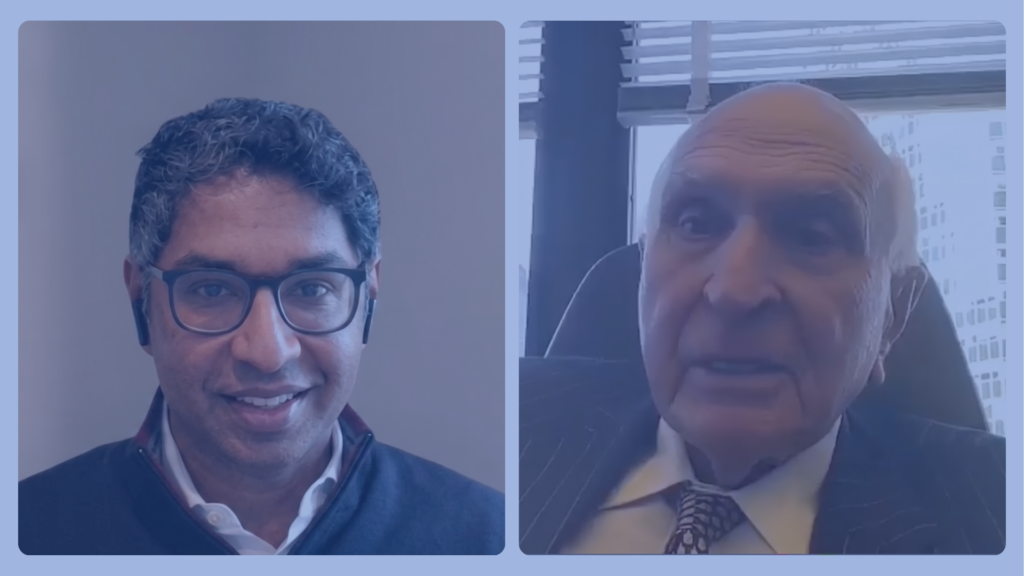
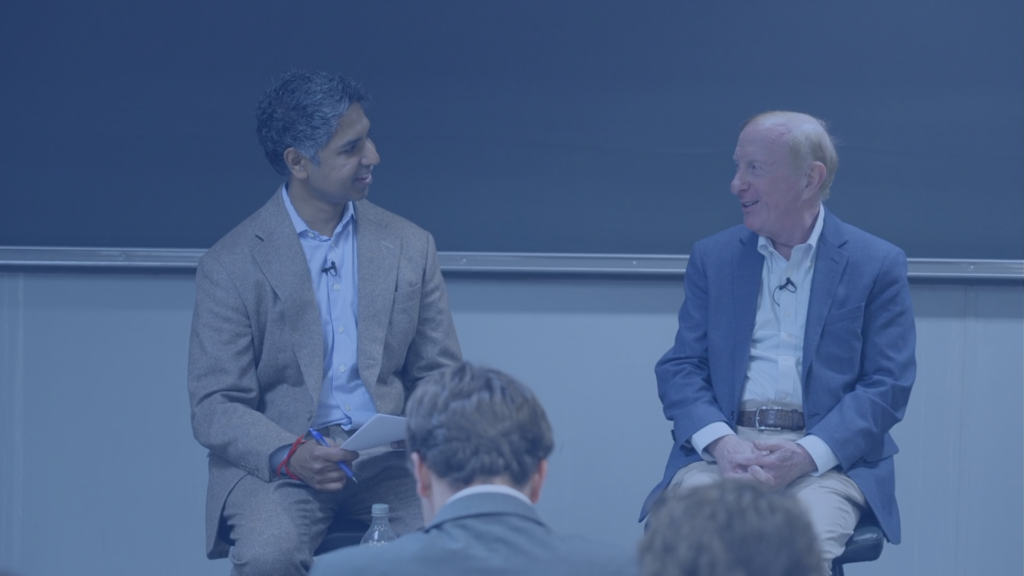
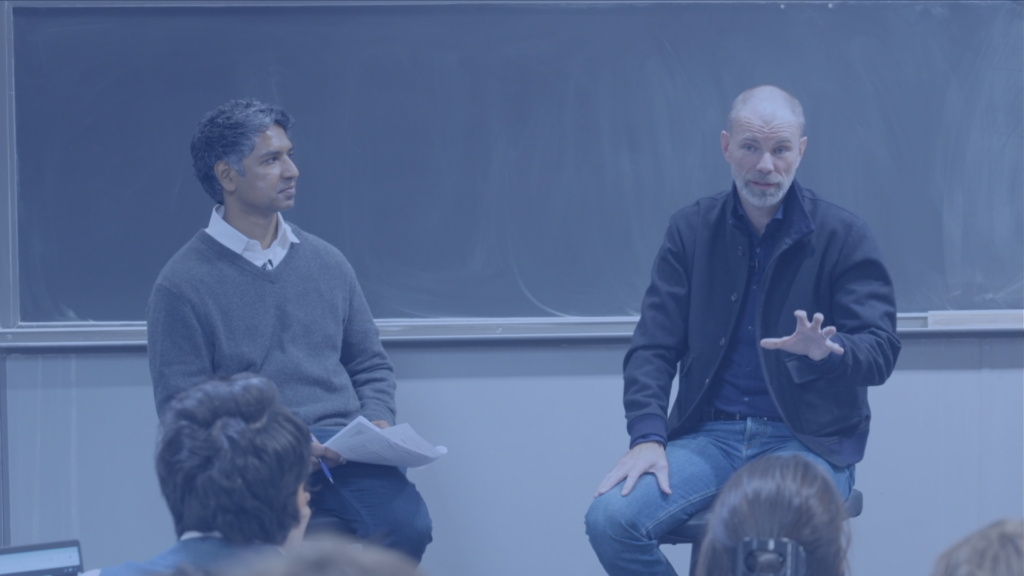


Our Address
117 Kendrick Street, Suite 300
Needham, MA 02494
Send us an email
info@worldlypartners.com
All rights reserved.