Worldly Partners
Arvind with Howard Morgan
In addition to leading Worldly, Arvind is a professor who has received a university all-star teaching award and brings deep real-world insight into the classroom. Each year, the course features conversations and lectures with distinguished guests who share candid perspectives from senior levels of business leadership, offering students exposure to industry thinking and practical insights within an academic setting. Guest participation is strictly for educational purposes only.
The videos and individuals shown are for illustrative and informational purposes only. The appearance of any person does not constitute an endorsement, testimonial, or recommendation of Worldly Partners, nor does discussion of specific companies constitute investment advice. No individual shown is being compensated for their appearance, and their statements (if any) are not representative of the experience of any clients or investors. Nothing presented should be construed as individualized investment advice.
Howard Morgan
Howard Morgan: The Quant Who Changed Seed Investing
In this engaging fireside chat, legendary investor Howard Morgan shares his journey from the President of quant firm Renaissance Technologies to co-founding First Round Capital and funding early-stage innovation, to Chairing multi-billion dollar global growth equity firm B Capital. Speaking with Arvind and a class of students, Morgan breaks down his “People, Product, Plans, Profits, Passion, and Persistence” framework and offers prescient insights into the future of AI, robotics, and human longevity.
Full transcript
Introduction
Arvind Navaratnam (00:00:13):
All right guys, let’s get started. Please join me in welcoming Howard Morgan to class together. Thank you. So I’ll keep my opening remarks brief. Howard has had a legendary career in investing. Howard was the founding president of Renaissance Technologies, as you all know, the famous quant investment firm where he focused on VC high-tech companies. Then he co-founded First Round Capital, a world-class early stage VC firm. And more recently, Howard is the chair and GP of B Capital, a large growth equity firm that was started with Eduardo Saverin, the co-founder of Facebook.
The students Howard have been preparing all semester and have researched everything they could find about you and your ventures in the public domain. No pressure. I’ll be asking the questions the students prepared on their behalf for a smooth fireside discussion, and then opening up to Q&A towards the end. But thank you so much for being here, we couldn’t be more excited.
Howard Morgan (00:01:19):
Thank you, you’re very welcome. I have been on the internet since 1973, and so my life is an open book online. My kids at some point said, “Do you overshare a little bit?” If you’ve gone to the internet, you’ve found a lot of stuff.
Early influences and a career in computing
Arvind Navaratnam (00:01:40):
Yes, we have, and they’ve spent a bunch of time on it. And I liked your comment about your obituary is your Wikipedia in one of your talks. Maybe we can start towards the beginning, Howard. So where did you grow up? And specifically what did your early childhood look like, and did that play a factor in your business journey?
Howard Morgan (00:02:03):
Well, my early child, I grew up in the Bronx, New York. My father was a furrier. He was a manufacturer of collars and cuffs in those days, and Davey Crockett hats. When Walt Disney had a show for kids and they did the Davey Crockett series and everybody wanted Davey Crockett caps, coonskin caps, and he made a good upper middle class fortune for a couple of years during that. But we lived comfortably. We weren’t wealthy, middle, upper middle class.
I went to Yeshiva as a kid until until the eighth grade, Jewish day school. Then I went to Bronx Science for a couple of years, for two years, and then we moved to Queens. And when we moved to Queens, I really didn’t like traveling two hours every morning on the subways to get to science. So I switched to William Cullen Bryant High School in Queens and they told me, “Gee, you could graduate this summer if you just take these two or three summer courses.”
When we were on our second date, my wife, it’ll be 58 years in December. But my wife met my mother-
Arvind Navaratnam (00:03:11):
Congratulations.
Howard Morgan (00:03:11):
… and she said to Eleanor, and said, “You know he’s a little man in a hurry.” And at that point, three years for high school, three years for college, I was working on what to do for graduate school, and I was working at City College’s nascent computer center. I learned how to program in 1960.
And Dick Hamming, who was a Bell Lab scientist who invented something called Hamming Codes, which was how we talked to satellites and stuff, error correcting codes, said, “What are you doing next year, Howard?” And I said, “I got a fellowship to MIT in physics.” And he looked at me and he said, “Oh, you want a Nobel Prize, hey? It’s going to be really hard to get that.” He said, “Plus,” he said, “I’ve seen you around these computers and you like them, and these are the future.”
So if you’ve ever seen The Graduate where the guy whispers plastics in Dustin Hoffman’s ear, he basically said, “It’s computers.” And I said, “Okay, I think you’re right, actually, I do love them. But it’s already February. How am I going to get admitted? What should I do?” He said, “Well, you have all this math, you should do something called operations research.” So I said, “What’s that?” Because most people didn’t know then. Most people don’t know today what it is. But he said, “It’s mathematical decision making.” And I said, “Where should I go?” He said, “Well, Cornell, Carnegie Mellon, Stanford are the three places in the country that are good for it, but I can get you into Cornell.”
And two weeks later I had a fellowship to Cornell, and that just changed my life. It was one of those decision points in my life where I could have gone and probably been a physics professor at MIT or someplace, but probably not get a Nobel Prize. But I went into computing and I went into computing when it was still very, very early.
So I got to Cornell in 1965. The computer science department had just started. I took courses in OR and computer science, they were on adjacent floors. My PhD thesis was a computer programming language, so I was in both, and then I stayed in academia for a while. So three years at Cornell, went out to Caltech to teach.
Caltech was an interesting place. It’s really brilliant students. You’ve seen them on some of the TV shows. But they didn’t get computing at the time. And the reason I was brought out is the guy who brought me out, a professor named Herb Keller, wanted to get a computer science department going. And the physicists who were ruling the roost at Caltech, Feinman, Gell-Mann, the very famous physicist, one of them said to Herb. He said, “Look, Herb, we have labs all over Caltech. Biolabs, chem labs. They all have refrigeration equipment. We don’t need a refrigerator science department. We know we’re going to have computers in all these labs. We don’t need a computer science department.” It set Caltech back 20 years, and they just didn’t get that computer science really was a serious discipline.
So we wanted to move back east, and Penn made me an attractive offer to be jointly tenured in the computer science department and at the Wharton School. And my focus was how do we apply computers to business? And with my advisors at Cornell, we had built an early database system which we sold to a bunch of companies. We hired as a salesperson, a guy named Dave Duffield, who later created PeopleSoft, and Workday and other things. But he was our first salesman, and learning the business.
And so I was always focused on how do we get computers to really help the business world? And that’s what I did for the next 12 years. I was a leading world expert in what we called in the ’70s, the office of the future, which meant word processing, and later on spreadsheets which were invented by a student of mine at Harvard Business School when I taught there in ’78, ’79. Dan Bricklin, he created the spreadsheet because he had some cases he had to solve, and they kept getting frustrated with having to redo all the analysis. And he said, “Gee, we ought to be able to have a computer do this with this WYSIWIG thing.” So he teamed up with Bob Frankson from MIT, and they built BiziCalc.
And so applying this Office of the Future technology was… Today, we just call it the office. I would say things to big companies. I would go around the world giving lectures to big companies about someday, it’s all going to be email. And I also said, “And by the way, when you’re using email, don’t think of it as a phone call, because it’s a written record, so it’s going to be in the courts.” And most of them never listen. They still don’t listen today, but anything you say on email can and will be used against you. So you got to be careful with what you do with email.
So that was all doing fine. In ’78, I spent the summer at the RAND Corporation, and another fellow at RAND, the guy named Peter Wiener, said he was leaving RAND to start a company. He had gotten his thesis advisor, who was one of the two guys at Bell Labs who created Unix, Brian Richie, to give him a commercial license for Unix. Up until then, Bell Labs only licensed Unix under trade secrets to nonprofits, universities and research institutes. And he said, “No, I think this would be great for business.” So they gave us the license, and we created a company called Interactive Systems. And Peter said, “And I’ve got this other professor who has some money and he’s going to fund it.” And so I met Jim Simons that way, and that’s how I met Jim.
Renaissance Technologies and First Round Capital
That gets us close to Renaissance, because three years later, Jim said, ” Why don’t you take a leave of absence and help me? We’ll start Renaissance. I’ve got $70 million, but I can only invest 35 in the quant strategies we have right now. That’s the capacity.” They were trading currencies and commodities. And I like creating companies, and so we’ll create Renaissance Technologies. Half the money will be in venture, half the money will be in Quant.
And I spent 25% of my time on the Quant side, because one of my expertises was database systems, large databases. I was the first editor of the ACM database journals, and 75% on venture. And Jim spent 75% on the Quant side. His stated goal was, “I want a system that makes money while I sleep, and I don’t have to think about and make decisions all day. I just want to program algorithms and let them do it, and 25% on the venture side.” And that worked great until 1989.
And in 1989, we had a come to Jesus meeting and Jim said, “Up until now, the venture had been outperforming quant.” So in 1986, ’87, most of Jim’s net worth was in a venture that we had done called Franklin, Franklin Electronic Publishers. In ’89, we said, “Look, the venture is now only 25% IRR.” He said, “But Medallion, the quant fund, is now 38%. And with Medallion, if I want to quit, I can sell everything the next morning and we can go home. With Venture, it’s going to take us five, six, seven years to get out of these things.” And he said, “I got a lot of people who want to put more money in the Quant side.” So he said, “Let’s take the venture out of Renaissance.”
So we separated the venture capital portfolio and I didn’t move my office. I didn’t change anything, except that it was now being new money was coming from Jim’s money in my pocket and Jim’s pocket as we invested through the ’90s. And we did a bunch of interesting investments. In 1995, six, we took six companies public. In those days, you could take tech companies public very early. We can talk about the reasons for that at some point. And we were able to do that.
The first company was called Infonautics. I don’t know if any of you used ProQuest when you were in high school in your libraries, but it ended up as ProQuest. We went public. The co-founder, Josh Kopelman in ’99 started Half.com, and Half.com was sold to eBay for $350 million in the height of the bubble. It became Buy It Now. If you use eBay, Buy It Now comes out of the Half.com thing. It was one of two… eBay made about 50 acquisitions in this ’98 to 2001 period. Two of them made money. Half.com was one of them. The other, I’m blocking on the name, but it was another analytics platform that they could use.
And I said to Josh, “What are you going to do next?” He said, “Well, I’m going to work for eBay for a while.” So he did. Meg Whitman kept trying to get him to move to California. He did not want to, his wife didn’t want to. So three years later, he came to me and he said, “Look, I’m moving back. I’m staying in Philadelphia.” He really never moved. “And I want to do investing and angel investing.” So he and I started angel investing, and he liked it. And he said, “I think…” This is in mid ’04. “I think it’s time for a seed stage fund. Nobody’s doing formal seed stage investing. Most of the venture funds at that time were doing basically series A, B investing.”
So we got some friends. We looked it up and Kleiner Perkins had started with $7 million. So we said, “We’ll raise $7 million.” It was 30 years later, or 28 years later. So we raised $7 million from ourselves, friends and family, and Comcast, which was a big supporter of Josh’s, made a lot of money in Half.com. And we started investing. We said, “What we’ll do is we’ll tell the people who are investing, whatever they would invest, give us a third of it because we’re going to do annual funds for the first three years. And if we like it, then we’ll do a real fund.” So we did first round 2005, first round 2006, first round 2007, and then we did follow on funds for each of those years. Then we combined it all. So for record keeping purposes, it’s now called first round one, but it really was six different funds.
But in late 07, we said, “Yeah, we like this. We’re going to make a business out of it.” We went around to a bunch of people. We were introduced to Dave Swensen, legendary investor from Yale, and he said, “Look, I like you guys. I like the combination of youth and experience,” because I was 60 when first round started. He said, “But you’re doing $130 million fund, I can put in 22 million. It won’t move my needle, but at least it’ll give me a window into the early stage fund.” So he did it, and then he called his friend Andy at Princeton, and they did it and we cobbled together $132 million.
When Dave got back $1 billion for his 22 million, it actually did move his needle. We kept getting calls. He said, “We got to report to the trustees every quarter now on the value, so we’re…” Good investing, good timing, and a lot of luck, and we had some great companies. So I could stop there.
Lessons from quantitative investing
Arvind Navaratnam (00:14:43):
No, that was fantastic. One of the questions the students asked was what are the frameworks and philosophies you took from your time at Renaissance that you applied to your VC and later on growth equity?
Howard Morgan (00:14:59):
Well, I started out in operations research, very analytical. So numbers are important, and we wanted to look at what’s most important. And people talk about in venture capital, the most important thing you’re investing in is people and the most important thing is people. And we all say it, but it’s not true. The most important thing is what size market is the company going after? Is the market big enough? And the people are very important, don’t get me wrong. But a great entrepreneur, a great operator going after a small market is just not going to make you a venture scale return. And so you want to make sure that whatever market you’re going after is large enough to make the whole thing worthwhile.
And I remember listening to Russ Siegelman at Kleiner Perkins when we were doing Idealab back in ’99, and he said, “Well at Kleiner, we won’t invest in anything where we don’t see a TAM of 40 billion. If it’s smaller than that, it’s probably not worth investing in.” So we weren’t quite that aggressive, but we were very focused on how big is the TAM?
The other thing we were very focused on is the unit economics of the business, because it’s literally true that you can’t make it up in volume if you lose money in every transaction. Does the entrepreneur that we’re talking with really understand the unit economics of their business? And those are some key things. As a quant, basically we looked at that and we look at a lot of measures. Now, in recent times with B Capital and with Eduardo, we’re using a lot of AI, and I can talk about that a little later.
Arvind Navaratnam (00:16:46):
Yeah, for sure. One of the interesting things about quant investing is it tends to favor fast feedback loops and measurable signals while venture tends to require more patience and deals with much more ambiguous data. So how do you reconcile those tensions or do you at all?
Howard Morgan (00:17:06):
Well, we want as much data as possible. Even at first round, we try to be in touch with the companies on at least a biweekly basis. We want definitely monthly reporting, and we’re looking for trends, and we’re looking for things that go outside of control limits if you will. We build a model when we invest, and then we want to know, are they still on model? Are they off model? You may be surprised to know that not all the companies actually achieve their models.
Arvind Navaratnam (00:17:39):
Right. Right, yeah.
Howard Morgan (00:17:39):
And usually it’s not because they outperform them, it’s usually because they underperform them in some way, shape or form. So you want to really catch it early. So you want to catch problems early, and that demands looking at a lot of numbers all the time.
The six Ps of venture investing
Arvind Navaratnam (00:17:53):
Yeah, that makes sense. In a podcast, you talked about your 6P framework. People, product, plans, profits, passion and persistence at first round. Could you explain what they are, and how you apply them in your investment process?
Howard Morgan (00:18:10):
So a couple of key things. One is, do they have integrity and intelligence? That’s key. Integrity is absolutely number one. I don’t want somebody who’s going to lie to me, and I want to make sure that they’re smart because the correlation between being smart and being successful has been proven out over decades.
The second piece of it after integrity and intelligence is, do I like them? I’m going to be working with them for a decade. If I make a venture investment in a founder, they’re going to be calling me at home at night and do I want, when my wife says it’s so-and-so on the phone to grimace and say, “Not her again,” or, “Not him again?” It’s just I’ve got to figure out, do I like them enough? Is there enough chemistry? And maybe they have better chemistry with one of my other partners, and maybe I’ll foist them off on somebody else, but that is important.
And the third thing is, are they a storyteller? Can they tell the story? Because being a successful entrepreneur in terms of being able to fundraise, being able to hire, being able to sell is all about getting people to hear your story and believe the story. A film school professor I used to take courses with said, “Can he get you on the ride?” A film has to get you on the ride in the first 10 minutes so that you suspend disbelief and go on the ride that the filmmaker wants to take you.
It’s the same thing with an entrepreneur. They got to get you on the ride, but they don’t have 10 minutes, they have two. And so that you believe that, yeah, we really can connect all the world’s people on this Facebook-y thing, or we really can get the world doing solar energy, or we can really do this self-driving car stuff. You got to believe the story. So that’s the people part.
Second is product, and by product, I really mean market. Because almost certainly when you’re an early stage investor, the product that the entrepreneur shows you day one and the product they ship in a year or six months are different. And so that’s what I said earlier, which is, are they going after a big enough market? Because if they go after a market that’s a $20 million market and they get 100% of it, it’s not a big enough thing for venture. If it’s a billion or $10 billion market and they don’t get it exactly right at the beginning, but they understand the market, then they can move it around and make it fit and be better. That’s the product market. Do they understand that?
And have they built that product by talking to customers? Do they really have a good way of understanding customer feedback, and adapting the product on a constant basis, constant tweaking based on what the customers actually tell them? Not based on they’re trying to impose their will of a product on the customer, but that interplay between this great new thing that they’ve created and making sure it fits with customers.
Number three is plans. Do they understand how to plan? And mostly that means can they build spreadsheets that are plausible? If we could turn spreadsheets to reality, that would be an easy job. But we can’t, but we can do a lot of testing. So we take the spreadsheet, and we slip the revenues by a quarter, but we keep the expenses the same or increase them by 10% and we see how long they can run on the money they’re trying to get.
What are they planning for in hiring? How many people do they need to hire over what time period? Can you really hire that fast, depending on what they’re doing? So we try to get all of that to happen. Do they understand planning? And by that, planning both in the quantitative sense but also in the organizational sense.
When you’re building a company of 20 people, you can do certain things with management. At 20 people, you know everyone who’s there. You get to 50 people, and the CEO walks in one day and says, “Who’s that? I didn’t hire him.” And when you get to 100 people, you have to start delegating, and then you need to create structure and all those things that hopefully you learned in the organizational theory classes. But are they able to plan for how the organization will grow, and are they able to put a culture in place? Is there a plan for a culture for the organization? So that’s people, products and plans.
Number four is of course why we’re in business. Does it make a profit? How much profit? Do they understand their unit economics? As I said earlier, do they understand the gross margins? What are the levers they can use to increase profitability over time? What are the levers they can use to figure out what the right pricing is, and the pricing model for… Pricing models are very, very crucial. Most people do not know how to price their things.
One of the advantages we have at B Capital with our growth companies is BCG has a great practice in product pricing. So we have them talk to our companies. They talked to one of our software companies, and they said within 20 minutes, “Okay, so raise all your prices 10%. Nothing will happen, except you’ll have more margin.” And it worked. They just have a sense of how to get people to figure out the pricing. So that’s people, products, plans and profits.
So the next two are different. The passion. The entrepreneur has to be passionate about what they’re doing. Part of it is because that passion will get them to get other people to come on the ride. It’s not just the storytelling, but the storytelling has to be accompanied by a feeling that they’re passionate about it, that they really want this to happen, that they want to change the world in some way. Passion’s a hard thing to measure, but it’s one of those… I know it when I see it.
When we had Garrett Camp creating Uber in our office, he was really passionate about the fact that this San Francisco system is so broken, you call a taxi, they don’t show up for 30 minutes, you don’t know where they are, you don’t know why they are. But look, if I could put this map up and you can see this car getting slowly closer to you, that’s going to be such… And he just told it in such a passionate way that we all believed in it, and I’ve used it four times today so I’m still believing in it as it turns out. But that passion is very important.
And the final one is persistence. Because strangely enough, very few companies go up and to the right. You really will hit snags. And when you hit a snag, and it may be a major one, do you have the… Some people call it grit. There’s other terms people are using to get through that, to stick it out. And that’s a very hard one to find out about. We talk to people who’ve worked with them. If it’s a 22-year-old entrepreneur just out of college, it’s a little harder to figure out than if it’s a 30-year-old who’s done two companies. But you really want to understand persistence.
And both of those are important, because the entrepreneur needs the support of their family. If they’re 22 and single, okay. But once they get a little older, and maybe are either married or in relationships and they’re going to be working 24-7, they have to have a way for somebody else to support them and understand what they’re going through. And that’s all part of that persistence layer. So those are the things we look at, and it’s worked.
B Capital’s partnership with BCG
Arvind Navaratnam (00:26:01):
That’s fantastic. You touched upon the BCG partnership, which is unusual in BC and growth equity. How does it work, and how does it change outcomes and drive value to you beyond that one example?
Howard Morgan (00:26:15):
Sure. When I started First Round, I told Josh I would give him 10 years. I was 60 when we started. 2015, I said, “It’s 10 years. We want to bring in younger people to… I’m not being ageist, but we want to bring in younger people to this early stage venture, because they are the ones that are going to go out to the bars at 10:00 PM and meet with the entrepreneurs. I’m not doing that anymore.”
And so we created a glide path. I announced I was going to leave First Round. I got 100 emails, “Would you join my seed fund?” I said, “No. First of all, I’m still an advisor to them, and it’s best one and I’ve got a lot of money sunk into it, so no.” And then Raj and Eduardo called, and they said they’re coming to New York, would I meet with them to hear what they wanted to do next. And I said, “Sure.”
Well, I said I’d give them a half hour, but two hours later I said, “Look, I love what you’re doing. I’d like to be a big LP.” And they said, “No, no, no, that’s not what we want. We want you to be our chairman, and to help us make new mistakes. We don’t want to repeat the mistakes you made building Renaissance, and building Idealab with Bill Gross and building First Round with Josh. You can give us a fast start so we don’t make those mistakes anymore, and we’ll make new ones.” And I said, “Well, what’s different?” They said, “Well, first of all, we’re global. First Round only invested in the US.” Minor exceptions, but basically 2% outside the US.
And when I was a professor and lecturing, I would go around the world, and I did talks to companies all over the world. And in the 13 years from 2008 to 2021, I was on John Deere’s Global Technical Advisory Board, and we’d go all over the world to help John Deere’s research, and help John Deere transition from a tractor company to a precision agriculture company, AI software-driven big data company.
And they said, “We’re global. We’re headquartered in Singapore. We’ll have offices in Delhi and Bangalore. We see a lot of opportunity to invest in Southeast Asia, and the US of course. Probably not Europe, we don’t see enough interesting stuff coming out of Europe.” So secondly, we’re mostly focused on B2B, not so much consumer. First round did really well on consumer. We did a lot of B2B that did really well too. Flatiron Health was great. Looker was great, we had multi-billion dollar exits. But it was a lot of consumer stuff. The two biggest exits were consumer.
And so I liked the idea that it was a little more B2B, and we’re going to be B stage and later so I wasn’t going to compete with First Round. Those were the things that hooked me in. And then they said, “And we have a real partnership with BCG.” So I spent a number of hours with Rich Lesser, who was at the time the CEO of BCG, today he’s their chairman and our vice chairman, and trying to figure out what he wanted for BCG out of the partnership. What he wanted was to be able to go to his clients and to show them technologies that were actionable. So he didn’t want to do what we could do at First Round.
We had a company at First Round that was in the autonomous driving space, and we could call GM and say, “We got a company that might interest you.” And they’d send 12 people in to meet this four person company. So first you had to find a conference room big enough, but you did that and then they would meet with you and they would say, “We love what you’re doing. Two years from now when you have a product and a balance sheet so that GM can actually do business with you, call us back.”
He said, “That’s not what I want. I want the companies that you’re investing in, which have at least 10 million of revenue, have done business with Fortune 500. So that if I show them to one of our clients, the client can say, Oh, bring them in. We’ll do a POC, a proof of concept tomorrow morning.” And so he wanted to show the companies.
Now the goal for year one, and I’ll tell you in a second what they provided us, but the goal for year one was 10 interactions between portfolio companies and BCG clients. We had 100, it was hugely successful. And on our end, what they did was every company got a BCG MDP, managing director or partner, as a board observer. So they would meet with the company at least once a month, and they would access BCG resources for the company. And if the company needed… I’ve mentioned software pricing, it’s one thing. They did a lot on hiring Salesforce, how to hire, and structure and compensate Salesforce. That’s a big problem for many companies.
And all sorts of other things they did. Helped us on due diligence. They would do market maps for us, and they still do. With this relationship, we have a 10-year exclusive contract with them even now. The new CEO is equally a fan, and it’s just going really well. So we get to use BCG resources. And then when the companies get really big and raise a lot of money, we do BCG engagements where we pay a third, the company pays a third and BCG pays a third. So they get really discounted, but standard BCG million dollar or more engagements, and that’s been a very positive thing for the companies. It’s working out well for everyone.
Arvind Navaratnam (00:31:45):
Right. That’s great, that’s the goal.
Howard Morgan (00:31:45):
Yeah.
Seed-stage investing, new markets, and robotics
Arvind Navaratnam (00:31:52):
What key characteristics of the seed stage businesses have you found to be especially predictive of long-term success?
Howard Morgan (00:32:02):
Well, there’s two different seed stage type businesses. There are ones that are going into established markets and changing them in some way, and there are ones that are creating new markets, completely new markets. So it’s bifurcated in terms of what makes for success.
So Uber went into a market that was not an established market. Nobody had successfully been using the new technologies of iPhones to get rides. Rides were still, you call a phone number, you get a dispatcher. So they were completely changing that whole model. They weren’t doing something that had been done before. When you got a company like Mirror, which was going into the athletic space, there are a lot of companies that provided tools for gyms and so on. This was more high- tech, so it appealed to us. But it was going into relatively a-
High-tech, so it appealed to us, but it was going into a relatively established market. So you need a little less education. So if the market needs a lot of education, you have to be able to figure out how are you going to do that? How are you going to educate the market on doing something completely new or very different? If the market exists already, it’s a lot easier to get people to do it. So we bifurcate those two things. And then the other bifurcation, the other thing you look at is, are the buyers able to buy it quickly or do they need six months or a year? How long does it take in that industry for things to be adopted? So we prefer things that get adopted quickly. The real successes are things that can lead to quick adoption.
OpenAI got 200 million users in the first four months, 100 million users in the first two months. That’s incredible adoption. Incredible adoption. And now of course it wasn’t a startup by then. It was six years old or seven years old. But still, those explosive kind of growth is something that you’d like to see. When you’re doing something that’s a little trickier. So right now, one of our favorite companies, one of my favorite companies is Apptronik, which does humanoid robots. It’s based in Texas. So right now there’s four companies doing humanoids. You’ve got Figure.ai, which raised at this incredible price, 38 billion, mainly because the VC that did it, the Parkway Ventures, continue to set the price for every round. So they did it at 200 million and two billion and then they did it at 38 billion. And they were supposed to do two billion.
They only did a billion and a half. All right. Then you’ve got Tesla with the Optimus robot. The Optimus robot was built by Apptronik for Tesla in 2021 and they took it over so we know how to do it. And Figure and Optimus have 19 degrees of freedom in their hand. We have 26 in the human hand. Apptronik has 20 right now. We’re moving towards 26. And you need those degrees of freedom because you need the wrist movements if you’re going to open a doorknob. If you want the robot to be in a home and go help people out, you need to be able to open doors. You need to be able to climb stairs. So a whole bunch of things that are required. And then there’s 1X is the other company.
So what we’re looking at is are we going to change that human behavior? How are we going to get people to use this? And that’s going to be a much longer path. So there what we have to do is get customers involved very early. So Mercedes is an investor and a customer. Some of the big CPG companies are investors and customers. We know how they want to use it. We have a partnership with a medical company that wants to use it for kitting in hospital ORs. So one of the problems operating rooms have is when you’re doing surgery, before you do the surgery, you say, “Here are the tools I’m going to need. I need scalpels, I need lancets, I need whatever.” I’m not an MD, so I don’t know, but lots of stuff. And down in the basement of the hospital, there’s a room where they get a sheet from the doctor that says, “This is what we need.” They’re supposed to put it all together in different trays and make sure that the trays are properly marked and all that.
The error rate’s insanely high. It’s insanely high. Doctors complain all the time, “Well, I need such and such and it’s not here. It’s supposed to be in this tray. It’s not here.” So using robots to do that, to create the parts, to kit the parts, to put them in the sterile autoclave, and then to bring them upstairs to the operating room. And we’re working with the customers to find out what their real needs are and what do we need to do with the robots, particularly with the hands to make them work. And we’re partnered with Google DeepMind to do the model of how the robotic hands and feet and so on move and with Google’s DeepMind Gemini to be able to command the robot to tell it what to do in natural language. So it’s very exciting to watch something come together in that space.
Arvind Navaratnam (00:37:21):
Have you figured out the hand problem? I mean, that’s been folding clothes and washing dishes. I was just reading an article about it.
Howard Morgan (00:37:31):
There’s a lot of work going on on it. I wouldn’t say anyone’s figured it out per se. We’ve partnered with a company in Britain, Google and Apptronik. Part of the problem is we have these tendons that… So all of the controls for moving your fingers are up in the arm. And if you try to do it with… A lot of people have done it with hydraulics, you can’t get enough hydraulics in the arm to do that. So you need some other way. If you try to do it with wires, they stretch so you don’t have the precise control that you need.
So a lot of approaches, a lot of it feedback, visual feedback to know if something’s gone. If it’s loosened a little bit, then you have to move a little bit more or less. A lot of work on that. So the hands are, I think we’re a couple of years more work to get a hand, particularly to get a human-like hand. You don’t need a human-like hand for many things, but you also need pressure sensors so you don’t break the dish or you don’t break the glasses when you’re loading them into the dishwasher. And so that’s another piece that comes with the whole problem of hands.
Investing in Perplexity and AI businesses
Arvind Navaratnam (00:38:44):
Can you talk a little bit about your perplexity investment?
Howard Morgan (00:38:49):
Yes. My colleague, so Yanda Erlich is our partner who runs our AI. So in 2014, first round with myself and Josh invested in his first company, a company called Parsable, which was using based on Google Glass. I don’t know how any of you remember Google Glass. This was glasses that you were going to put on with a heads-up display in it. They realized that you could show instruction manuals to people fixing parts, fixing things in the field when they needed both hands. They needed hands free. So this way they could actually be looking at the instructions while they were doing the fixing. They built that company and then he went to CoreWeave or he went to a company called Weights & Biases, which he was COO and then that sold to CoreWeave. So he got very embedded in the Bay Area AI community.
Then he went to Coatue for a year as an investment partner and then we were able to hire him. He wasn’t thrilled with Coatue and so we hired him last year and he was friendly with the people at Perplexity. So he came in and within a month he said, “We’ve got to do this deal, Perplexity.” And so we all started using it and we said, ” It’s pretty good. I use it all the time now instead of…” And I use their new Comet browser as well. So we did the investment at $9 billion, held our nose, if you will, at that price. And the latest valuation is 18 billion, so we’ve doubled our money in nine months on paper.
I more than anyone understand that these valuations are ephemeral until they actually get realized. But right now that one is doing well. And what we saw was Perplexity was not trying to build its own language model. They were trying to figure out what the best one was to use for different things and how to synthesize results into an answer of what you want. And so several times a day I’ll do things. I’m trying to remember what it was last night. My wife came in, her MacBook had split the screen. I didn’t remember how do I unsplit the screen? So I said, “How do I turn off split screen on MacBook to Perplexity?” And it said, “Oh, you just look for the red dot in the thing and close that window and then you’re fine.” And it worked three seconds later. So I look like a technical genius to her, but it’s perplexity that’s giving me the ability to do it.
So we think it’s still growing and they have a business model. We’ve worked a lot on the fact that they want you to use it to ask about products. And if you use it to ask about products, there’s money to be made and it just intermediates Google. And if you do that in the Comet browser, it just intermediates Chrome. Google’s under attack. I am still long Google stock. I love the company. I don’t write it off at all, but I would think that particular part of the business is going to be affected.
Arvind Navaratnam (00:41:48):
How do you think about the opportunity relative to ChatGPT, OpenAI?
Howard Morgan (00:41:54):
Well, they have the Atlas browser, which so far is not as good. They’ll all get to priority, I think. There’s a lot of great people in the valley and they keep moving from place to place. “Just give me a $10 million signing bonus and a hundred million dollar package after four years and I’ll move. I mean, they’re using money as the coin right now. But I think that each of them is so focused on their own large language model that they’re not going to get the benefit of all the others and Perplexity does get the benefit of all the others.
Arvind Navaratnam (00:42:27):
Interesting. What do you look for in the founders you back?
Howard Morgan (00:42:34):
Well, we’ve kind of talked about a lot of it.
Arvind Navaratnam (00:42:38):
Is it the beyond the people definition as…
Howard Morgan (00:42:40):
Yeah. Well, I look for the ones who can see a couple of years out, who can tell me… Eduardo Saverin asks every founder, “What do you see yourself in the company in five years? How do you see the company?” And the ones who can articulate that are much better at building a company because they have a point to aim for than the ones that are, “Well, I don’t know. We’re growing.” You get a lot of really mouthed answers. And it’s not that they’re not good founders, but they’re not going to be necessarily the superstars because they don’t have… Look, Elon Musk wants to go to Mars. Everything he does is focused on going to Mars, whether it’s SpaceX, whether it’s Optimus, whether it’s XAI, he wants to go to Mars or he wants people to be able to go to Mars.
He himself doesn’t actually want to go to Mars, but that’s another question, but he wants humanity to be able to go to Mars. And so he’s got a focus and most of what he does is to try to fit in with that focus. Even the DOGE job was to be able to push NASA’s budget into… Didn’t work as well as he expected, but that’s where he is. We look for founders who have a vision out there focused.
Arvind Navaratnam (00:43:57):
That’s great. Why do you think many startups’ businesses fail to scale?
Howard Morgan (00:44:04):
Why do they fail to scale? Well, sometimes the product isn’t good enough. I mean, the product doesn’t have a natural virality to it. People won’t tell their friends about it. I tell all my friends about Perplexity. I say, “You should be using Perplexity.” They ask me a question, I give them an answer instantly, and they say, “How’d you get that?” I said, “Perplexity, you can download it. Go do it.” And someone will pay the $20 a month, some of them won’t, but they can use it. So that’s part of it is virality makes these things scale. Secondly, their model just, they have to charge too much for their product depending on how they built it, and that makes it hard to scale.
Some of them have misread the market. They’ve misread how big the market is, and we’ve fallen into the trap with them because we invested, but we misread how big the market is or how fast the market will happen. When you do things in real estate, when you do things to sell to state and local governments, we’re very skeptical. In education, we’re very skeptical because you’re selling to a very fragmented market, 45,000 school districts in the US. If you’ve got to sell to 45,000 school districts one at a time, it’s really hard. So picking places where you can get that word of mouth, that virality that people come to… You want your product to be bought, not sold. And the companies that scale quickly are the companies whose product is bought. It’s not sold.
Early-stage and growth-equity investment decisions
Arvind Navaratnam (00:45:41):
So there was a question from a student. How does the investment process and decision making at B Capital shift while transitioning from early to late stage investor?
Howard Morgan (00:45:51):
So the late stage investment, and that’s sort of B stage and later, if you will, is much more metrics focused. We want companies to have 10 million in revenue, so we have a lot of numbers to work with. And what we do now, so now Eduardo has a team of eight people in Singapore building AI tools for us. So we take their numbers, the AI crunches them, we take the narrative that the analyst or the investment professionals put down, we give that to the AI. The AI goes out and first of all, it ranks all of the management team members. It goes out and looks at everything it can find, whether it’s LinkedIn or YouTube, other places for information about the management team. Then it goes and looks at all the competition, gives us a competitive matrix. It says, “Well, here’s where this is better and this is better.” Then we take all of their numbers and we say, “Here’s how these numbers could grow. The AI does this now. Here’s what we think is different.”
We give a chatbot to the people who are on the investment committee and say, “For most of your questions, if they’re factual questions, ask the chatbot before the investment committee meeting.” I can say, “Well, what happens if the revenue slipped by a quarter? How does that push out your case for a 3X return?” In an instant, I get back a response as opposed to the analyst saying, “Oh, I’ll have that for you tomorrow morning.” It just changes the whole interaction pattern. So we’re doing a lot of that. At the early stage, we don’t have the numbers. We have the product plans, we have some notion of what they think the market would look like, and we have the founding team. So we do a lot more work, again, with the AI about the founding team. What have they done before? What do peers think of them? What can we find out about them?
In terms of the market they’re going at, what can we find out about how big it is? Is their TAM plausible? Is their SAM plausible? But it’s much more focused on the people and the market size than it is… And then are their unit economics possible? If they’re physically manufacturing something that’s not just software, what are the costs and what are the bottlenecks they may face? Are there any materials that they’re using in this product? So we have space technology companies and we have a company called Star Catcher. Star Catcher is putting a satellite… it’s building a power grid in space. So think about satellite goes up, it has two solar panels. They open up, they collect the sun, they provide power to the batteries in the spacecraft. Then some micrometeorites come by and they knock out one of the solar panels. So you’re now down to half power. So either you change your mission or you deorbit. Deorbiting is very expensive. There’s insurance, but it’s very expensive.
What we can do, we collect sunlight a couple hundred kilometers above them, we store it, and then we have lasers tuned to the frequency that solar panels like, and we can beam that power down. We can beam one sun onto them, two suns, three suns, whether they’re on the dark side or the other side of the earth and give them the power to keep going. We can give enough power so that you could put H200 chips in orbit, which are huge power high and you don’t want to put up as many batteries as you would need to do that at the beginning because weight is a big constraint. So for a company like that, we did a lot of analysis of who would the buyers be? We talked to DOD people, we talked to commercial space people, and we had to get ourselves comfortable that there would be a market there. And there is. They’ve got PPAs now from a lot of people, but when we did it, they didn’t. So you have to convince yourself that the market they’re going after is addressable and you can reach it in a reasonable way.
Arvind Navaratnam (00:49:53):
That’s great. And it actually addressed one of the questions that the students had about how you use AI in your own investment process.
Howard Morgan (00:50:01):
A lot more than what I just said, by the way. No, I can go to our AI home screen and put in the name of a company and it will tell me everything about the company. It will tell me if we’ve had any interaction with that company, what have our interactions been, which partner talked to them, how many months ago, what did they say because it has all our emails and everything in it. And if we’re going to win a deal, it can tell me who’s on the board there, what are the overlaps between people at B Capital and people who are close to the company that we can leverage to try to get to win a deal. So we’re using it everywhere we can.
Arvind Navaratnam (00:50:40):
Any other big use cases for you internally?
Howard Morgan (00:50:45):
Internally, well, personnel decision making, we’re using it there trying, again, to get a sense of is there stuff out there on people that we want to promote internally? What have they done? What are other people maybe writing about them, commenting on their LinkedIn, commenting on other social media and so on? So we’re trying to hoover up anything that’s out there and use it like any good intelligence agency would.
AI valuations and the bubble question
Arvind Navaratnam (00:51:11):
Yeah, that’s great. Given your experience investing in early stage companies, Asun asked, “Do you think that we are currently in an AI bubble similar to the dot-com era or is this a more durable technological shift and how do you think about that?”
Howard Morgan (00:51:29):
We are currently in an AI bubble. It is not similar to the dot-com era. So in the dot-com era at Idealab, we created great companies to do all sorts of things. We created a company to do streaming entertainment. It’s called Z.com. In fact, I had a great email. My email was h@z.com. Unfortunately, on 56K dial-up modems with 100 million total people on the internet in 1999, it just wasn’t going to happen and it didn’t happen. And so many dot-com companies created that failed became gigantic hits when redone eight years later when there were now two billion people on broadband all the time because if you were going to get 1% of the market and there was a hundred million people, you got a million users. If you had two billion people, you’re going to get 20 million users. So it just changed the scale.
That’s why the OpenAI, 200 million users so quickly completely changed the scale of things. $4 billion, $13 billion in revenue this year just out of the gate. So yes, we’re in an AI bubble in the sense that the valuations are gone out of sight and they are definitely… It’s going to take years to grow into those valuations, but the winners will definitely be worth having invested in even at those crazy prices. There will be a lot of losers, unfortunately, and that’s the difficulty. But look, bubbles occur when too many people want to get into… Too many people want tulips. I mean, everybody wants tulips, right? So the price goes up, supply and demand, that’s what happens. And that’s what’s happening now, the amount of stock that’s available. Look at the prices, even SpaceX, which I think is not unfairly valued necessarily, but is it a trillion-dollar company yet?
No. Will it be a trillion-dollar company in three or four or five years? Probably, but you got to pay a trillion dollars now or whatever the latest value is, 500 or something. So it depends on what return you’re seeking. If you’re seeking venture scale returns, which to me is 10X or more, we’re in a real bubble because trying to get 10X on some of these valuations is very hard. With Perplexity, we said nine billion, could we see 90 billion as an outcome? The answer was yes. Can we see 30 billion as an outcome, which is we underwrite in growth fund to 3X? Absolutely. So that fit. We saw some other things at similar prices where we didn’t think they were going to be worth more than 20 billion. So we just didn’t see the ability to invest in them.
Arvind Navaratnam (00:54:11):
Is duration a factor in that 10X?
Howard Morgan (00:54:14):
A little bit, but not a lot. I mean, when you’re in venture, you never know if it’s going to be three years or 10 years. I personally am not a huge fan of the IRR measure because IRR assumes that you can reinvest the money at the same rate, and by and large you can’t. I mean, you get the money back from Uber. We got the money back from Uber in 2021. We invested at four million, we exited 60 billion, but we couldn’t reinvest in another thing that was going to do that. It didn’t really matter what the IRR was. For me, as both running a venture fund and also as a very big LP in venture funds, it’s the MOIC that matters. How much cash am I going to get back in the end? Or at this point in my life, how much cash are my heirs going to get back when the venture things pay off in 15, 20 years?
But yeah, it is definitely a bubble, but a number of the companies will work. John Doran, 2001 famously said the internet is under hyped after the crash, and he was right, but it took Amazon nine years to get back to their bubble high. A lot of companies went bankrupt. We’re going to see the same thing when we have the AI crash. It will take five to eight years to get back to those numbers. If I knew exactly when it was going to happen, I would try to do something, but it’s hard to short the private stocks though.
Arvind Navaratnam (00:55:45):
Yeah, that’s for sure. Can you talk a bit more about the AI investments that you’ve made in the valuation and how you think about that?
Howard Morgan (00:55:58):
Yeah. I mean, we did WRITER. ai. We think about the valuations by thinking about whether we can see a 10X. That’s really the way we think about it. At the very early stage-
Arvind Navaratnam (00:56:09):
But the exit multiples, I mean, there’s so many layers into that.
Howard Morgan (00:56:13):
There’s so many layers there. I mean, we do a bunch of different analyses. We have different models for how far out we go. We do DCFs and all those kind of things, but we’re really looking at how big is the market for that. You look at Harvey.ai in the legal space. So we looked at another company recently, which was going to be selling to general counsels internally, and we said, “Well, what’s the moat that they have against a Harvey who’s got a lot of capital, a lot of customers already so they can just add products on?” And we just didn’t see them, and they were trying to sell it at a billion and a half or something, and with almost no revenues, 20 million of revenues really. We don’t see them being able to grow to that. So we do a lot of thinking about how big can they get and how big are the competitors and how do they eat away at them?
And particularly now that we mostly want to invest in a vertical focused AI. And then what we look for is, do you have a data edge? Do you have data, proprietary data that the big models don’t have so that you can really continue to be paid for something? And we see companies that have that, and we see some in the medical area, for example, medical AI. And if you’ve got a great data set to train on radiology data that no one else has, then you can win in radiological AI. And if you have a great… We just saw DeepMind doing the cancer stuff now, where if you can get enough data to train on, you can do amazing things. A 98% success rate in diagnosing early stage breast cancer.
Arvind Navaratnam (00:57:56):
It’s incredible.
Howard Morgan (00:57:56):
Way, way better than any of the humans doing it. But if they’re just using the same data everyone else is, we’re very skeptical.
Mentorship, lifelong learning, and daily habits
Arvind Navaratnam (00:58:10):
So I’m turning towards the end. So students, please get ready as we open to Q&A shortly. You’ve mentored many investors and business leaders throughout your life. What advice do you find yourself repeating most often?
Howard Morgan (00:58:32):
Well, I do tell people that it’s all about if you make an investment, you better like the entrepreneur because you’re going to be there for them for a long time. This is not a quick flip game. Every now and then you get some of those. They’re great when they happen, but that’s not what it… It is really a much longer term thing. So I tell people that. I tell them that the sin at first round, the sin at B Capital is not saying no to a great deal. It’s not seeing it. So I went home and I told my wife, “I met this guy, Brian Chesky. He wants to rent couches in our apartment for 100 bucks. We could have somebody sleep here and make 100 bucks. What do you think?” She said, “NFW, that is not going to happen.” So we didn’t do Airbnb, but that’s something that I’ve advised people, make sure that you at least see the companies.
Sourcing is the biggest advantage. Really, what our LPs pay us for is to find great companies. And to find great companies, you got to kiss a lot of frogs. So you got to have a very wide funnel and hopefully you have a funnel that is intelligent enough and your associates and your partners are actually seeing all these companies. We do a lot of work and we use AI for this also in doing a deep dive into a sector. So we’ll say, “Okay, we want to look at AI for small business finance.” And we’ll try to find every company that we can that’s doing something in it. We’ll search the web, we’ll search PitchBook and all those other services that you can use and TechCrunch, Crunchbase and see what’s out there. And then we’ll try to meet with each of those companies and get a perspective on them. So have a very wide funnel that you’re using and then be disciplined about vintage diversity in a fund.
So the one fund of B Capital that didn’t do so well was one where we got caught. We had a partner who just way over invested in 2021 when the prices were high and we used more of the fund. We should have used a third of the fund that year. We used 45%. I’m pretty rigid on the early stage fund. We’re going to invest rateably over 36 to 40 months. We’re doing 45 companies, we’re going to do a company a month, maybe we’ll do two some months, but that’s it. I’m sure you’ll see more great companies. You’re going to show them to me and I’m going to say, “No, we’ve already done our two companies this month because you’ve got to have that vintage diversity to really survive the downturns in the industry. It’s a cyclical industry. It always has been, and people don’t give it enough credit for being one. So that’s advice I give people as well.
Arvind Navaratnam (01:01:36):
What daily or weekly routines, metrics or disciplines do you attribute most of your success to, both in life and in business?
Howard Morgan (01:01:46):
I’m writing my autobiography right now. It’s called Pick Great Partners because I am much more a catalyst in these things than… And so I have my wife of 58 years, my thesis advisor who’s taken all the domestic stuff out of my brain. She’s an interior designer, so she picks the houses and does all that and get lots of my clothes and stuff. And then my thesis advisors who really partnered with me on getting into this whole field, Jim Simons obviously passed away recently, and Bill Gross actually, and Josh both, but Josh was an operator first and a partner later. Bill Gross was a partner earlier, still involved with Idealab, which has created a couple of hundred great companies, including paid search.
Bill came up with paid search in 1998, announced it at the TED Conference, was booed on stage, was vilified by Walt Mossberg in the Wall Street Journal. “How can you let people pay for their position in search results? This is evil.” Well, maybe not. Google figured that out later on. We tried to buy Google. When Google was doing 25 million and we were doing an overture, 250 million in sales, we offered Google half the company, which two and a half billion dollars. The Google founder said, “Great,” because they love Bill and he loves them. And one of their investors said, “Can’t do it.” Wouldn’t let him do it.
And that was Kleiner Perkins, because Kleiner Perkins 13 that had Google in it was a billion dollar fund that returned $3.1 billion to investors, 3.2 of which was Google. So he was right. I mean, what can I say? He was right. We then sold them Picasso, which became Google Photos. We’ve had good relations with them over the years and done very well with them. And then Josh and now Eduardo and Raj. So I’ve picked great partners or they’ve picked me or however you want to look at it. And I try to then provide the right advice and leverage to what they want to do. And that seems to work for me.
Arvind Navaratnam (01:04:22):
Do you have any sort of daily or weekly routines that you found helpful?
Howard Morgan (01:04:31):
My 38-year average right now is 175 books a year. So it’s slowed down in the last couple of years because there’s this thing called Netflix and Prime and it takes some of my reading time away because some of these series are pretty good. But I try to read very eclectically. As I like to say, for a nice Jewish boy, I have Catholic tastes in reading. I read everything. Science, technology, spy models, biography. You learn a lot from biography actually, and just reading all the time. I stay as kind as I can. I’ve been getting science magazines since 1962. I’ve been getting in the computing stuff since the early ’60s. I just try to stay at a high level current with what’s going on in science, not just computer science, but science in general, physics and so on.
I’ve become focused for obvious selfish reasons on longevity in the last seven or eight years. And I’m trying to stay very focused on what’s going on in longevity. I joined the board of Cold Spring Harbor Laboratories, which is the premier microbiology research place in the world to learn more about how we’re made and what can I do to hopefully live a healthier life and maybe a little longer. So all those things are part of the routine. The daily routine is gym pretty much every day and strength training three days a week and cardio six to seven. And it’s my morning routine. So-
… to seven, and it’s my morning routine. So gets me going, gets all the juices flowing and keeps my weight in check and so on.
Arvind Navaratnam (01:06:11):
That’s great.
Howard Morgan (01:06:12):
I also take 52 pills a day. So I’m a little bit of a nut. Ray Kurzweil takes 85 now, so I’m not at Ray’s level, but Peter Diamandis is about 55.
Arvind Navaratnam (01:06:27):
If you had to take just three or five pills a day that mattered the most, what three or five would those be?
Howard Morgan (01:06:36):
Yeah. The problem is that’s the wrong way to think about it.
Arvind Navaratnam (01:06:39):
Okay.
Howard Morgan (01:06:41):
The way to think about it is it’s a control theory process. Every three months we do blood tests. We measure 125 markers. And we look at the eight quarter trend in every one of those markers. And we said, “Is it stable? Is it going up? Is it going down? Do we want to move it in some direction? And how do we tweak what we’re doing to move it in the right direction?” And so they all have a purpose.
Now, there are some that are truly prescription medicine. I’ve got to keep my cholesterol down, I take two pills for that. I wouldn’t give that up. I take a ACE inhibitor, as they’re called, for heart because I have family heart history and I can’t stop that. I take the GLP-3s because they’re a new lifesaver, just like statins were 20 years ago. So those are probably the most important ones, but everything I take has a purpose. And yet I was talking with Dr. David Ages at our annual meeting and he looked at my list and he said, “Yeah, you should give this up, this up, this up, this up.” Said, “You don’t need this, this, this, and this.” And so we have different views on that.
Arvind Navaratnam (01:07:49):
Does Eleanor take a lot of pills?
Howard Morgan (01:07:50):
She takes about 40.
Arvind Navaratnam (01:07:51):
Okay.
Howard Morgan (01:07:52):
Yeah.
Arvind Navaratnam (01:07:53):
Interesting.
Howard Morgan (01:07:54):
We want to grow old together.
Arvind Navaratnam (01:07:55):
Yes. And that’ll help you age longer.
Howard Morgan (01:08:00):
Absolutely, yes.
Arvind Navaratnam (01:08:01):
Because it’s relationship.
Howard Morgan (01:08:02):
Social interaction is critical. The number one cause for dementia is hearing loss and uncorrected hearing loss. So if you stop hearing, you start pulling back from social interaction and it goes to hell in a hand basket from there.
Student questions on uncertainty and meaningful investments
Arvind Navaratnam (01:08:20):
So at this time, I’d love to open it up to Q&A for my students. Please don’t be shy. Oh yeah, Jack.
Jack (01:08:28):
Hi. First of all, thank you so much for coming. In this class, we focus so much on the knowability of a stocks return based on the company. In technology where it’s so ever changing, how are you confident on the knowability of the technology industry in order to invest in it?
Howard Morgan (01:08:45):
Well, I would say that the 40 or 50 year history of what technology has done to this world says that I can be pretty confident that a lot of these things are going to have real returns. Not every one of them, but that’s why we have a portfolio. And so I don’t get it right all the time. But even in the stock market, if you get it right 55 or 60% of the time and you allocate capital properly, you make a lot of money. Same thing is true. So we’ll make 45 bets in the, and of course we call them bets, in the fund, the Ascent Fund III, which I’m running right now, the $500 million fund.
But what we’ll do is we’ll make a $3 million bet on Star Catcher. And then when it proves itself, then we’ll add another five and then we’ll add another 10. Apptronik, we’re now up to 31 million, but only because it’s continued to deliver. So you have the ability on the knowability. You don’t make a single bet all at once. You put it in over time and that helps you with the knowability question.
Arvind Navaratnam (01:09:58):
Thank you. Other questions? Yeah.
Speaker 1 (01:10:02):
Thank you for speaking with the class. For someone looking to build a career in investing, what’s one piece of advice you’d give them and what’s something that most people will overlook early on?
Howard Morgan (01:10:16):
Well, if you want to make a career in venture investing, the advice is work at a startup first and get some experience on the side of the entrepreneur and the startup world. We’ve definitely found that our best investors have all come from people who’ve been operators at some point. That’s sort of the key piece of advice. And find a piece of the industry that you love and learn everything you can about it. So one of our associates is now focused heavily on the space world. So he’s in LA, there’s a huge space community in El Segundo. He’s going to their dinners, he’s going to where they’re hanging out, their meetups and all that. Just have a little bit of specialization early on if something that you’re passionate about.
Arvind Navaratnam (01:11:11):
Yeah.
Speaker 2 (01:11:12):
Thank you once again for coming. My questions, we’ve talked about a lot of phenomenal investments, but I’m curious for you personally, what do you believe is your most meaningful investment throughout your career?
Howard Morgan (01:11:24):
That’s most meaningful. Well, the two investments that caused first round Capital Two to return 52X, so Uber I’ve talked about. So the fund had 70 investments, 68 of them returned about 5X. It included Square, some others. The 69th was Uber. Uber was started in our office because we knew the entrepreneur. So he’d sold his company to eBay. We told him, “Whenever you’re done, we’ll give you a quarter million dollars and a desk.” And he came to us, said, “I’m leaving eBay.” We said, “Here’s the desk. Here’s the quarter million. What are you doing?” He said, “Well, I’m going to call cabs in San Francisco. I’m calling it Uber Cab.” The San Francisco Taxi Commission said, “You’re allowed to use the word cab. You’re not licensed.” So we switched the name to Uber.
About two months after we did the Uber investment, my partner Chris Fralick bought in a gaming company and Josh and I turned it down. And two months later, Chris came back and said, “I’m bringing my eight-year-old son Max to pitch you on Roblox.” And we did Roblox. And in the end, Roblox actually returned more than Uber to the fund. So Uber, we invested at four million pre-money and it went public at 60 billion. Roblox, we invested at seven million pre-money. It went public at 80 billion, but because it had a much shallower trajectory in terms of money raising, Uber was at three billion in three years. Roblox took eight years to get to 100 million. It exited at 80 billion and we made more money from Roblox than Uber. Not a lot more, but more.
So I think the investments that have impacted the most people in the world are those two, for sure. I think the investment that I’m most proud of is Flatiron Health. So Josh and I had a Wharton student as an intern, Nat Turner was his name, and Nat and his colleague Zach Weinberg decided to start an ad tech company back in 2000, I don’t know, six or seven, something like that, called Invite Media. And it was the first DSP. So it was the first demand side thing. And we sold it to Google for 85 million pretty quickly, and they worked for Google for two years. And then they were leaving Google and they were also part of what we called our blank check club. You make us a lot of money, we’ll fund your next thing.
And so they came to us and they said, “We’re ready.” And we said, “Great, here’s the desk.” That was in my New York office. I said, “You can have a couple of desks. You can have five desks.” I had to kick them out when they got to 25. But we said, “What are you going to do?” They said, “Well, we’re going to try to cure cancer.” And we said, “What? Neither are you doctors? What do you mean?” So we’re going to try to do databased view of what cancer treatments are like.
So they started collecting data on three million patients on every interaction with the medical profession, what was prescribed, what was diagnosed, how people took it and all that. And that became Flatiron Health, which we sold to Roche for two and a half billion dollars, but which really helped understand that certain kinds of treatments for certain kinds of cancer were more effective in white males and others were more effective in Asian women and others…
People had not stratified the data. Nobody had anything like the amount of data we had. Clinical trials up until very recently were basically 1200 white males, US clinical trials. Yeah, then eventually they got to using some African Americans and some Asians, but not many and very few women. So what they did was provide the evidence that said, “Here’s what’s really happening. This cancer does not affect everyone… This treatment does not impact everyone equally. It depends on the genetics, it depends on race, it depends on the gender, it depends on how old they are, all sorts of variables.”
Because they were big data guys. That’s how the advertising at Google works. It’s big data and big data AI and that’s what they were doing. So I think in many ways that’s the one I’m most proud of.
Arvind Navaratnam (01:15:45):
Pat.
Learning from failures and exploring new technologies
Pat (01:15:46):
Thank you so much again for coming in. Kind of on the other hand, especially in venture capital where not every investment can be a unicorn, do you have an example of a company that you invested in that might not have been as successful? And how did you personally get through that and how do you keep your team motivated during that time?
Howard Morgan (01:16:02):
We have a lot of examples of companies that don’t work and that didn’t work. And I’ll give you one in a minute, but you get through it by saying we have a portfolio. That’s why we have a portfolio. That’s why we don’t want to do one company. The Silicon Valley Angels in the ’90s did a study that said if you were an angel investor, you had to have at least 20 investments to break even, just odds are… And maybe the 21st was Google and it washed out everything else that happened. So we view it as a portfolio.
But what hurts most are the ones where you’re really convicted on something and you think, “Gee, this one should really change the world,” and the world doesn’t seem to agree with you. We have an investment in a company that is doing stuff for dentists called Flossy for dental practices. And we thought, “That’s a thing that’s really going to grow and the PE guys are getting into it. They’re going to want to consolidate. They’re going to want a great operating system for it.” Just not happening. And so the company’s running out of money. That has happened.
We had a company which we invested in 2020 that was going to roll up all of the people providing services to Shopify merchants. And by doing that, we would have first-party access to the shopping carts of a lot of the people on Shopify and would use that to build everything. And it turned out that the price started getting out of hand. We couldn’t acquire the companies we wanted and that one went bankrupt. I felt terrible, the CEO felt terrible, but sometimes they don’t work. Fortunately, that fund has got a pretty good MOIC with the other stuff that was in it and is in it. So you get through it.
The hard part is when you’re shutting it down, trying to do it in a way that keeps everyone’s reputation intact. So we try very hard not to do bankruptcies. It’s really tough to put a company in Chapter 7. You do not want to be on the board of a company that goes into Chapter 7 because for the next 10 years, any questionnaire you have from your LPs is, “Have you ever been involved in a bankruptcy?” You don’t want to say yes. You can talk to them about what it was, but you don’t want to. It’s just a question you don’t want to have to answer that way. So we’re very careful to make sure that we follow all the rules and get out cleanly and try not to end up owing too many people too much money.
Arvind Navaratnam (01:18:42):
Go for it.
Speaker 3 (01:18:43):
Thanks for taking the time. Besides Perplexity and Star Catcher, could you talk about some of the other current investments you’re in that are really exciting to you?
Howard Morgan (01:18:51):
Well, Havoc.AI, Havoc is making unmanned surface vehicles for the part of the military that has the most ships, which is of course the Army, which has more ships than the Navy, because the Army uses them for logistics and for other things, but the Navy also buy them. So they make a 10-meter-long boat, 32, 33 foot boat with a Starlink antenna, solar panels and an ISR package, intelligence surveillance reconnaissance package, and it patrols. And they have AI software to run a swarm of them. So you can tell 10 of them, “Okay, here’s this section of ocean, do an optimal search in this section of ocean for search and rescue for something,” or, “Look for this Chinese ship shape. See if that shape is in this part of the ocean.”
And I was in San Diego last… I guess it was July. We had 10 boats running off the coast of Portugal, 10 boats running in Hawaii, 10 boats in San Diego, all controlled from one control room. We had a whole bunch of generals and admirals there and we said, “You can give the high level command, natural language command now, ‘Search this area for,’ and that’s it. And the AI takes care of the rest, gets these boats, allocates the boats it needs and they go out there and do it.”
There’s another company in Texas called Saronic that’s doing it, raise money at a crazy rate. They sell similar size boats for 2.6 million. We sell ours for 100,000. One of the admirals said, “I want a thousand of these circling Taiwan all the time.” And we may get that, there’s now a… When you sell to DOD, you need a POR, program of record. And so there’s now a program of record for unmanned vehicles. And that’s a very, very exciting one to us now.
We also have an exciting one called WIN, which helps people with COBRA. So if you leave your job, there’s a program the government has called COBRA, continuation of benefits. And you have to get 12 months they have to continue paying the benefits. But you have to find an insurer to do that, and it’s a pain in the ass for the companies. And this company, WIN started out, figured out how to do it really easily, how to offboard people, and it’s growing by leaps and bounds now. And some of the insurance companies want to buy it so that they can have captives, but it’s been very exciting.
I mean, the Humanoid Robots company is kind of the big one right now because it’s exploded in valuation so quickly, but there’s a lot of companies that are of interest.
Arvind Navaratnam (01:21:35):
[inaudible]
Anna (01:21:34):
Thank you for being here. I have more of a personal question, then kind of a future, more professional question. The first one is just I’m curious, I studied physics, I studied computer science. I’m curious what made you fall in love with it. I have in my mind things that made me fall in love with the technology and why I still follow it. So it’s more on the personal side.
And then looking more to the future though, I’m curious what your take is, what technology breakthroughs you think you’re keeping your eye on, because we are getting close. I think AI, if you studied this, it wasn’t actually a super breakthrough technology, but is making conditions true for some of the breakthroughs. And I’m just curious what you have your eye on.
Howard Morgan (01:22:20):
So on the first one, 1962 when I got to Citi, I was taking physics. They put up a note saying, “We’re going to teach computer programming, three weeks, three two-hour lectures.” They had just gotten a small computer, it’s a desktop size computer, Royal McBee, LGP-30, punch paper tape. And I asked my physics professor, could I miss three classes? And he said, “Yeah, if you do the work, you can do it.” And I just got hooked on programming and the fact that you could command this thing to do these complex logic things and that just really appealed to my mathematics sense. And when I was at Cornell, we built a compiler that was for the language called… MAD, University of Michigan, developed it, called PLC. It was PL1. And within a year it was used by a million students around the country. And I was like, “I’ve impacted a million people.” So that kind of solidified the whole thing on computers. We have a quantum computer hardware company in the portfolio, which I didn’t mention, but I’m very excited about it. It’s going a very different direction than most of the others.
You see IBM, they did two cubits, four cubits, 16 cubits. They have 1,137 cubits now. You need tens of thousands or millions of cubits to do really interesting quantum computing things. And what this company does is uses what’s called electrons on helium. We have a CMOS chip. You fill the channels with liquid helium, you float the electrons above it. We have tiny magnets in there. We need that Chinese neodymium, rare earths, but we do. And then we entangle them and so on. And because it’s on a chip, we can do 10,000 cubits on a chip. So we have a taped out chip for 10,000 cubits. We’ve made one cubit work well. Now we’ve got to make spin cubits work together, and when we can do that, we’re immediately scaled to 10,000 cubits. So that’s extremely exciting to me.
But the other part is the whole longevity world, which is everything that’s going on in longevity, where AI is playing a big role because it’s doing the data analysis, where CRISPR is playing a big role. People say, “What can I do to live longer?” I said, “Number one, have different parents because your genetics is the key.” And my father lived to 93, my mother died at 81. I have okay chances on longevity. My father’s brothers lived to 98, so that’s a good sign. I tend to have more of my father’s constitution than my mother’s, so that’s a good sign. But there’s so much going on in the longevity space, which I’m following carefully. I’m a sponsor of the XPRIZE for longevity. We have an XPRIZE out there. We have a hundred finalists now, or semi-finalists rather, and it’s going really well. So that’s what’s exciting me today.
Founder pitches and venture portfolio outcomes
Matt (01:25:29):
Thank you so much for taking the time to speak with us today. I’m sure you’ve had a lot of founders that come to you with different stories and different ideas. What do you think is the most common mistake or failure that they do when presenting those ideas that cause those ideas to become overlooked?
Howard Morgan (01:25:44):
Well, again, as I said, storytelling, passion. If they don’t have passion for what they’re telling me, that’s number one. Number two is not understanding the competitive space. So Josh and I, the two words we always would hate is a founder would come in and they’d say, ” We’re the first X, Y, Z.” And we’d be typing in Google and we’d turn it around and say, “What about these other three that Google just brought up?” “We’re the only.” No, you’re not the only. You’re not the first. If an idea’s in the air, it’s probably in the air and there are probably a dozen people working on it. So become aware of who else is doing the kinds of things you’re talking about doing and thinking about doing.
Now, be careful not to put too many questions into OpenAI, which will then put it into its training set.
Arvind Navaratnam (01:26:29):
Right.
Howard Morgan (01:26:31):
But that’s the big mental block people has is thinking that they’re the only ones who can come up with this idea. It’s way too often. I remember in 1999, we had a company at Idealab called Pay My Bills, and the idea was you’d redirect your bills to their address in Virginia. They’d scan them, they would make them electronic, they’d send you a note saying, “You just got these five bills this week. Who should we pay them?” And do that automatically. So we went into AOL and we sit down and they said, “No NDA?” We said, “No, no NDA.” They said, “We can keep the blinds open.” I said, usually people come in and they say, “You got to shut the blinds. You got to sign this NDA.” Then they tell us something and we say, ‘You’re the fourth one that’s been in the last two weeks with this idea.'”
So I mean, understand that ideas are… When they’re ripe, a lot of people will find them, but they won’t all execute. So Stephen Sondheim has a quote that I love from one of his songs in Sunday in the Park, “Having just the visions, no solution, everything depends on execution,” and that is really the case. You get a couple of people with the same idea, whoever executes is going to win.
Arvind Navaratnam (01:27:54):
Yeah.
Speaker 4 (01:27:55):
Thank you for speaking with us. So I guess going back to how you’re talking about how you have that portfolio, so those good companies watch out the bad ones. What percent would you say of that portfolio ends up being really great companies versus good companies, versus companies that don’t really work out so well?
Howard Morgan (01:28:12):
So we expect 20% of the companies to return zero to 1X. We expect 50 to 60% to return one to 5X and the other 20% to return above 5X. And we hope that some of that’s 100X or 10X. And if you do that model, it works out to… With an early stage fund, you’d like to try to deliver three to 5X over the course of the fund. 5X is what we try for. And when you look at Union Square Ventures, when you look at First Round, that’s kind of what they’ve consistently been able to deliver.
Arvind Navaratnam (01:28:48):
Thank you.
Howard Morgan (01:28:48):
Yeah.
Computing backgrounds and science fiction
Speaker 5 (01:28:51):
Pleasure to be with you today. Some people tend to say that people coming from STEM backgrounds, engineering, have a more advanced career in finance or a better career. In what way would you agree with that? To what extent? And do you think your background in computer science has helped you more in that field and can give you a better perspective than that?
Howard Morgan (01:29:19):
Well, I think that if you look at the top venture firms, most of the partners who succeed have engineering background of some sort, engineering or math science background. And it’s because they can think analytically about the problems, and I think that remains to be true and I’ve seen that. In other parts of finance, in quantitative trading, there, it’s absolutely essential. And one of the things that Renaissance, in the research part of Renaissance, they do not hire people who know about the markets. They only hire people who are statistics, computer science, astrophysics, physics, people who will look at this series of numbers and not think about what those series of numbers represent.
They won’t say, “No, this is Nvidia. This is…” No, these are numbers. Some of them are prices, some of them are volumes, some of them are sentiment indices, some of them are all sorts of other alternative data. But we want you to look, as a statistician would, at a whole bunch of data and predict the next number. We don’t want you to think about the market side. Now, Renaissance has another group that takes those signals and trades on them. That group knows about markets. They know what will the market impact be if we try to put in too big an order and so on.
And so the way compensation worked was if the research group said, “Okay, buy at 10 cents and we expect to make two cents on this trade,” they got credit for that. And if the trading group is told, “Buy at 10 cents and sell at 12,” and they’re able to buy at nine cents and they’re able to exit at 12 and a half, they get credit for the extra piece. So the compensation, so they each have their own incentive structures based on what they’re good at. And even in the early days of Renaissance, we had to hide our trades from the commodity markets in Chicago because people would try to follow them and then you get reversion to the mean if you’re not careful.
At one point, Renaissance was kind of 3% of the NYSE trades, daily trading volume, and you got to do a lot to try to hide that.
Arvind Navaratnam (01:31:34):
Yeah.
Speaker 6 (01:31:35):
Hi, thank you taking the time. I’m curious, you have a mathematical background. You joined MAD, you went to the computer side. When you were first starting Renaissance with Jim, why did you lean more to the VC side at the beginning [inaudible]?
Howard Morgan (01:31:52):
Well, what happened was we had done this company, Interactive Systems, and we had done Franklin Electronic Publishers, which was originally Franklin Computer. Franklin was the first clone company. We made an Apple II clone. Unfortunately, the Supreme Court said that we weren’t allowed to do what we did, which was to copy the bios. So it created a landmark case, in fact, at the time. So we switched to making dictionaries and spellers, but Franklin was another… And so Jim said, “I like this kind of private investing, so why don’t we do both?” So that’s really why we did both. Okay?
Jim was so focused on math, and he’s a math professor, that was more his love. And I liked the math, I liked the computing, but I also loved working with the company founders. So 75/25 versus 25/75. Worked out fine for both of us.
Arvind Navaratnam (01:32:46):
Great question. Yeah, Anna, please. Go ahead.
Anna (01:32:52):
I’m just curious, what’s your favorite sci-fi book, or movie or show even?
Howard Morgan (01:32:58):
Okay. For books, I tell everybody to read The Discoverers by Daniel Boorstin.
Anna (01:33:04):
The Discover what?
Howard Morgan (01:33:05):
The Discoverers. It was written many years ago. It’s a fantastic book talking about the journey of discovery. For sci-fi, I mean, I grew up with the iRobot trilogy, and we just talked to a company out of Caltech called Three Laws, Asimov’s three Laws of Robotics, which is in robot safety, which is an important area, in fact. So I do that. As I say, I’m very eclectic in terms of things like that.
On television, I thought that the Apple TV series, and I’m just blocked on the name, which took us to Mars and the moon and Mars and so on. It was… For All Mankind or something like that?
Anna (01:33:35):
Oh yeah, For All Mankind.
Howard Morgan (01:33:51):
For All Mankind. I thought that was a great series. I really liked that series. Yeah. But I like comedy, I like… There’s a series called Nobody Wants This that’s out there now, and it turns out I know the people who it’s based on very well, so it’s kind of a fun comedy series.
Arvind Navaratnam (01:34:14):
I read The Discoverers after your recommendation this summer, and it was very good.
Howard Morgan (01:34:21):
Yeah.
Arvind Navaratnam (01:34:22):
Are there other books that… You read about a book a week, right? Or you showed-
Howard Morgan (01:34:26):
No, I read three books a week.
Arvind Navaratnam (01:34:27):
Three books a week, right? And you showed me your Excel spreadsheet with all-
Howard Morgan (01:34:32):
I have 8,000 books on the spreadsheet.
Arvind Navaratnam (01:34:33):
Right, exactly.
Howard Morgan (01:34:34):
And that’s only from ’85. Before 1985, I read another couple of thousand. Look, I mean, there’s a lot of great books. I think that Walter Isaacson’s book about Jennifer Doudna, is a fantastic book to read, to learn about CRISPR and about the whole thing. She’s an amazing scientist. And biographies, again, I think any of Isaacson’s biographies should be read.
Arvind Navaratnam (01:35:04):
Yes.
Howard Morgan (01:35:04):
Ben Franklin, Steve Jobs, da Vinci.
Arvind Navaratnam (01:35:05):
He’s one of my favorites, yeah.
Howard Morgan (01:35:07):
He’s just a great author, does a great job on that. And I don’t know. I saw a question back on-
Arvind Navaratnam (01:35:15):
Yeah, go for it.
Longevity and pivotal career decisions
Jack (01:35:16):
Thank you for taking the time to talk to us today. I wanted to ask, since you talked about longevity to some degrees, do you think that longevity escape velocity is something that’s achievable? And I guess, what are your thoughts on it?
Howard Morgan (01:35:34):
So I’m not one who wants to live forever. I don’t think that’s a good thing for a whole sorts of reasons. What I want to do is live healthily until I die. And what is it? To die in my sleep like my grandfather, not screaming in terror like the people in his car that he was driving. No, no. I have a friend, Alan Patricof, another famous venture capitalist. His goal is to live to 114. He’s 93 right now. I’m going to turn 50 hex in a couple of weeks, and my goal is to live to 120 if I can. I don’t know if that’ll work.
And again, if my wife stays with it because she’s on the same program I am, that’ll be great. If not, that’ll maybe change my feeling about it. I have three amazing daughters and seven grandkids and it’s a lot to live for. I’ve only been to 114 countries. I want to get to the other 70 that are floating around out there, or some of them. Some I don’t really… DPRK, I don’t really need to visit, but some of the others. So I do think that the work that’s going on in longevity right now will get us into healthy aging into the hundred level.
So much is genetically determined that… Will we get approval for CRISPR to take out… If you have APOE4 allele, which is a precursor for Alzheimer, early Alzheimer’s, you can with recombinant DNA with CRISPR swap that for APOE2 and three, which basically stops that. Will the government allow it? Not in the next three or four years. So I want to live long enough so some of these advances happen. What do I fear? I fear the silent cancers, so pancreatic cancer, colon cancer. So I get MRIs every year. I do a huge amount more testing than the average American is, and I’m fortunate to be able to afford it because the government doesn’t pay for it. But that’s what you have to do.
So I want to try to control what I can control to live longer. But my body’s going to tell me what it’s going to tell me. I put my bag up in the overhead compartment when I was flying to Nairobi a few weeks ago and I tore my rotator cuff, again. The first time we fixed it was stem cell surgery. Two weeks from now we’re going to do another stem cell surgery because it’s tore in a different place. So I try whatever’s the most advanced but reasonable therapy for anything that ails me and I try to prevent everything I can. Prevention is so much better than cure.
Speaker 7 (01:38:41):
Yeah, thank you for taking the time to speak with us. You’ve led an incredible life and career. When reflecting on it, what are some of those defining moments that shaped who you are and whether that be times of success or adversity or perseverance?
Howard Morgan (01:38:59):
So I talked about how getting the advice to go into-
I talked about how getting the advice to go into computing, that completely … You talk about sliding doors, that’s completely one of them. Secondly was getting to Cornell at a time when I was able to really take advantage of the computer science because it was just starting. And when you’re an early assistant professor and you’re early in a field, there’s a lot of low hanging fruit. There’s a lot of problems nobody’s ever looked at. And so the solutions may be obvious, but since no one’s looked at them before, you get a paper published and you get promoted and you get tenure and all those kind of things. And so I was very fortunate for that.
Setbacks, you know, I’m an optimist. Yes, I have had them here and there, but I have a very optimistic outlook on life, which is also a factor in longevity by the way. And I’ve never had clinical depression except one. What I would think was probably clinical depression, although I didn’t report that way, for a few weeks after I found out it was going to take one extra year to get tenure. I though I was going to get tenure right away.
So I was 22 when I got my PhD. I was the youngest assistant professor at Cornell. But I was at Cornell because MIT offered me a job, but when I asked them six years to tenure, they said, “Well usually, except we don’t give tenure to anyone under 30, so you’ll have to wait a couple more years.” And I was like, “I’m not waiting a couple more years.” So I took the job at Cornell and then I took the year at Caltech and then I came to Penn and I thought I’d get tenure in three years and it took four years.
So that third year when I didn’t get tenure, that really threw me. It was the first time in my life I had not been a winner, if you will. I got it the next year, so it was just fine in the end.
But since then, there was one point in 1990 when one of the stocks … I was on a lot of public boards, and when you’re on public boards, you can’t sell stock very easily. And so one of the stocks I had dropped enough that I got margin calls and the only way to meet the margin calls was to sell some of my Medallion. Medallion was the Renaissance fund that has consistently delivered 38% net to investors, still does today. And that was really depressing, but I still kept most of it and that did just fine over time. Renaissance is a good example of fee structure, one thing we didn’t talk about, and I know we’re running late here.
Arvind Navaratnam (01:41:51):
We have plenty of time.
Howard Morgan (01:41:55):
Renaissance charged five and 25, 5% fixed fee and 25% carry, if you will, which is very high in 1985, ’89, whatever, and delivering. And in 19, I think ’91, we decided to raise the fees to five and 36. And the phone would ring off the hook in the office next door to mine, the chief administrative officer, and he would say, “Yes, five and 36. It’s pretty outrageous, I know. Look, I can have your money wired back to you probably tomorrow morning, but maybe this afternoon. Is that okay?” And they’d be like, “Do you want 39% or don’t you? If you’re looking at my pocketbook, don’t look at my pocketbook, look at your pocketbook.”
And that’s the part of the lesson, which is if you’re making good money, don’t worry about how much the other side is making. It’s not a fair, unfair kind of thing. We were providing people. Then a few years later, the models got better and we switched, the number became five and 44, still delivering. And the phone rang again and it was exactly the same. “We’ll get your money to you tomorrow morning. When do you want it? You can find 44%, 39% somewhere else? Please take the money out of here and put it there.”
So I’ve always have been a believer, particularly in quant funds, and I’ve done this for a couple of funds where I’m a GP in quant and some in crypto quant, to say, you just move the fees, particularly the carry. The fixed fee at Renaissance was because Renaissance had more computers per employee than Google until 2001. So it had a huge cost structure and that’s what the 5% covered. But if you have a quant fund, if you’re delivering two handle returns with a 25% fee, that’s fine. If you’re delivering three handle returns, raise the fee. You want to share and you want to give people good returns, but you’ve got to get your part of it too.
Arvind Navaratnam (01:44:17):
Sure can.
Intelligence and the future of technology
Speaker 8 (01:44:18):
Thanks for being here. Earlier you mentioned that under people, one criteria you look for is intelligence. What’s your definition of intelligence and how does one increase their own intelligence?
Howard Morgan (01:44:34):
The Herenstein book that got them in so much trouble, in terms of what is intelligence, it’s not IQ obviously. I mean, that is a component of intelligence. There’s social and emotional intelligence that are important. There’s so many factors involved in it.
So look, there’s certainly the base level of book smarts, mathematics, and so on. And some of that’s measured by IQ. The IQ tests in the US are not particularly good at taking out biases for some of the upbringing and so on. So you need to look at other things. Emotional intelligence is important.
I would say this, some of the greatest founders that I’ve worked with are somewhere on the spectrum because that lets them tune out. I wouldn’t say they’re autistic or anything, that’s why it’s called a spectrum, but they’re somewhere on there. And you look at Bill Gates, who I’ve known since ’75. When he wants to focus, he focuses and that’s because he’s somewhere at the early edge of the spectrum. And Mark Zuckerberg is the same way. And a lot of the founders that I’ve dealt with are.
And so they can be very intelligent and not have the emotional intelligence. And for some positions in a company, you want somebody with really good EQ, as it were. So I don’t have a simple definition for it. We don’t give people the IQ test or those kind of things.
Arvind Navaratnam (01:46:17):
Sure. Go for it.
Speaker 9 (01:46:18):
Thanks. I was wondering, so when you first started your career in computing, did you ever think that you would one day have smartphones that fit in your hands? And what do you think the world looks like 20 years or 50 years from now?
Howard Morgan (01:46:36):
So I typically say the following. In 1975 when we were doing windowing systems on things, I kind of predicted everything that would happen up to the smartphone. I was on the internet telling people all around the world, we’re all going to be using email, we’re all going to be using spreadsheets, we’re all going to be communicating with video conferencing, we’re all going to be searching the internet. All that I got right.
Comes along the iPhone, and even that we’ll have some of it in our pocket, but the iPhone was a complete game changer. And because the iPhone made it a consumer product in a way that I hadn’t. I knew the guys who invented the touch screen and being able to pinch and all that, but they had done it for tabletop size originally, not for phone size things. And between Steve Jobs and Jony Ive and Tony Fadell, Apple really, they understood that this could be a consumer product. Now, once it came out, then I could predict and did the next two decades. The next decades after this, phone’s going away. I mean, it’s the wrong interface in so many ways.
So the new Meta glasses have a heads up display in them. You can talk to them, you can get the information you want without looking down at your phone. You can actually look at the street around you and look at the people around you, which is very useful. One of the companies we funded at first round was tools for the self-driving car software people to tell whether a person was actually making eye contact with the driver, with the car. So were they looking down at their phone crossing the street and there was no eye contact, so if the car started to move, they wouldn’t know it? And that was important to know as to how aggressive a self-driving car could be because self-driving cars are notoriously not aggressive, but sometimes they need to be. Four-way stop sign, somebody’s got to start and go through it.
So the first prediction, and it’s not just me obviously, it’s a lot of people, phones are going away. They’re not the right interface we’re going to have. I don’t know if it’ll all be glasses. I think some of it will be brain computer interface. So we have a company, just raised money at a half a billion, called Precision Neuroscience. It is three of the co-founders of Neuralink who did not like sticking needles in the brain, created what they call the layer five interface, layer seven interface, which is a very thin film of electrodes, 2000 electrodes, which we slip between the scalp and the brain. So it lies on top of the brain, gets the same or better information than Neuralink gets, can last for five years without having the problems that they have of scarring inside the brain.
They’ve been in six patients. Right now we have FDA approval and we’ve been in 60 patients. We’re doing a patient a week. So I think we will have brain computer interfaces either in our brains or on our heads for most of the things we want to do. And that’ll be in 10 to 15 years of various kinds, maybe sooner. So that will change a lot and it will mean that some of our interaction with other people, with agentic AI, will be walking along in the street and the agent will say, “Oh, that’s Kendall. You saw her last in a class, [inaudible] class, and maybe you want to say hello or maybe you don’t.” So that’s all going to happen. I mean, Meta forbid the MIT students from doing face recognition at Google Glass and stuff, but everybody’s hacked that. So that’s going to happen.
Look, as a young adult, I could memorize probably 1500, 2000 phone numbers. Now, maybe I have 50 or 100 at most because I’ve outsourced my brain to that, that part of memory there. I’ve outsourced my calendar to that part. If we outsource it to something that can recall it for us immediately into the brain, that’s going to happen. So I think that’s going to be huge.
Remember, I can now go to China and talk to people and listen to them. They’re talking Chinese, I’m here in English, and vice versa. That’s today. And that’s in its primitive form. Five years from now, that’s universal language translation. Star Trek obviously is the model for a lot of that.
Teleportation’s more complicated. I’m not sure we get there for a couple hundred years. I used to talk about if you look at the amount of information in our DNA and so on, it’s about 10 to the 15th bits. So if you want to teleport in a second, you need 10 to 15 bits per second of communication. We don’t have that yet. So we have to wait and then you have to reconstruct the person and all that kind of stuff. So it’s going to be a while.
But a lot of the other stuff that you see in science fiction … Science fiction is no longer nearly as far ahead. If you want science fiction that really has nailed everything, you read Neal Stephenson. Everything he’s written from 1990 on has been happening. The Diamond Age, with AI teaching bots and nano bots and all sorts of stuff there. The Cryptonomicon, which is all the cryptocurrency, eCash. He just keeps predicting. Seveneves. Read Neal Stephenson if you want to know what the future’s going to be like because he gets it right.
Mentors and skills for an AI-driven world
Speaker 10 (01:52:25):
Thank you for speaking with us today. Something that comes up in our class a lot is the concept of mentorship and partnership. I was wondering in your life if there was a specific mentor or partner who is memorable or is still influential in your life and what they taught you that you’d like to share with us today?
Howard Morgan (01:52:43):
Well, look, I would say PhD advisors by their nature are mentors. And Dick Conway, who passed away recently, and Bill Maxwell were great mentors because they also were early pioneers in both operations research scheduling theory, but also in using computers for business. And that became really important for them. So that to me was very important.
And I’ve tried to be a mentor to a lot of people and it’s worked both ways. So Josh Kopelman, who was just finishing his undergraduate when he started Infonautics, I mentored through Infonautics and through half.com. Once we started First Round Capital, I would say that after four or five years, he was mentoring me in certain ways. So it was a two-way street, as it was with Jim. With Jim, it was an amazing mentorship, which continued long after I left Renaissance.
And the interesting thing is after I left Renaissance and started First Round, Jim actually made more money with me from First Round than I made from Renaissance because he was in that 50X fund. So we did very well.
But I think it’s important to pay it forward. So whether it’s real mentoring or just taking a half an hour to talk something through with somebody who has, and I’ve done that hundreds of times. And I’ll be stopped. We were in Harrods one time with my wife and somebody comes over and said, “Thank you so much for the advice you gave me.” And I’m like, “Who’s this? What advice?” It just happens sort of.
Arvind Navaratnam (01:54:24):
Sure.
Speaker 11 (01:54:25):
Mr. Morgan, thank you for your time. Going back to what you mentioned with CRISPR and longevity technology and the Neuralink, do you think there’s any facet of daily life where technology shouldn’t evolve into or shouldn’t expand?
Howard Morgan (01:54:39):
Well, that’s the ethics question. So our quantum computer hardware company has a woman named Faye Wattleton, who’s our ethics VP, and she worries about the ethics of where should we use quantum computing? Should we use it in weapons design? Should we use it to make better nuclear weapons or not? So it’s a good question.
As a science fiction person, you can’t stop technology. Anyone who’s tried it has failed. And what you can try to do is nudge it into the right direction, and I think that’s important, but you’re not going to be able to stop it. And it’s always going to be used for evil. Look, the first video conferencing, where was it used? Porn, right? The Polaroid camera, porn. All those technologies, that’s where you can make money. That what they used it. And that didn’t change with the internet, that didn’t change with AI. What’s AI being used for? Porn. All the AI chatbots, porn. I mean, we’re humans, what can I say? And particularly if the humans are 16-year-old males, it’s even worse.
So I think all technology is dual use. There’s good and bad use, and we’re not going to change that. I think we can try to make more good use, but I despair of trying to legislate out uses. It doesn’t work.
Arvind Navaratnam (01:56:09):
Matt?
Matt (01:56:10):
With the rise of AI and the amount of tools that we have available, are there any specific skills that you recommend undergraduates and graduates to really hone in on to get ahead of this AI? And how would you balance the use of AI versus building up those skill sets that, again, you said you can memorize all of these phone numbers? What might be some ways that we can balance using these tools for our benefit, but also building up those [inaudible]?
Howard Morgan (01:56:35):
So one of my granddaughters in her senior year at that other school over there with an H, was given an assignment to have AI write a paper, give the prompts, have the AI write the paper, edit the paper, put it back in the AI, re-edit, and sort of learn how to coexist with the AI. And I think that’s an important skill, which is don’t take its first response as your answer, but figure out how to go back and forth and make it a thought partner for what you’re doing.
In writing my autobiography, I went to Gemini and to OpenAI to say, “I need an outline.” And I gave it a whole lot of things I wanted to talk about. Said, “Give me a good outline for an autobiography.” And they came up with two different ones, but I could then synthesize into what I really wanted to do. I’m going to write it myself. I’m going to have them read the writing. I’m going to have it go back and forth. I don’t want it to write it. So I think learn to interact with it in things you’re doing. I think that’s an important skill.
Look, schools wanted to ban calculators when they came out. Kids aren’t going to know. So yes, you do need basic arithmetic. There’s a wonderful science fiction story which supposedly set 5,000 years from now and there’s some intergalactic battle and the computers go down and there’s only one person who can do arithmetic and he saves the world because he can do arithmetic. He can add the numbers that they need to solve something because no one else has ever had to learn how to add numbers. So I don’t think we’re there yet with AI and I don’t think we’ll get there.
I think we need to continue to interact with it and continue to learn some of those basic skills and teach some of those basic skills. But I don’t think we should try to inhibit its use. I think we should try to make its use done in a way that people can feel that they’re still in charge. They may not be, but they can feel that way.
Speaker 12 (01:58:38):
Thank you for sharing your [inaudible] story and insights with us today. I wanted to ask, how is your definition of exceptional founder since 1990s to present? And what do you think, how it might evolve looking in the future, what might become a new essential trait for founders?
Howard Morgan (01:58:59):
Well, look, the exceptional founders in the 90s were either people who had a really great product market fit sense. Steve Jobs was that. I mean, he wasn’t the technologist, but he had the product market fit sense. And usually that came from solving a problem they needed. Bill Gross was in New York for a meeting. He had to get a haircut. He didn’t know where it was, where he could find a barber. He invented City Search. Founders who are exceptional respond to their own needs and fill needs that they perceive. That’s still true.
What’s different today is that founders have more tools at their disposal. One of the reasons we started First Round was we observed that to create Infonautics and get it to first product ship cost $5 million in ’96. We had to buy giant Sun servers. We had Oracle licenses, et cetera. By ’99 when we did half.com, we had open source software, we had Rackspace, we had people. So we didn’t have to hire people 24/7 to run the servers, we could rent that.That cost $2 million to get the first product shipped.
In 2003, we created a company called Turntide, which was anti-spam routing. It cost 750,000. And we said, “Okay, you can really create a company in 2005 for $250,000.” And today you can create a company for $20,000. You can have all the coding done by AI copilots. You don’t have to be a great coder. Vibe coding I guess is the term people want to use, but it’s not just vibe coding.
I mean, you can have it do the design work for you on websites. You can go so far on a very small amount of money that the exceptional founders know how to do that. They know how to get to a point where what they can show me is not a pencil sketch or a napkin sketch of what it’s going to be, but a working prototype. And that’s a change. That’s a change.
Speaker 12 (02:01:12):
And what do you think would be in the future? How do you feel it might evolve? Do you have some-
Howard Morgan (02:01:21):
I don’t know. I mean, that’s why I want to stay alive and see how the future evolves. Well, look, people will … I think we still need people who have a serious knowledge of engineering. So one of the tests I used to give people when we were hiring an engineer is to say, “Go to the web browser, type in the URL.” And I say, “Look, I’ve just typed in www.firstround.com. What happened between typing that and this page coming up? How many turtles in that stack of turtles sitting on each other’s back can you tell me about?” And it’s really instructive to see what people know about what’s going on underneath the scenes and how deep an engineer they are. What do they know about DNS? What do they know about the server forms? What do they know about how all of that is distributed? What do they know about AWS?
What do they know about then the coding? What languages were that done in? What do they know about the bootstrap loader for that machine and all? How far down can you go to tell me what happened? And I think that skill remains important. Not everybody has to have it, not everybody has to, but we do need a number of people who still have it.
Arvind Navaratnam (02:02:45):
So John, why don’t we make this the last question and then I’ll ask the closing question.
When companies should go public
John (02:02:49):
Okay. I was wondering if you could share your thoughts on when a company should go public and how they’ve changed over time.
Howard Morgan (02:02:56):
Okay. So in the 80s and 90s, companies went public very early. Microsoft went public. It was valued at $300 million. It had sales that year, I forget, 50 million or something like that. So it wasn’t very much price to sales. It was very low, relatively speaking. The reason companies could go public early in the 80s and 90s is that stocks were traded in eighths. So when you wanted to buy a stock, it was quoted as 15 to 15 and an eighth. That meant if you were selling, you got 15, and if you were buying, you paid 15 and an eighth. And that eighth of a point went to the broker, 12 and a half cents per share. So if you traded a million shares in a week, $12,500, $600,000 a year basically.
That money was used to run conferences to get investors. It was used to create research departments at the big brokerage firms. They did all sorts of things to foster tech research. And the companies that did it, Hambrecht & Quist, Alex Brown, some of them are still around, but a lot of them aren’t.
Then in 2001, we had the Big Bang. The Big Bang changed the commission structure from 12 and a half cents to a 10th of a cent. So this was not a change from 12 and a half cents to five cents or to one cent, but to a 10th of a cent. There was no money left to support any of this, just no money left. And the research departments on small cap stocks went away. There was no money to be made trading those stocks. In the 90s, you made a lot of money if you traded a lot of small cap stocks. 2000, you didn’t make anything. And now of course it’s even less than a 10th of a cent. I don’t know how many mills it is per trade. Of course, for Robinhood, it’s zero, but it’s a few mills to trade, to actually do the trades. That’s what completely changed the industry. People blame it on Sarbanes-Oxley and other things. It’s not Sarbanes-Oxley. It’s that there’s no money left in that end of the market. So when should a company go public? So that’s changed. You can no longer go public just because you have a lot of interest. You have to go public most of the time today, if you’re not in biotech, you have to go public when you’re profitable and much later.
And you don’t anymore have to go public with the secondary markets that have arisen. You can get an incredible time, like SpaceX has shown and OpenAI is showing, you can go really far with secondary markets.
I think the time to go public, if you need to raise a lot of money, yes, you might want to go public for that, but you can raise a billion dollars privately now. Idealab was the first company to raise a billion dollars privately. We raised a billion dollars in March 2000, 1,000,030,000. Now it’s kind of chump change to raise a billion dollars. You go to [inaudible] at SoftBank, he’ll give you 10 billion, 12 billion, whatever. So you don’t have to go public nearly as much.
When is the right time? If you need a lot of capital like the biotechs do before they can be profitable, they have to go public. If you’re OpenAI, Anthropic, Perplexity, you don’t have to go public. You can get your early investors out in the secondary markets. You can get your employees out in the secondary markets. That’s why people went public.
And the other reason they went public is when you have a thousand shareholders, by law you have to be a publicly reporting company. So there are ways to hack that, and that’s what SpaceX has been doing so that you don’t cross the limit that forces you to be a publicly reporting company. Once you’re publicly reporting, you may as well be publicly traded.
Advice for the decades ahead
Arvind Navaratnam (02:06:54):
Well, Howard, this has been fantastic. A final question to end. In this room are undergrads, MBAs, and grad students broadly. What advice would you leave them with as they think about their journey ahead over decades, either professionally or personally?
Howard Morgan (02:07:11):
Well, two things. One is find some great mentors because they can really help and you’d be surprised that more people are willing to be mentors than you might think. And understand that your world is going to be dominated by AI. So you might get some mentoring from the AI itself.
I mean that quite seriously. You can ask the AI for career questions, for career advice, and it’s starting to get to the point where it’s going to give you interesting answers and useful answers, I should say. So those are the two key … And don’t take a job that you don’t love.
Arvind Navaratnam (02:08:03):
What a great note to end on. So thank you so much, Howard. This has been fantastic.
You may also like...
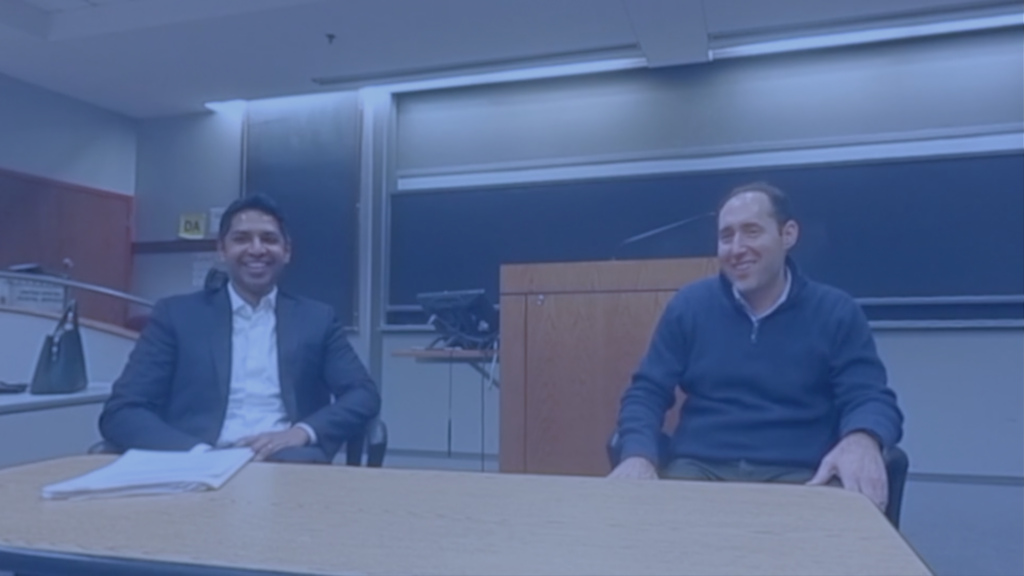
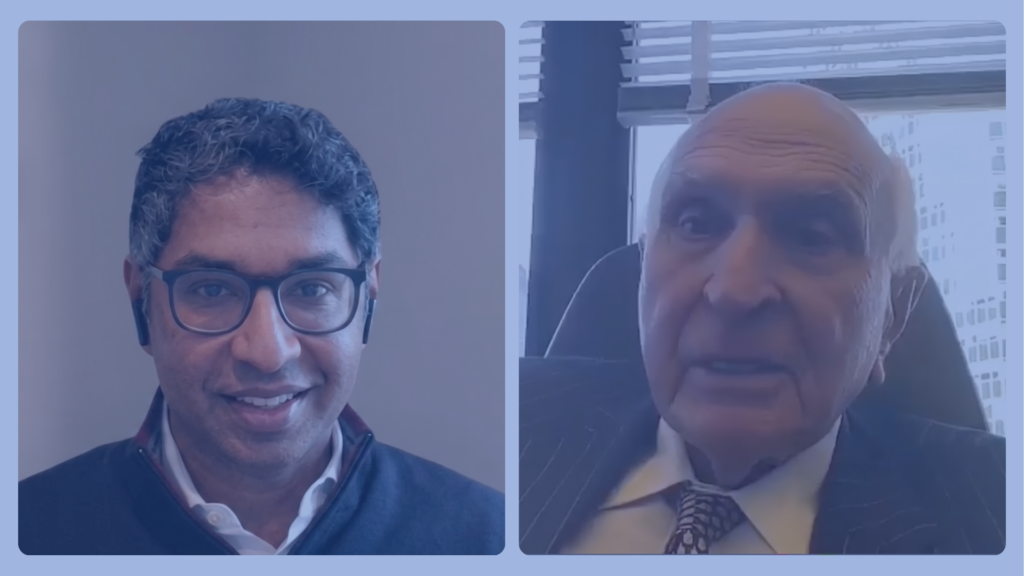


Our Address
117 Kendrick Street, Suite 300
Needham, MA 02494
Send us an email
info@worldlypartners.com
All rights reserved.