Worldly Partners
Arvind with Eric Paley
In addition to leading Worldly, Arvind is a professor who has received a university all-star teaching award and brings deep real-world insight into the classroom. Each year, the course features conversations and lectures with distinguished guests who share candid perspectives from senior levels of business leadership, offering students exposure to industry thinking and practical insights within an academic setting. Guest participation is strictly for educational purposes only.
The videos and individuals shown are for illustrative and informational purposes only. The appearance of any person does not constitute an endorsement, testimonial, or recommendation of Worldly Partners, nor does discussion of specific companies constitute investment advice. No individual shown is being compensated for their appearance, and their statements (if any) are not representative of the experience of any clients or investors. Nothing presented should be construed as individualized investment advice.
Eric Paley
Eric Paley: Conviction and Founder Alignment in Seed Investing
In this Distinguished Speaker Series talk, Eric Paley discusses his philosophy on finding value at the seed stage by prioritizing founder talent and intellectual honesty over market sizing. He challenges conventional venture capital wisdom by emphasizing the importance of capital efficiency and maintaining genuine alignment with entrepreneurs throughout the business lifecycle.
Full transcript
Introduction
Arvind (00:00:09):
Without further ado, let’s welcome Eric to campus. You guys have read everything about him and we can-
Eric Paley (00:00:18):
Everything.
Arvind (00:00:18):
… jump right in. Everything that’s in the public domain.
Eric Paley (00:00:21):
Scary.
Arvind (00:00:21):
Yeah. Including your bird watching videos, Eric.
Eric Paley (00:00:25):
Oh wow.
Arvind (00:00:26):
Yeah. That’s right.
Eric Paley (00:00:27):
You really did [inaudible] we presented that in my daughter’s third grade class.
Arvind (00:00:32):
Right. It was cute. That probably won’t come up in the conversation, it’s an-
Eric Paley (00:00:39):
We already did. It’s all we covered.
Arvind (00:00:39):
Yeah. So we’ll get started. So Eric, it’s a great honor to have you here with us today. Thank you so much for being here.
Eric Paley (00:00:49):
For sure.
Arvind (00:00:49):
Our class is focused on worldly value investing and is really being shaped and nurtured by Charlie Munger, who encourages a worldly and open-minded perspective. I got to admit though, what you do, finding value at the seed stage is very much outside our humble class’s circle of competence. So we are particularly grateful to learn from you. We’re big believers that different perspectives are incredibly valuable. So thank you so much for the opportunity.
Finding value at the seed stage
So let’s jump right into the heart of it. How do you go about identifying and thinking about finding value at the seed stage?
Eric Paley (00:01:31):
Yeah. I mean, so you guys, I could easily go off in crazy different tangents. So you should interrupt and just ask different questions or just say that’s no longer interesting or relevant. And I mostly spend time talking to entrepreneurs, so you’ll see there’s a lot of bias there. And I interestingly don’t think of myself as an investor, which may be a funny comment, but I came at this from being an entrepreneur. I never identified it as an investor. I kind of think of myself now as a portfolio entrepreneur. I’m helping numerous entrepreneurs trying to be the best advisor I can be. And my business model is that we invest in the companies, but not so much that I think myself as an investor. But I think my partner Dave Frankel had a great…
Well, so the right first answer to your question is everything we do is about the entrepreneur, which I think is not really true. I was chatting with Chuck earlier today and we have a mutual friend who’s very much an investor and he was saying there’s only so much value in talking to management. You actually worry so much that when you talk to management, all your biases creep in about, are they just good at presenting? That type of thing. And we don’t get much anywhere else besides talking to the founders. That’s the whole game for us. So I think value investing is, in my world, is being able to identify talent, people who can do amazing things and we spend less time evaluating the ideas and more time evaluating the talent.
The other thing I just wanted to bring up was my partner Dave Frankel once said this and it really struck me and this sounds more like an investor I guess in a way, but the only value investing in our industry, particularly in a boom economy where prices are getting very, very high, is conviction early. So what we do, you hope something that starts at a 4 to $10 million pre-money valuation or whatever that ends up being… Does everyone know what pre-money, money in, post-money, is that like using terms people don’t use? I don’t know if that’s-
Arvind (00:03:35):
You can explain it.
Eric Paley (00:03:35):
Okay. Very quickly, it’s exactly what it sounds like, but if you haven’t come across it before, it may sound weird. Pre-money valuation is the price we pay for a company, money in is the money that goes in and post-money is what it’s valued afterwards. But that math ends up being really important to the entrepreneur and to ownership and all this stuff. And if you think about the idea of what we do is to invest in something when it’s at a 4 to 10 pre-money valuation, 4 to $10 million pre-money valuation, and hopefully it becomes a meaningful company. That’s actually the core vector. We’re not looking for 20% return on our investment or something. We’re saying, well, geez, if you invest at a six million pre-money and you put in $2 million and it’s an eight million post, does it become meaningful at some point? Does the business become meaningful? Because it isn’t when we invest.
So let’s say it becomes a $50 million business and it exits for $300 million. Probably there was other money that came in along the way and we don’t actually own the same percent as we did at the beginning. But that math will work every day. Unless they raise stupid amounts of money and did crazy things and there was all this recapitalization of the business, that math works every day. It’s really different math than if you’re a bond investor, dramatically different math. So we’re sitting there trying to figure out from something that barely exists at the beginning, can we find conviction in the talent of this entrepreneur? And if we can find that… We usually use the company as the way to test conviction, or test the entrepreneur.
We’re looking for entrepreneurs who want to solve problems, not whose heads are in the cloud. So there are entrepreneurs who are very, very captivating about the vision of what they want to do, but when you start asking them really hard questions about how they’re going to get there, they’re actually quite annoyed, “Don’t bother me with your stupid little questions. Look what I’m trying to do.” And we just think that’s like David Copperfield stuff. That’s great, you’re a magician. Somebody else will give you some money to go be a magician. Some of those entrepreneurs turn out to do a very good job. They figure it out. We’re much more interested in the entrepreneurs who want to talk about the hard parts of their business.
So we use the business as almost the way to assess whether this entrepreneur is an aligned fit to how we think about people who are good at creating value. And that’s the conversation we’re really having is like, okay, well, you think you’re going to be able to change the world in this way or build a business that does X. A lot of companies have struggled to do Y as part of that. What is it about that Y that has made them fail or not succeed? And then you have a really good conversation about Y they’re worried about that same why or whatever that variable is. Those are the entrepreneurs will back because they’ll talk more about, “Okay, this is why this is really hard. This is why we may not succeed doing it. But here’s our perspective on why we can overcome it and here’s some of the ways we’re starting to test that, how we’re thinking about it.”
I’m so glad you asked the question because that’s what I stay up all night sleeping about, not sleeping because of. And I think the good entrepreneurs from the beginning want to talk about the stuff that they’re having trouble sleeping because of. So that’s where we find our value.
Arvind (00:06:53):
That’s really helpful. And we’re going to delve into that much more, but-
Eric Paley (00:06:56):
Like I said, I can go long. Nobody walked out yet, so that was good. I would say-
Arvind (00:06:56):
The students have prepared a lot of questions.
Eric Paley (00:07:03):
… I don’t know if I’m breaking protocol here where it really screws anyone up. But it would be so much easier to have this conversation if maybe the better way would be, well, you’re here. So some of the people on the far side here would come this way, then it’s easier to engage with everybody because otherwise I’m just going to talk to this group.
Arvind (00:07:20):
That sounds great.
Eric Paley (00:07:21):
All right. Sorry if I ask things up and I was told I’m not supposed to shift my chair too much.
Speaker 1 (00:07:25):
[inaudible] direction.
Arvind (00:07:27):
Not from me. We’re totally good.
Eric Paley (00:07:29):
And I’m not supposed to stand up and walk around.
Sourcing investments and saying no thoughtfully
Arvind (00:07:32):
Yeah. So maybe as people are shuffling over, we can hit the question, just how do you source your investments?
Eric Paley (00:07:44):
Yeah. I get asked that question a lot. And so one of the things to talk about that’s hard about venture capital, it all sounds pretty easy, and it’s worked well for us, so maybe it is pretty easy. One of the things that’s hard about it is I say in venture capital, there’s very rarely an A activity. You spend all your time on B activities. And what I mean is when you’re an entrepreneur, you figure out stuff that works and you just do it over and over and over and over again. And you’re just like, “If I can just go find more of that stuff. If I can find sales reps who have this background, they always seem to successfully hit their number. Or, we buy advertising on Facebook and it converts at this rate and it succeeds or whatever the vectors are.
And what we do, since it’s so outliers driven, one of the really tough things is that there is no single activity or set of activities that are very clearly drive deal flow or good entrepreneurial opportunities. Literally anybody anytime could be the one deal that changes everything for us. And also the things that we do that don’t work out well, unfortunately also could be very distracting. So you sign up to do something and spend the next 7, 10 years working on something that just isn’t going to turn out. And if you were an early investor in WeWork right now, you’d probably be feeling, and you put a lot of time into it, you feel like, oh my gosh, what a problem. Well maybe it’s all going to work out, but it looks pretty rough.
So we source in many, many different ways, but there’s no singular… I wish if I just trolled the halls at top universities that have good engineering programs, but it doesn’t work that way. So most of our deal flow comes now… We’ve funded 300 companies now in 10 years. Our pace has slowed a little. We now invest about 20 a year on average, not 30. But we still… So most of our deal flow, much of it comes from our portfolio or our co-investors from previous investments who like working with us and value the way we work with the companies.
Primarily though, it’s really the entrepreneurs… By the way, some of them are not even the ones we funded. A lot of entrepreneurs that we choose not to fund later bring us other opportunities, largely because we work with them well. I mean ultimately most entrepreneurs that we say no to, I don’t want to say everyone’s happy with us, but most people really appreciate the process we used and how empathetic we were through that process to them.
Arvind (00:10:21):
So give me an example of that, that saying no well is very difficult to do.
Eric Paley (00:10:24):
Yeah. So I have a company that I’ve spent the last, I can look it up, but six weeks working on. The team has done five meetings with me, which may not sound like a lot, but in our world it’s quite a bit and have also allowed us to do about a half dozen reference calls to really keep contacts. We got incredibly close. By the way, it’s the ones you get very, very close to that ultimately you don’t do that in a way you harm the most because you asked a lot of them in the process of really trying to get over that line and then you didn’t get there. Think of it if you ever hired anyone, you brought them in for four meetings, you did all these reference calls, you really liked them and for whatever reason the last minute you didn’t hire them, they put a lot into that process. Investors don’t care. So if you guys are all going to be investment professionals, hopefully this resonates one day where you think, “Actually, maybe I should care.” A lot of VCs don’t care. Their attitude is sort of like, “You’re here for me. You wanted my money, you didn’t get it, but I gave you a shot at it and you’re here for me.” They’re not here for me. The founders are not here for me. I’m here for them. So in a way I let them down, right? If I could have figured it out sooner, that would have been beneficial.
And if I run the process in a way that’s sensitive to the fact that we are asking a lot of these people and throughout it, try to be balanced because the other thing VCs do is they’re insanely effusive and enthusiastic until the moment they’re not. It might sound like dating, I guess. But they’re incredibly effusive until the moment they’re not. Well, that’s pretty painful. You get quite convinced as the entrepreneur that you’re about to get funded and in the moment where you get turned down, it literally feels catastrophic. Plus you put so much time in and you probably were telling people, maybe team members or your parents who have been funding you or whatever it is, your spouse who’s been supporting you with your two year old at home, you’re telling them this is about to happen and then it doesn’t happen.
And the good news in this particular climate is very, very often when we don’t fund somebody, somebody else does and these guys are going to get funded. It wasn’t just us. But I still feel a certain sense of obligation to them and that we did take a lot from them in the process. So the good news is, I mean, I wrote them a pretty lengthy note about how much we wanted to get over the line. This is not BS, very true. It’s why we spent the time and how disappointed I am that we didn’t and why we didn’t. And also why we don’t feel like we can keep pulling strings on the diligence to see if we can get there. There’s some point where you’ve got to stop taking from the entrepreneur in this way. And they wrote me back an unbelievably gracious note about how valuable that process was to them and how much they appreciate our transparency throughout it.
And I think those are the types of entrepreneurs that send us, they send us, they do, they send us deal flow. We don’t do it because they send us deal flow. We do it because we take a very long view. And I think when you take a very long view, people want to work with you. You mentioned Charlie Munger. I think Berkshire takes an unbelievably long view of working with people, as I understand it. I don’t know how much of it’s PR or real, but the Jordans guys still seem to like them.
Arvind (00:13:42):
No, it’s true. It’s true.
Eric Paley (00:13:43):
They take a very long view. And in our industry, a lot of people don’t or they say they do and then they don’t. And we really try to do that. So that drives our deal flow. But mostly because of all that, it’s inbound. The deal flow comes inbound.
Arvind (00:13:56):
Right. And so-
Eric Paley (00:13:58):
So that was a very long way of answering the question. The deal flow is inbound.
Evaluating founders and sustainable competitive advantage
Arvind (00:14:01):
No, that was an important… There was a lot of learning there in giving constructive feedback, so we’re grateful for that. I guess once the deal actually comes in, how do you process it or how do you evaluate it to see whether or not you want to move forward?
Eric Paley (00:14:19):
I mean, I don’t know if these mechanics are of interest or not, but we have three full-time investment partners on the team and then we have five in total including, so two more people who help us with looking at deal flow. And then we have an ops team as well. So a new lead comes in, used to be that I handled 100% of my own email. And so very often I clear out my entire inbox by Sunday night, which meant for some pretty miserable weekends. If a deal came in on Monday, there was an extremely high probability I didn’t respond to the person until Sunday, which in our business is a real problem. So now we have a whole triage process. So there’s someone, nobody’s actually sending emails ever on my behalf, but a deal comes in, there’s someone who immediately gets it into our system on the operation side. The sort of vetting process begins before I’m paying any attention to it.
We qualify every deal with the amount of signal we have on it, which doesn’t ever really conclusively say we should do it. In no way conclusively says it, but it does give a sense of triage importance. And then the two investment professionals that are not our partners, assuming it’s your run of the mill deal that comes in as opposed to let’s say from a lead source that we know extremely well and work with all the time, the two non-partner investment professionals will review that deck and start commenting on it. So before I ever would have even responded, we already have people commenting on whether or not we think it’s a fit for us. And if they’re excited about it, most of the time they’re going to take a meeting within 48 hours of that coming in. So again, I still wouldn’t have responded and the entrepreneurs are already in for a meeting.
So we’ve improved this process a lot because being efficient with the companies in particular that we get excited about is really important in our industry. So they’ll take that first meeting. In most cases, again, if it comes from a really trusted source, it might be one of us that takes it first or if there’s a specific expertise we have, it’d be one of us. And they literally have slots every week to fill from our time for pitches they’re excited about. And they’re constantly prioritizing that as well among the three of us around who’s most available and who might be the best fit. And so just because it came into me doesn’t mean I’m the one chasing it after that.
But the beauty of it is usually they have a company in front of me before I would have even responded to the lead source. So that’s what we’ve gotten better at. And it makes a big difference, particularly right now these are such boom times and there’s so much capital. I think we are lucky that a lot of entrepreneurs want to. They choose to work with us for a whole bunch of reasons, but they don’t choose to work with us if they get a term sheet before we ever meet with them. So I can’t lose a week just because I’m behind on email. So we’ve gotten much more efficient about that. And then from there, if I’ve taken a meeting and I’m excited, we start the serious part of the diligence process.
Arvind (00:17:29):
Right. And that would include?
Eric Paley (00:17:32):
It’s complicated because diligence is one of these things where, at least in my field, you start pulling strings and the more you pull them, sometimes the more new interesting questions come up that you have to keep pulling. So you’d love to believe that something we were excited about, we could do diligence, really sprint and get done in two weeks. But if a whole bunch of new questions come up or it’s complicated or a space we really don’t know well… I’m an investor, you’ll find we don’t really believe evaluating ideas is the business we’re in. I think people think, they watch Shark Tank and they think that’s the business. We’re evaluating people on their ability to execute. And many things you wouldn’t think would be very interesting ideas turn out to be very big.
A lot of venture capitalists think their superpower is market sizing. Is this a big opportunity or not? I think VCs are terrible at market sizing opportunities. I have so many successful companies in our portfolio that in the early days somebody told us it could never be big. There’s a really interesting, very, very lengthy analysis that a business school professor did of Uber saying that it could never be more… The entire market for ride sharing is only $2 billion total, not even revenue wise. But Uber, I think this year is roughly doing about 50 billion. So that’s how far… And that’s a business school professor doing a really deep analysis, which I think arguably would be better than a venture capital market analysis, they’re probably better at it than a venture capitalist.
But I’ll give you an example. We’re an investor. I led an investment in a dog DNA testing company called Embark Veterinary. I was captivated by the two founders. Their life story lined up to this, incredibly sophisticated thinking on it. And they were off and running already, not like a big revenue business, but they had traction. It was interesting. Even the brand work they did, if you go on their website, I thought was excellent for an early stage company. And little details like that tell you a lot about how somebody executes. Even when I did the deal, I said to the founder, “One of my big fears here is this just could never be bigger than a $30 million business.” I just don’t know… My initial thing when I saw the deck was, I don’t even know if I want to meet with them, this doesn’t feel big. How many people are going to pay to have a DNA test of their dog? I mean, maybe if we did all animals, I don’t know, but just dogs.
And Embark’s going to be right around…So we invested two years ago. They’re going to be right around that in revenue this year, two years later. Meaning two years later, their revenue is roughly what I thought the entire market opportunity could be. And I’ve been pretty good at this, but I also didn’t let it get in the way of me investing, thank God, because I think it could be a really, really big company. Now, we can talk about why Embark’s such an interesting company. But we talk about a lot. We like things that are weird and wonderful at Founder Collective, things that the mainstream of theme chasing that most venture capitalists do, we think makes no sense. And we think what it does is just massively over-funds sectors. And you can make money that way because if there’s tons of momentum that can work for you, but that doesn’t create really interesting sustaining businesses and we want to build really interesting sustaining businesses.
So we’re much more interested in entrepreneurs that are interested in areas that are not super obvious, like dog DNA testing, or we have a company that does robotic oyster farming. And so not that aquaculture is a big part of our business or pets or anything like that, but we’ve looked in all kinds of interesting and strange places. I’m so far from your question.
Arvind (00:21:14):
No, there are pieces of that question that we’re able to explore.
Eric Paley (00:21:19):
You said how do we evaluate? Yeah.
Arvind (00:21:19):
Yeah. You said previously you bet on people, not companies. What are you looking for in people?
Eric Paley (00:21:26):
Yeah. I mean, I feel like I’ve given you sort of, without going to extraordinary depth, the best answer I can, which is they love talking about the hard parts. They’re thinking so far ahead. I always think it’s funny, I’ll start doing diligence on a company and the entrepreneur can’t help me. And I’m like, “But didn’t you do work on this before you decided to spend the next 7 to 10 years of your life doing it?” And I don’t say that to them, but the answer is not really. They thought idea equals business. There’s nothing more untrue in our world than idea does not equal business. If you’re interested in investment management and all you do is long public equities, it’s a fascinating question to step back and ask why are some of these companies successful?
Like my company was bought by 3M. Why is 3M, whatever it’s been, hundred and something years later, still a relevant Fortune 500 company? And working there, I have questions about that. And there were some good things about 3M too, but I think a lot of it is not there’s some idea that drives their success. It’s tons of ideas, endless sets of ideas and iterations around somebody along the way that was really good at executing at some aspects of things that helped turn that into a real core competence that put the company in some sustainable position of advantage. But it’s rarely, really the idea.
The iPhone is probably the most transformational single tech thing over the last decade, 15 years. It’s not an idea. I think people want it to be. They want to be really simplistic about it, but multi-touch was around, Microsoft was doing all kinds of stuff with it, but it really hadn’t commercialized in an interesting way. Mobile browsers were around, but they all kind of sucked. Everyone was pretty convinced you needed a keyboard. I still actually find it annoying. I don’t have one, but Blackberry had that one little advantage.
Arvind (00:23:30):
Sure.
Eric Paley (00:23:31):
But the screen space was too valuable. If you really think about what happened, it’s not the keyboard was bad, it’s that the screen space was more valuable than the keyboard. But it’s so many ideas. In fact, including the fact that I think if, and I don’t know how many people had iPhones back then, but if we were stuck in the edge network indefinitely, the iPhone would have flopped, in my opinion. It’s too slow. It wouldn’t have worked. It’s like edge predated 3G. So when your phone downgrades to 3G, just remember that’s an upgrade from where the iPhone launched, right? I don’t know that that would have worked for the mass market. I think we would have been stuck in the era of phones are good for telephone calls and for email and maybe music, but we wouldn’t have thought mobile browsing and apps were interesting. So there’s so many confluences that come together, but it’s not an idea, right?
It’s a competency. Steve Jobs’ magic was not creating, inventing things, I don’t think, it was combining things. I mean, he said like, ” Great pirates steal,” or something like that. He was great at magical at combining things. And I think great entrepreneurs are like that, but if you skip over the project, so you have an idea, then you want it to be a business, and then in between, what’s in between, it’s a project. It’s a really big project of trying to figure out whether it’s worthy of the next… Now this is how I talk to entrepreneurs, but worthy of the next 7 to 10 years of your life. Are you really committed to this because you’re going to hit all these bumps in the road that make you think it’s going to be a total failure and that you’re completely wasting your time. You’ve been way better off taking this investment management class and going and working a hedge fund. That’s a way better way to make money, for sure.
Arvind (00:25:12):
Yeah. Well, so there’s a couple of things there. One is, just so you know, I did not tell Eric that we spend all our time studying long duration competitive advantage. So his comment about how you’d be way better off studying businesses over decades is, that’s all we do in this class. And putting aside hedge funds and the like, because the way we think about things in this class is really in terms of just being an owner of a business and the investment vehicle, whether it’s your type of capital or it’s called a hedge fund or whatever, is completely irrelevant to us. And what we try to understand is how do you build extreme success over the fullness of time? And a couple of weeks ago, we were incredibly blessed of Jim Jim Senegal in this class. Jim Jim Senegal is the founder of Costco. And all we spoke about-
Eric Paley (00:26:12):
You were kind enough to invite me.
Arvind (00:26:13):
Yes. And you were missed. You were missed. Hopefully you’re a Costco member.
Eric Paley (00:26:20):
No, if I could have been there I would have. I’m sure it was fascinating.
Arvind (00:26:20):
Yeah. No. Right.
Eric Paley (00:26:20):
Yeah.
Ambition, capital efficiency, and founder alignment
Arvind (00:26:23):
Yeah. And so what’s so interesting is you made the comment of these tiny markets and you gave the example of Uber and there was no way to predict that. When he wrote the business plan for Costco, he envisioned it, if it’s a billion dollar company, I’ll be really happy. And today, Costco’s well over 100 billion and revenue is very successful. And so the human mind can’t necessarily imagine where these competitive advantages over the fullness of time takes.
Eric Paley (00:26:50):
I almost think the danger of getting obsessed with the notion of vision and ideas, and it’s such a simplistic way of thinking about all this. And the real danger of it, our industry is so caught up in it because reality is for most mainstream venture capitalists right now, a billion dollar exit actually doesn’t even matter that much. It actually doesn’t move the dial that much. So how much risk are they willing to force onto a business for the tiny, tiny, tiny little chance that maybe it becomes a $10 billion business?
We spent the last decade talking about unicorns, and now some of my peers at big funds in the venture industry only talk about decacorns. They don’t care about unicorns. Well, there’s only been US wise, China’s got a whole bunch and there’s some others, but I don’t know, like 15 ever, right?
Arvind (00:27:38):
Right.
Eric Paley (00:27:39):
That in less than a decade became worth over $10 billion. We can name them together if you want. Maybe there are 20. I mean, it’s not some very long… So I just think if you start playing lottery ticket games, you start getting careless of thinking of things as just gambling. You think of it as bets and you think of it as gambling. And you stop thinking about that you can’t be a billion dollar business before you’re a million dollar business. And you actually have to find proof points in the market that validate what you’re doing to achieve that whole vision, which means before you can be a $10 million business, you got to be $1 million business, before you can be 100, you’ve got to be a 10. It’s great to be ambitious. I don’t mean to suggest that the unambitious will win. I don’t mean that at all.
Arvind (00:28:30):
They’re not mutually exclusive.
Eric Paley (00:28:32):
Right. And I’m not encouraging conservatism, which a lot of people read my stuff and they’re like, “You’re for bootstrapping. You want to be conservative.” I’m super happy to be wildly aggressive in investing capital when the model works. The problem is in our industry, the model almost never works and yet money is piling in. And so the money’s being used to cover up the fact that the model fundamentally doesn’t really work with the hope that you’ll fix it at scale, you’ll fix it as you scale. And I think it actually gets harder… If you look at most efficiency metrics-
I think it actually gets harder. If you look at most efficiency metrics at a startup, the more they try to scale, the worse the efficiency metric, whatever that metric is. Productivity per sales rep. Well, if you go from 10 to 30 sales reps in a year, that number always falls. Or you want to increase your marketing spend from $5 million to $20 million. You get less return on spend at $20 million than you get at $5 million. So every scale metric yields lower efficiency performance. So if the model doesn’t work at the beginning, what happens when you scale it? It only gets worse.
And then you have this whole problem of vanity. There’s enormous vanity in our industry, and there’s a lot of Kool-Aid drinking and a lot of people think backslapping and telling the entrepreneur they’re doing a great job no matter what is some form of actual being founder friendly. I actually don’t think that’s friendly at all. If your brother or your sister or your friend was in really bad shape in some way in their life, just telling them that it’s awesome is probably not how you’re a loving sibling or friend. But that’s going on constantly in our industry.
So we’ve actually separated… I don’t say we’re the only ones, but we really get a lot of credit for moving the industry more towards founder friendliness. And we scoff at that idea because we’re very interested in genuine alignment. How do you actually get aligned? What can you do structurally be aligned? Not this sort of faux pretend friendliness that as a general sentiment is a positive one. I think people should care about the founders. When I was a founder, VCs didn’t actually care that much about founders. So they’ve gotten better. But the problem is as you get out of alignment with that founder, all of a sudden you’re not as friendly anymore and you mistake encouraging the founder even when you don’t really believe in what’s happening as somehow a form of friendliness as opposed to being able to have a real conversation.
What would you want from your co-founder in a business you started if they had serious concerns about what’s happening with the business? Would you want them just to tell you it’s awesome or would you want them to talk about it with you? I’d want them to talk about it with me. But again, this is the kind of entrepreneur we look for. We don’t look for the entrepreneurs who everything is Pollyanna, totally rose colored glasses. We look for the ones who want to talk about what’s hard. They want to anticipate it. They want to deal with it earlier. Anyway, that’s again, very long answer.
How founder assessment evolves over time
Arvind (00:31:20):
No, this is great. So have the qualities that you look for in founders changed over time? You started, I think about 10 years ago.
Eric Paley (00:31:28):
Yeah. I don’t know. I think it was the same general idea, probably at a very deep level. Some of the triggers or things that tipped us off about whether it was a fit or not a fit have probably shifted. But maybe in the early days, I used to get caught up in questions that a lot of VCs like to ask. Explain to me how this will be a hundred billion dollar business. I don’t remember ever asking that question, but maybe I was less cynical about it back then. Now I’m much more interested in, tell me about the hard parts of building your business and why it could ever be a big business. It doesn’t need to be some crazy absurd thing. We’re lucky to be Uber investors.
I don’t think you identify Uber as an investment because of some nonsense conversation about it’s going to be a hundred billion dollar company. Or the founder having some silly ambition about it. I think they should be ambitious about making impact in the industry and making it as good a company as it can be. And if in truth they can actually do that, they will succeed and it will become clear to them they shouldn’t sell their business because… So I’ll give a story about that. I’m on the board of a company that today is worth over $10 billion and I wrote the first term sheet. And at one point it was a company that always struggled to raise money for a whole bunch of reasons. We were in a sector people didn’t like. And at one point we got an offer to buy our company for a quarter of a billion dollars. And as a company now I’ve already killed the punchline because I told you it’s public and it’s worth much, much more than that, 40 times, more than 40 times.
But for a company that was never appreciated in value, it was never viewed by anyone, there was no one encouraging the entrepreneur that, wow, this thing is worth a lot of money. At the time, a quarter of a billion dollars sounded amazing. And the reason he didn’t sell it was he was so confident in where he was. I think that year he thought he was going to get to about 50 million in sales and he thought he could two to 3X the next year. Why would you ever sell your business if you think you’re a year away from $150 million business for $250 million? Even though at the time he was probably at a $30 something million dollar run rate and the comps lined up.
I think founders don’t walk away from huge offers because they’re foolishly ambitious or they shouldn’t. It should be because they’re confident, genuinely confident about the business they’re building. I think if that’s real, they’ll keep going. And that company burned $6 million before going public. So you don’t need, and their competitors raise hundreds of millions of dollars and they ended up becoming the most profitable and fastest growth in the industry with the lease capital because the capital, we say at Founder Collective, capital has no insights. The capital doesn’t have insights. All it can do is scale what you’ve figured out, but it does not really solve the problems. You have to go solve the problems and the money is not a meaningful enabler in that. It can help pay for experimentation, but if you’re doing too many experiments at once because you have a lot of money and you’re scaling experiments that don’t work, you won’t figure things out anyway. So more money does not mean better experimentation in most cases.
The Trade Desk and knowing when to fund growth
Arvind (00:34:53):
There is so much there. So why don’t we talk a little bit about that? So I thought we could walk through some of your successful investments and how they came into your firm and what you saw at the time and then how you got involved post investment. You’ve already touched upon that with Trade Desk, but let’s just talk a little bit more about that. So with Trade Desk, how did it come into the firm? What did you see at the time? And then that’s one where you’re very involved being on the board. How did that come to be?
Eric Paley (00:35:24):
I was an investor. One of the first investments I ever made that we were a lead… We sometimes lead and sometimes participate. One of the first investments I made as a lead investor, I think it was the first, was another ad tech company, non-competitive called Integral Ad Science. At the time it was called Ad Safe Media. And by the way, that’s another interesting, just side note, where every VC I ever showed that company to said your CPM, which is basically our take rate effectively in that business, would definitely go down over time. The business could never get big. It sold for almost a billion dollars to Vista Equity a little over a year ago. People though it’d never get big. They were like, “I don’t see how this gets to be worth a hundred million dollars.”
So again, VC is terrible at this, right? But I was an investor in Integral and I did something that I don’t do a lot of today, but I only had one investment. I was lead investor on at the time. I was a brand new VC. There was a trade show in New York for the ad tech industry and they were presenting at the trade show. I said, “Why don’t I come down for the trade show and see what’s going on?” So I went down to the trade show, and at the show, one of the members of the founding team introduced me to a guy he knew from the ad tech industry who was still at Microsoft, but was potentially going to leave soon. And that was guy named Jeff Green. He had sold his last company to Microsoft. And we instantly had hit it off. There was something about him I just totally trusted and thought was very, very deeply, just intellectually honest.
Then we started this process of like, “Okay, I understand this little tiny piece of the ad tech industry that Integral is working on,” AdSafe, at the time. “You want to be a demand side platform. There are all these demand side platforms in the market already. Help me understand how you’re different.” And it’s really complicated stuff if you’re not that knowledgeable, which I wasn’t in the industry. Jeff very patiently explained it all to me and so we invested. The plan was to not write follow on checks ever, for a whole bunch of reasons that most people who view themselves as investors think is incredibly stupid. But we have a lot of reasons we believe it’s a really good approach.
Arvind (00:37:42):
You’ve spoken about that in the past.
Eric Paley (00:37:43):
So as far as I know, we’re just about the only mainstream institutional venture fund that does this. And it really is about alignment with the entrepreneur. If you guys have read some of my stuff, you get a sense of it. But Trade Desk, basically what was happening was the speed… So online advertising was going towards programmatic. It was going towards real-time bidding. The speed at which that was happening was so exponential that as the Trade Desk started building their technology, had a really good CTO, co-founder named Dave Pickles, who’s still there also. As they started building their technology, they literally could not keep up in a way that they could get launched. The number of ad impressions that were out there, the tech, just every time they think that they were going to get to a target, it was exponentially bigger. We were 15, 18 months into the company, still hadn’t launched, no meaningful revenue. We had never written a follow-on check.
And I said to my co-investor after a board meeting, “We have a really tough decision to make right now because either we’re just going to let this thing go out of business or I’m going to have to write a check that I never intended. As a fund, we never thought as a policy we would never make.” The first question was for my co-investor, “Are you willing to write the check?” Because this is normally what he would do, but there was no traction. Nothing was happening. We put this money in and there was no progress really. There was progress. They were building stuff, nothing you could see. We did it. We wrote a follow-on check for the first time and it ultimately led to this among other situations revising that policy quite a bit in a certain way that maintained the integrity of what we’re trying to do while allowing us to support these companies in these moments. That follow on check probably, I don’t know, had 150X return.
Arvind (00:39:30):
Wow.
Eric Paley (00:39:31):
It’s good that we wrote it.
Arvind (00:39:32):
Right.
Eric Paley (00:39:33):
We would have lost the money on the first check that had a whatever, 250X return or more. I don’t even know. It really worked out for us that thank goodness we did that. But one of the lessons in that too is it’s a very old venture adage, great lemons ripen early. If you hadn’t noticed yet, I challenge a lot of the conventional wisdom in the venture industry. I think it’s total nonsense.
We have some companies, Airtable is an incredible example. I don’t know if people know Airtable. It’s really an incredible enterprise company. If you use spreadsheets, but you find that you wish that they were a little bit more sophisticated like a database, but you want the interface of a spreadsheet, that’s where Airtable lives. It’s growing like gangbusters, but the founders took four or five years of really just getting the product right before they started really spending money. They used to send updates that were like, ” We spent $32,000 this month. We have 57 months of capital in the bank.” Nobody ever sent me updates like that. Everybody’s running out of money in 12 to 18 months, but these guys, our mantra is go slow to go fast. Figure it out first and then hit the gas and only hit the gas to the speed at which you have the confidence that it makes sense and you can start validating that you should keep hitting the gas.
But there’s no reason why a startup… Of course you want to compound, get back to investors for a minute, but compounding stuff that doesn’t work doesn’t work. Compounding negative value, very dangerous. So until you’re sure you have a model where there is a positive interest rate, compounding doesn’t have any value. And people get very hysterical about showing the evidence in a very scaled kind of way as quickly as possible.
And there’s no timeline, there’s no limit to when you can start accelerating. If you can serve your cash until you’ve proven what you want to prove, you can be five years in and start. We have an amazing company that so many people told me the market was tiny in Israel called Joy Tunes. Does anyone see Joy Tunes? Anyone want to learn the piano? So it’s the leading app for learning the piano now. You think, how big could that be? Well, pretty real business. They went about five years probably before getting through the first million in sales. They’re a big business now, worth hundreds of millions of dollars. There’s no limit to the time you can take before you accelerate. And that’s the thing that entrepreneurs forget, very dangerous. I think a little bit why people thinking investors is so dangerous because if your whole mindset is I run a billion dollar fund, a billion dollar exit’s barely interesting to me because if all works out, I’m going to get 20% of that exit. So I’ll make $200 million, it returns one fifth of my fund. If that’s a great exit, doesn’t even return my fund. I’ve got to get to five to 10 billion to get to fund return. That’s your old mindset. The analogy we use is just a little gruesome is it’s like running an Olympic program where you’re injecting steroids into babies, hoping they become Olympians, not caring about what the implication is for anyone who ends up not only not being successful, but not being healthy because of that. You just don’t care.
But the entrepreneurs care, this is their life. Most entrepreneurs are pretty happy if they sell a business for $100 million. I sold my company for $95 million. We thought it was amazing. We only raised $8 million though, right? And that’s that trade off because what the VCs are doing is they’re stuffing so much capital in that those exits start to look like pretty bad exits. And so there’s this very unhealthy steroids into babies. Sorry, it’s quite a gruesome analogy, but I think it’s like if all you cared about was gold medalists, right? I mean, maybe some people are thinking of the Russian program right now, but if all you care about is gold medalists, what extreme will you go to? And you really don’t care what the outcome is for everybody else.
I think that’s a lot of what’s happening in the venture industry today, enabled by the fact that interest rates are so insanely low, there are hard places to find meaningful returns and venture has actually gone through a period now where the returns are somewhat interesting. I mean, if you’re in really good funds, they’re amazing. But in general, they went from a period where there were virtually no returns. From 2000 to 2010, the average venture fund did not return more than 1X the capital. I think it was slightly under 1X.
Arvind (00:44:04):
Right. But with venture, it’s all about being in the top quartile, top decile.
Eric Paley (00:44:08):
Yeah, but the money is driven from… If in truth-
Arvind (00:44:12):
The data for venture, I mean, you would know this better than me, but the data that I’ve seen from the endowment community, we’ve been blessed to have endowment speakers in the past. And what they’ve shown us is that if you’re in an average venture fund, you don’t really want to be there. That may have changed over the last 10 years, but over the last 30-
Eric Paley (00:44:29):
It’s gotten better, but I’d say the over-capitalization of the industry. So if you said, I joke a lot about the 25 venture funds that think they’re the top five and the 50 that think they’re the top 10, there’s a lot of that. But there’s, I don’t know, 1,000 venture funds, 2,000 venture funds. I don’t even know the number. And so if that was true, what would actually happen is only the 50 that think they’re in the top 10 would actually get meaningful capital and everyone else will be small, but that’s not what happens in the industry. And if that was actually the case where only the 50 really got meaningful capital, the industry would not be so overcapitalized. But the industry is insanely over capitalized because it’s not just the 50 that are getting that capital. It’s a lot, a lot of funds are attracting a lot of money.
And then you have things like SoftBank where there isn’t evidence that SoftBank is a top tier anything. I would even go as far as saying their inputs will mostly create bad outputs because it is the ultimate extreme of this problem I’m talking about where vanity driven lottery ticket minded behavior will rule the day. WeWork is the first very meaningful example of that, but not the only one.
Arvind (00:45:44):
Right. Well, this area, venture capital is outside my circle of competence. So again, I’m very grateful.
Eric Paley (00:45:50):
You’re playing a good game here.
Venture returns, fund size, and incentives
Arvind (00:45:52):
But to some of the points that you raised, and I do want to go back to the company specific piece, but to some of the points that you raised, there’s been this general view, and again, I’ve seen the Cambridge Associates data and the endowment community talks a lot about this, about how there’s a persistence in returns amongst the top quartile of funds. And now we can debate whether or not everyone thinks they’re top quartile, are they in reality? And maybe that’s leading to some of the problems that you were raising in terms of capital just going to perhaps the bottom 50%.
But for that top quartile and really the top decile, do you believe that that persistence should exist? And more interestingly to me is the firm that you’ve built, it’s very hard to build a top tier venture capital firm given this persistence, I would imagine, of entrepreneurs wanting to work with the firms that back Google and that creates that virtuous cycle. So do you agree with that persistence view and then how did you go about breaking that apart?
Eric Paley (00:47:05):
So interestingly, if you were to choose some theoretically objective measure, so I’m going to use in this case the Forbes Midas list, has its problems, domains it’s just it’s the be all and end all, but it’s probably sort of like the most kind of noted list of venture capitalists. I don’t have the actual numbers, but if you look at the top hundred VCs on that list, I would bet you 30 or 40 of them are from funds that did not exist a decade ago. So why do I share that? I share it because it is not true that people can’t break in or that the persistence is so strong that it’s very, very difficult to get in.
I think one of the things that happens is a top fund of yesterday is very often really not the same fund today. It’s totally different people. They have a completely different investment profile. The dollars, the size of the fund dictates everything about strategy and there’s this huge incentive to have the biggest fund you can for the purposes of management fees. So there’s this short term incentive to maximize the size of your fund. If you’ve done well in the past, you can raise a lot more money.
And so you take a fund that was a unbelievably successful fund at $200 million in the whatever, 1990 to 2000 time period. Today they’re a billion dollar plus fund with completely different people running it. And so I don’t know that I believe that persistence is certainly not impenetrable, but the two things I’ll acknowledge that I think are meaningful, if I look at like a Sequoia or a Benchmark who in our world are probably the two top brands, they do generational transfer very, very effectively. They really teach venture capital from one generation to the next.
By the way, they also shed, particularly Sequoia, many, many people along the way. So just because you go there doesn’t mean you’ll one day be Mike Moritz. They have a lot of turnover, but they’ve come up with some model that does really, really well bringing new people in and helping them become great VCs. And I think it’s also true that entrepreneurs do get attracted to brands. They primarily should get attracted to who the lead partner is. That actually should be the thing that drives. There are many funds where I think one partner’s terrific and I think the other is completely giving terrible advice to entrepreneurs.
The brand is of somewhat limited value, but it has certain cosmetic, again, vanity factors. I had an entrepreneur say to me the other day, “Because you guys are investors, I can attract much better entrepreneurs, I mean much better engineers, and if in the next round we bring in, give your name brand fund here, that will help me attract even more really great engineers. And so this other term sheet I have from somebody else that isn’t as well known, I’m a little concerned.” There’s probably something to that, which is where the brand stuff does have some value, but I think it’s a little overstated is my personal viewpoint.
Arvind (00:50:15):
Right.
Eric Paley (00:50:15):
So your board can really ruin your company.
Arvind (00:50:18):
Yes.
Eric Paley (00:50:18):
Boards never make companies successful, but they ruin companies all the time. So the primary question of a startup is how fast should we go? And there are many people in our industry who think the answer to that question is as fast as you can capitalize. It’s a little bit like saying to a mortgage broker, “How much house should I buy?” I think the answer the mortgage broker would say is, “However how much house I can get you a mortgage for.” I don’t know that that’s how people end up house poor, right? I think if you run your company at the speed at which you can attract capital, then instead of really thinking of it as what have I validated and am I confident, you think of it as how good am I at attracting capital? And some people are really good attracting capital and so they kind of go crazy and then those companies don’t work out.
So your board makes an enormous difference because if somebody’s sitting there saying to you, “Go with that, go at the maximum speed you possibly can, ignore everything else,” I think that’s really foolish. And I think it’s really bad for entrepreneurs, but it’s very hard not to get lured into that. It’s hard for the entrepreneur who gets offered $20 million to say, “No, no, no, right now I’ll take six.”
Arvind (00:51:31):
Right. No, and you’ve talked a lot about that. Right. Yeah.
Eric Paley (00:51:35):
Our fund two is 75 million, our fund three is 75 million. We could have raised hundreds of millions. Our fund four will probably be 75 million, which means we’re foregoing all these management fees. And in some ways it sounds almost fun like, “Wow, if we could just have 300 million, wouldn’t it be more fun than 75?” But it would change everything about what we do.
Building a seed fund’s competitive advantage
Arvind (00:51:52):
Well, right. And I deeply admire that about you and your firm and your partners is that you’ve stayed true because you’re really addressing this segment of the market and you’re aligned to that and you wouldn’t be able to do that if you manage even 200 million. I mean, it would just be a different conversation and a different use of time and a different alignment. It all goes back to that. So I deeply admire that. Returning to the notion of competitive advantage within the context of your firm, you talked about this in some of your other discussions.
When you first started, there was very few seed firms doing what you’re doing. Today, there’s 30, 60X the amount of firms claiming to do what you’re doing or addressing that segment of the market. Within the context of today, how do you think about building a competitive advantage? And maybe you’re not intentionally doing it, maybe it’s an output, but can you just talk to that thought process?
Eric Paley (00:52:56):
Yeah. I just think at the end of the day, in whatever field you go into, there are just not that many people who are intellectually honest. I don’t mean that they’re fraudulent or they’re manipulative or they’re bad people. They don’t do things that would harm their short-term interests. They don’t give advice that are admissions against their own sort of benefits. Just think about what’s going on today in Congress, and not to get political about it. I’ll try to be apolitical about it for a minute. It’s so telling that neither side has anyone who’s willing to say the other side’s making something of a reasonable point.
I think personally, I have a point of view, one side’s much, much worse than the other in this, but how can you even say there’s intellectual honesty when there isn’t even the acknowledgement? These are some very well-educated, talented people who probably many of them went into this world of politics for the right reasons. I mean, maybe some of them just wanted power and to abuse power, but I think a lot of them went into it because they wanted to help the world and contribute and be a public servant. I mean, I think what was so powerful about watching the foreign service officers testify was they were making admissions that weren’t in their interests. They were telling the truth because they believed that the truth actually mattered. They were actually being intellectually honest because in service to something they believed in. But I just think unfortunately there’s so many people who are enablers of vanity, enablers of the mainstream thinking, going along with the tide, even when it isn’t in the interest of the people they’re working with, sort of fake alignment.
And so I think our competitive advantage is, it’s a very small group of people that I think are very serious about doing that right, and we’re trying really hard. And that doesn’t mean our own vanity never gets in the way or that we’re not human and don’t screw up, but we start from a place of this is what we care about. Our mission is to be the most aligned fund to the founder at the seed stage. Word for word, that’s the exact same mission we wrote in 2009. It’s been on our website ever since.
And for good reason, nobody has ever said, “You are totally full of ” Because if they did, we’d have hundreds of entrepreneurs saying… We have seen them over and over and over again do things that were not in their short term interests because they wanted to support us. And so I think that’s our competitive advantage. That’s our moat to the extent we can have one. And prices are out of control and if I don’t get to the entrepreneur before they get a term sheet somewhere else, doesn’t matter if they want to work with me, they’re not going to wait. All that stuff’s true.
Do entrepreneurs take discounts to work with us or give discounts? They do sometimes, but only so much. So if somebody’s funding something brand new at a 20 million pre-money valuation, I can tell you five to eight years ago, that same company would have been at four. And if we offer eight, they’re not going to come to work with us. It doesn’t matter how much they want to work with us. They’re going to say, “That’s crazy.” Maybe they’ll do it at 15 or 12, maybe. And so it’s a world where I think in a weird way, our product is getting more scarce and more rare, not necessarily low valuations because we’ll also pay high valuations, but I think-
Arvind (00:56:40):
Who you are as a firm, your identity and your-
Eric Paley (00:56:42):
And the three of us being as true to that as we can be sitting in our team meeting every single week going, “Yeah, but that may… I think we’re rationalizing in our own interests.” because that’s the problem. Everyone’s rational. If you are a Republican senator right now, you know you have no choice but to 100% go along with this. You don’t have a choice. You will be crucified by your party. So you rationalize and you say, “It’s okay. Mostly I’m fine with it. It’s not a problem.” I just think it’s incredibly hard to find the people who really, really fight that. And so I think that’s what we offer the entrepreneur, is we really try hard not to rationalize in our own self-interest.
Arvind (00:57:36):
Right. Well, intellectual honesty is the most important thing. It’s critically important. Returning to-
Eric Paley (00:57:43):
But I’d say to a group of students, if somebody asked me today, if I was speaking at a commencement, what would it be about? And it’s on this topic. You would think intellectual honesty is incredibly common, right? I think particularly in the academy, it’s really, really valued. And what I’d say is it is valued in the real world.
… Really valued. And what I’d say is it is valued in the real world, but it is actually not very common for a whole bunch of reasons. Because people start from a place of, if I’m not for myself, then who else will be? In so many contexts. And I’m not saying don’t have a spine. Of course you need to stick up for yourself. But if you don’t think about other, at least in an iterative game, you really destroy a lot of long-term value. And I think people don’t realize the long-term value they destroy. There’s a venture fund that we interacted with very early in our days at Founder Collective who was brutal in their behavior, brutal. And we have never worked with them. We’ve never shown them anything else. Now they don’t know that. They don’t realize that. But just think about that. We have 300 companies, none of which will ever pitch them.
That’s a lot of companies that they are not seeing. But they have no idea how much that behavior costs them. I think they though they were shrewd and there’s nothing I like less in the world than somebody who’s shrewd. Because shrewd suggests that you’re very clever at taking advantage of other people. And I think we are in a collaborative world where you largely build value through trust. And I don’t like shrewd people. I don’t want to work with shrewd people.
Arvind (00:59:25):
Right, right. You want to work with honest, high integrity, fun to work with people.
Eric Paley (00:59:34):
And fair people. And that doesn’t mean they don’t build enormous value or at times have to stick up for themselves. But they care about other, they care about fairness. They care about was this other person I was working with treated right? We say even hiring, we want everyone we hire for this to be the best job they’ve ever had. If we think we’re trying to convince somebody to take a job that for them would not be the best job they’ve ever had, just because they have great skills or they’d be really valuable, we don’t think that’s a good fit because it’s all about alignment. They’re going to probably be unhappy and leave anyway, but maybe short term there’d be a benefit.
And we just take this whole thing, this whole perspective of we are trying to build alignment. And I think it’s partially why I don’t so much identify with the investment world because in most cases you can be anonymous. And we think about what a good day trader does in the extreme of the investment world. Their relationship to anything they’re interacting with is truly actually quite irrelevant. We are so at the other extreme of that where we work so hard to stand behind who we are and how we collaborate. Does that make sense?
Holding periods and investment exits
Arvind (01:00:45):
Yes. And you’re in this world where there’s quantitative trading and the average ownership of companies can be two days and the average ownership of the S&P has gone from seven years in the ’50s and the ’40s to six months. And that is the complete antithesis of what we’re trying to do in this class. What we’re trying to do in this class is think about long duration and competitive advantage. And it begs a question from where you stand, interestingly enough, you are actually forced to sell because of fund cycles. I mean, it’s not like you can hold for 40 years. How do you think about that? I mean to a certain extent you are being forced now, it may be 10 years that you can hold. I don’t know what your fund docs say, but how do you think about that?
Eric Paley (01:01:31):
There isn’t actually a time specific that we have to sell by, but funds age and at a certain point people want to see them wrapped up and you got to audit them every year. Be better at some point if you’re not auditing some small value and most investors at some point start to say, “Hey…”
Now we’re only 10 years old. I say only because I don’t think we’re in the strain period of that. So if you think about even that first fund, it’s average investment’s probably eight years old. That’s a while, but it’s not. And by the way, we still have, I don’t know, 55 companies from that fund eight years later. So these things take a long time. Our view is it really isn’t the entrepreneur’s problem. They’ve got to build their company and anything they’re doing because of us is the tail wagging the dog. We are a minority investor and we’re there to be a supporter.
So we don’t push for liquidity so that we can get liquidity. If we were to get it into a conversation with an entrepreneur where we say, “We really think you ought to think about selling.”
It would likely be because we’re seeing things in the business that worry us, maybe it’s not growing the way we though it would or strong competitive wins are coming in and we want to have a real conversation with the entrepreneur about what’s the right thing for them as a trustee of all this value for themselves, their employees, their investors, even their customers to think, “Is this the right time?”
But those are rare conversations and we don’t put pressure on entrepreneurs in any way. And I think there are other interesting things happening in our industry now. There’s some more secondary activity. It’s still small, but maybe that ends up being one of the solutions to this problem. I also think if an entrepreneur really wants to run their company for the long haul, that’s where going public makes a lot of sense. I think people confuse going public with liquidity. If you are the founder of a company and you take it public, that is a non-liquidity event for you.
Arvind (01:03:26):
So let’s explore that a little bit. I’m actually thinking more from your perspective as an investor. You have this great company, you’re 10 years out, it’s gone public and you’re going to sell it. In this class, we spend a lot of time thinking about Home Depot, which is strange. Why would we be thinking about Home Depot? We think about Home Depot because over the fullness of time, Home Depot has been a 9,000 X return. Yet there’s been 15-year stretches where Home Depot has underperformed the S&P 500 and the like. And you really need to be patient thinking about the long term value creation and structural competitive advantage of that business or the fullness of time. Now I’m not saying that’s particularly relevant here, you’re getting it so early, but it is really relevant if you think about you may have gotten even 100X, but if it goes up, if it just doubles again, it’s a 200X.
Eric Paley (01:04:23):
So when there’s liquidity from the opportunity for liquidity, we don’t think our charter is to be a public securities investor. So Uber, we just distributed our Uber stock, the lock up ended, we distributed the stock. It’s up to the investors in our fund, including ourselves for the stock we received, whether or not we want to be very long term or not investors. I’m bullish on Uber, but it’s up to everybody to make their own decision. We’re not making that decision for our investors. So now they waited nine years, now they have their stock and they can decide whether they’re very long on Uber. So the good news about that is, I mean, I would say look, if the company is public, besides trying to do these things in a way that doesn’t harm the company, like create massive supply of stock at a time where institutional demand isn’t there and stuff like that, which some investors are very insensitive to.
But besides trying to be thoughtful about that, the companies don’t primarily care at that point whether we’re holding the stock or our investors are holding the stock. And it’s well understood that we’re very early stage investors. Our job is not to continue to hold the stock on behalf of our investors.
The PillPack investment
Arvind (01:05:39):
Right. No, I understand that. So let’s return to kind of how these investments came to you. So PillPack, for example. How did you source it and how did you decide to make the investment?
Eric Paley (01:05:55):
PillPack’s very particular, but it’s not the only one. I see on your list, I think Cruise Automation. Both of these are the same story where they ended up selling also for almost the same number, but PillPack and Cruise were both founded by entrepreneurs who had worked for us and came to us to sit down with us and say, “Hey, you’ve sort of been a mentor at some level or a friend and we’ve worked with you before and would love to tell you what we’re doing and see if you’re interested.”
Really blessed to have a few of those. I mean, $2 billion exits-
Arvind (01:06:27):
That’s incredible.
Eric Paley (01:06:27):
… where they’re people who had actually worked for us who founded those companies. So I think there was at some point Fred Wilson, who’s a bit of a guru in our field who runs a fund called Union Square Ventures, wrote he feels bad for venture capitalists in their 30s. And I was in my 30s when I read that and I kind of didn’t get it at the time, but I think what he was saying was at some point the dividends of spending a long time doing right by people start to pay off in very intangible ways. Here are two people that worked.
I think we were good people to work with when they were working with us and treated them reasonably well. Although the Kyle Vogt story is kind of funny at Cruise, which is he was interning for us from MIT and we’d spent a bunch of time getting him on board, interviewing, getting for the summer internship and two or three weeks in he resigned to start Justin.tv, which became Twitch. And we really tried to talk him out of it. We’re like, “You’re going to learn so much here.” We gave him such a hard time about it. “You’re going to learn so much here.” And he was dropping out of school too, like, “Finish MIT,” all this stuff. And Twitch sold for a billion dollars and then he founded Cruise and Cruise sold for a billion dollars. So Twitch was, I think it was close to a billion. So I don’t think we treated him badly, but we definitely gave him a hard time. He’s brilliant. He’s an exceptional talent. There are a lot of things about what I do that are a lot less glamorous than people think and that are a grind. The real, real extraordinary part is getting to work with people that talented.
Arvind (01:08:01):
Yes. That’s incredible. They were both at your firm. And Venmo, how did that come across?
Eric Paley (01:08:10):
So long ago. And Venmo was a story of, we were small investors, we were participants and it’s a good example of where venture capitalists can underrate an asset because it’s actually sold very, very early, way before it became a household name and had extraordinary, it had good traction, but extraordinary traction. So the other side of it is perhaps if it hadn’t become part of Braintree and everything, it wouldn’t have, you just don’t know. Maybe it wouldn’t have become such an extraordinary story, but that’s a good example of a company that was probably sold earlier than it should have been.
Arvind (01:08:46):
Got it.
Eric Paley (01:08:47):
But I use it all the time. Hopefully some of you guys do too.
Learning from mistakes and missed opportunities
Arvind (01:08:50):
How do you think about learning from your mistakes in terms of omission and commission? And I can define that a little bit more.
Eric Paley (01:08:58):
Yeah. No, I know exactly what you mean. We talk about it all the time.
Arvind (01:09:01):
Right.
Eric Paley (01:09:02):
It’s so hard because if you get overly specific, you create cognitive biases that are probably just wrong. So you invested in a company you were super excited about, it had a bunch of characteristics you really loved, it blew up and went completely wrong. And all of a sudden now you would never do a deal that looked like that again. And then the next thing that comes in the door looks like that, you turn down and it becomes an extraordinary company. And we’re fond of saying this, but we really believe it is they’re all snowflakes. Every single one of them is a snowflake. They’re completely unique to themselves. I have turned down some pretty terrific companies because I had recently done diligence on something that looked very similar and ultimately not invested and forgotten that ultimately the reason I didn’t invest was I didn’t believe in the founder instead of I didn’t believe in the market.
But you can start convincing, forget, you look at the aggregate of that whole experience of spending time and then turning down the company and say, “Oh, I don’t want to do that again.”
And so it’s very dangerous because we’re in a world of outliers. At the end of the day, it’s only a handful of our companies that really drive most of the value and the outcomes. And I’ll tell one story along these lines that I think is useful and it speaks to this point, ideas are overrated, massively overrated. The same year we invested in Uber, we invested in a company called Ridejoy. Ridejoy was much more like what Uber is today than what Uber was. We didn’t even think of it as competitive, but they were in the same industry. But Uber was a capacity fulfillment service for delivery drivers. So there were delivery drivers literally sitting around all day because dispatch was extremely inefficient, having very little to do.
And in between their schedule, they might have three rides all day. In between their schedule, people could order an Uber, what became Uber Black effectively. They could order an Uber and those drivers could give a discounted rate because they were nearby already. It filled capacity that they had. So people got not nearly as inexpensive as what UberX became, but discounted black car. That’s what Uber was when we heard the pitch. UberX wasn’t even on the radar. The idea that your neighbor would drive you or someone from the neighboring community or whatever, that was not part of it. Some college student was going to just pick you up. That was not part of Uber at the time. Ridejoy was carpooling, right? Ridejoy’s idea, they started with, I don’t remember which major sort of convention or event it was, but they started with driving people from San Francisco to whatever that was, maybe it was some big concert series or I actually don’t remember.
But they started with that and it was actually worked very well for that was like I’m going to this whatever major concert. Who else wants to go? I’ll charge $ 5 per seat in my car, $10 per seat in my car, come with me. And they want it to be, you’re commuting from Lexington to Cambridge every day and your neighbor can pick you up and they make you some money by driving. It’s a lot more like what UberX is, right? Ridejoy didn’t last a year. Now picture if we hadn’t made the Uber investment and we were pitched Uber after Ridejoy and we weren’t pitched the black car version of Uber, we were pitched UberX. I think our reaction would have been like, we already lost money doing this. This doesn’t work. Well, it really works. It works incredibly well. Ridejoy just did not successfully execute against it and Uber did.
And so you can get very caught up in the idea. So you say, how do you think about mistakes? What I’d say is I try to think more about extrapolating reasonable and fair watch-outs or thoughts like that than thinking that every time one portfolio company executive introduces me to a new founder, they’re going to be Jeff Green or I don’t know what the, from the trade desk. I don’t know what you can say from it. Or every time one of our former interns starts a company, we should invest. Turns out that’s been a pretty good thesis. But I think there’s a real danger of creating some really bad biases in both directions off of these experiences that in some cases go on for many years where you go to board meetings and you’re working really hard and it just goes nowhere. And then you’re like, I don’t…
I’ll give you another example. Six River Systems sold here in Boston for $400 million to Shopify last month or the month before. It’s a pretty good outcome, maybe not to the billion dollar funds. For us it would have been great. And they pitched me right after we’d shut down Harvest Automation, which did warehouse robotics, which Six Rivers does. And I literally didn’t have a stomach to do another warehouse robotics company. I just didn’t in that moment. That’s too bad. I mean, I think it was a mistake and I didn’t think about it as these founders are really, really interesting and really unique and maybe once again, I’m just going to have to do a robotics company in warehouses. So maybe the best thing I can say is the way I think about mistakes is they remind me you’ve got to have an open mind over and over and over again.
Building strong, lasting relationships
Arvind (01:14:28):
I’m constantly learning that. So I’d like to turn to sort of more personal questions and then open it up to the group.
Eric Paley (01:14:35):
Yeah. How are we doing on time? Have I eaten up all our time?
Arvind (01:14:37):
No, no. I think we’re okay. As long as you’re willing to stay.
Eric Paley (01:14:42):
Yeah.
Arvind (01:14:43):
So I guess as a successful VC, I imagine you’re strong at building relationships with people. How can we just as human beings cultivate that in ourselves, just build stronger, genuine relationships with people in an authentic way?
Eric Paley (01:15:02):
So I’ve seen many different types of relationship people. I would say both of my partners are much, much better at the beginning of relationships than I am for a whole bunch of reasons. And that’s something they’re very, very good at. I think I’m much, I don’t know, better than them, but I think I’m very good at the deeper part, like the depth of relationships. So I would say they both have much sort of broader relationships than I do, social even. And I have, I don’t want to say deeper than them, but deep relationships. And so for me, I’m that friend or family member or investor that is really transparent and tells you what I think. And hopefully it does it with empathy and shows that I care. But my grandmother, who was one of the most important influences in my life, used to always say that she lived by the mantra of tough love.
And I think that’s a big part of how I operate. I don’t try to be tough, but I try to be very candid. And I think there’s a population of people who don’t enjoy that or at first maybe it turns them off. And then I think there are people who really, really want that. And we try to select for people who really, really want that. And our fund’s mantra, I mean, it reflects all of our personalities. So it’s not that I’m the only one who’s like that, but I’m particularly like that. But I think the way you build deep relationships is not by being really shallow about your relationships. I think most people are. Think of what a fraternity is. It’s a group of guys who are sort of thrown to, or sorority, thrown together, opt into a sense of a brand or some kind of notion of community where in many cases they don’t even like all of their brothers that much, but they want that sort of camaraderie or whatever.
For me, that never appealed. I was always much more interested in much deeper relationships where I didn’t waste time spending it with people that I didn’t actually really like. I spent it with people I really liked. So it’s a different philosophy and I don’t know if it’s really a totally fair answer to your question, but I think being supportive, but being honest in the relationships we have with people I think is the, to me, that’s what’s worked for me.
Arvind (01:17:31):
And what about, you know a lot of great entrepreneurs and other VCs, et cetera, and just a lot of people and your partners. What are other ways that they’ve developed deep, strong relationships over time?
Eric Paley (01:17:46):
Yeah. I mean, I think a lot of it’s just being there for people. When you make yourself available, I mean, this is another thing. When you’re a student and people are being intellectually honest, that seems really obvious. I think another one is really make time for people that matter to you. It’s amazing when you get into your 40s, even in your 30s, how hard that is. And crossing over between this is a business relationship that I sort of pretend is a social relationship because that seems good for business to actually this is somebody I really care about and I really want to build a relationship, like a deeper relationship with. Paying attention to crossing over that line, we had a big fight with one of our clients at the first company I founded years and years ago, which was a web development company. And we constantly have scope creep problems with the clients and there was a lot of tension and pricing and all this stuff and this guy threatened to sue us. And I remember coming home and telling my then fiance how upset I was. And she was like, “You’re acting like you were betrayed by a friend. This is really just a business relationship.”
And I was like, “You don’t actually really think of this person as a friend.” Now he probably was sort of glad handling me. He was probably always pretending that we were friends, but I really had crossed that line. I’d say most of the people who I’ve given that trust to have very much reciprocated, but it really hit me hard because I was like, “What friend would do this?”
And she’s a lawyer. She was like, “He was pretending to be your friend, but really it was just business and it’s business and he thinks he can get money back from you and not have to pay you. And so he’s threatening you.”
So I think the best answer I’d give is extending trust where it appears there’s the beginning of that in a meaningful way and then really investing time behind those people. And it goes even to your kids. I know it sounds like funny, of course you spend time with your kids, but Jerry Colonna, who’s a friend who wrote a great book recently called Reboot, if anyone’s interested, sort of a spiritual journey in the work world, right? It’s like this talks about his life. He’s probably the best known CEO coach in the startup world today. And mentioned Fred Wilson before. He used to be Fred Wilson’s partner at Flatiron. He was a venture capitalist, very successful one for many years.
But he tells this story about feeling like an accomplished father because he took his daughter to the mall to buy shoes very efficiently, very quickly. And in the parking lot, he could feel his daughter was, I don’t know, maybe gripping his hand a little tighter or something. And he looked down at her and she was maybe seven years old and she was crying and she said, “Dad, what do you do if you feel like you bought the wrong thing?”
And he said, “I was trying to be effective and efficient and I forgot to be there for her. I didn’t ask her.” I mean, it’s like small little anecdote, but I think it’s a really beautiful anecdote from his book. “I didn’t ask her what she really wanted or had she made up her mind or was she really happy and excited? I just was like, ‘That was great. Let’s go.'”
And it’s very easy when we get really busy and very focused. A lot of value creation comes from focus. When we get really focused, it’s very easy to become more transactional. And the more transactional we become, the less we invest in people. And you have to get back to, and I think it’s true in business relationships too, really investing in people in those relationships and making time for those relationships. So there’s an entrepreneur I’ve known for years now and we backed the second company. We’re tiny investors in his company, but he sent me a note today and I get one of these almost every day of the week, “Hey, I really need your point of view on something. Can we chat this week?” I can’t ever say I’m too busy. I can’t, that’s somebody I care about. And he needs to know that I would never say I’m too busy. It’s why he’s asking. Many, many times he’s asked me now like, “Hey, I really need your take on something.”
So it’s a really simplistic answer, but you got to be there for people. None of this stuff can be about making money. That’s the other thing that I think is tough in my connection to the investment world where so much is about keeping score and making money. It really can’t be. Some of my best relationships over the years are for people that we lost money together. We lost a lot of money together.
Arvind (01:22:28):
Interesting.
Eric Paley (01:22:28):
And we lost a lot of time together and they’re still really, really good relationships. And I think if you take a very long view, it will not only help me in life, it will ultimately come back and pay in business as well. But you have to take a very long view.
Arvind (01:22:40):
Right. Yeah, no, that was a great answer. I mean, it’s really interesting. There was this article in The Globe that my friends in their 50s sent around to me, and you probably saw it about middle-aged men and loneliness. Did you encounter that article?
Eric Paley (01:22:55):
I did, but there’s this unbelievable poem, I don’t know if you know it, about middle-aged men, something about softly hear the doors closing around them. This idea of the many opportunities in their life that they always valued were options and opportunities are slowly closing all around them because obviously you become more of an expert at something. And even in manual labor, whatever you do, if you’re good at painting, you become more of an expert over time at that thing and that’s what you’re valued for. And you live in a certain place and you can easily forget all the joys of all those things, of the things you’ve invested yourself in that are paying dividends then and become very upset. But I don’t know why the poem’s about men. It should be about men and women too. I don’t think it’s so different, but very upset about all those doors closing around you instead of seeing all the positives of the…
This is what Jerry would say, his book, his Reboot and The Art of Growing Up. And he would say the growing up part is taking agency for all your choices and relishing in the benefits of them, not the opportunity costs of them. That’s the growing up because when you’re always obsessively focused on what you’re missing or the FOMO or the opportunity cost, you’re always unhappy.
Student questions on building a startup
Arvind (01:24:26):
Right. Yeah. No, this has been a really interesting, wide-ranging conversation. I’d love to hear your thoughts and open it up to more… All these questions that have been asked were from my students, but if other Q&As-
Eric Paley (01:24:39):
Was that right? I just though you were a great interviewer.
Arvind (01:24:42):
No, no, it’s 100% them.
Eric Paley (01:24:43):
It’s good.
Arvind (01:24:45):
Yeah. Yes, please.
Speaker 2 (01:24:47):
So I work in ultra-rare diseases, so finding a patient, it’s a very, very rare event. Maybe we get 10 patients a year. We’re thrilled with that number. So it relates to you because you do a lot and you have very little successes. So I’m wondering, and it’s a real challenge for me to find successes along the way that aren’t exactly the final product. So I’m wondering how you evaluate, even maybe it didn’t pan out ultimately in a sale or in a huge evaluation, but what worked well for you and something you want to repeat? What’s your technique there?
Eric Paley (01:25:22):
What comes to mind a little bit for me is I’m on boards with numerous people that we’ve failed together before. I’ve worked with entrepreneurs again where we lost money the first time. I’ve been, as I said before, introduced to many companies through entrepreneurs we didn’t fund. And that comes to mind because I think a lot of the interim benefit or the success outside of the actual economic success really gets back to it is those relationships. It is we valued working together. I’m on a board of a company right now where the entire management team together were part of a company that failed and I was on that board and they wanted to work with me again and I wanted to work with them again. And if I hadn’t done that company, for better or for worse, nobody would have though of me for this one.
I think there’s a lot of… This gets back to self-worth in a kind of weird way, which is like being overly spiritual and I’m not that spiritual person, but it really is the journey. And I think when you get overly obsessed by the outcome, you fail. You fail not just in the actual outcomes, maybe you succeed financially, but you fail as a human being. You don’t enjoy it at all. You don’t enjoy getting to work with all these people. If I blew up everything relationship, if I was on that roller coaster for that company that failed, such that nobody related to that company wanted anything to do with me because I was so bombastic in every meeting…
… company wanted anything to do with me because I was so bombastic in every meeting about how stupid the decisions were and how… I wouldn’t ever get the chance to work with these folks again. And so just remembering that the journey itself has its value, a lot of value. Primarily it is the value. At the end of the day, assuming you have the money you need to take care of your families and educate your kids and feed yourselves and that stuff, none of you are going to die worried about the amount of money that was fixated on whether the money in your bank account was 1.5X what it ended up being or 0.5X what it ended up being. It’s just not going to be how you’re going to… That’s not what’s going to be on your tombstone and it’s not going to be what matters to you.
And it’s an easy thing to say at some point. I get that, but it can’t be about that. I actually think it’s the most deflating part of being an investor is when you have big wins and then you realize that all the big wins are is financial. And then you got to remind yourself that all that other stuff mattered. So all the people that need help in rare diseases that one way or another you’re helping, and I don’t know the details, but either helping by attracting capital to those spaces or helping by treating those people. I think that’s what really matters more than anything. I have a friend whose son had a very rare occurrence in recent weeks and was treated really well at Boston Children’s, but they see very, very few of these cases and they did think at a period of time that it was very possibly terminal. And thank God people are interested in focusing on rare diseases. And so anyway, I don’t know exactly how you focus there, but thank you. And I think remembering that’s the really important part of it. Yeah.
Arvind (01:28:52):
Sure.
Speaker 3 (01:28:53):
Perfect.
Speaker 2 (01:28:53):
Yeah. You’ve given some really great advice. I kind of put myself in the seat of an entrepreneur. I think everyone has an idea about a company they want to start or an idea that they want to do. I think you talked about how, think of it as a project and not just idea today, money tomorrow, or business tomorrow. What maybe resources would you recommend or where should you say, what’s a actionable next kind of thing that someone with an idea should do?
Eric Paley (01:29:17):
There are people who feel very strongly in the opposite of what I’m going to recommend, but I would read The Lean Startup because what The Lean Startup is about… Eric Reese’s book, I don’t know if anyone here has read it, but what The Lean Startup is about is how do I start testing my hypothesis? How do I begin the project? And I think it’s hard, right? If you’ve never done this before, it’s hard to begin the project, but it’s like, what are the ways I can start validating core assumptions I’m driving at here that have me doing this? And almost everybody in the course of going through that process, if they do it with intellectual honesty, meaningfully shifts what they’re doing at some level. And maybe core tenants are the same, but usually the problem space remains, but the solution looks different. So one of the things I tell people is get obsessed with the problem, not the solution.
Yes, the whole point is to find the solution, but when you think you’re starting a company because you have the solution, it’s a little dangerous because usually you haven’t validated that solution yet and you tend to be less open-minded to what might actually in that journey turn out to be better solutions. So be more rigid about the problem space than the solution.
Speaker 2 (01:30:26):
Awesome, thank you.
Eric Paley (01:30:27):
But I think that book is… It’s just a good primer on how do I get started with very little money learning about this, about this thing I’m excited about.
Speaker 4 (01:30:39):
To that point, when you meet with entrepreneurs, how do you assess flexibility and persistence? So if they’re obsessively focused on the problem, it’s not like it’s a quick feedback of whatever they’re creating is going to solve that. So how do we balance those two things?
Eric Paley (01:31:01):
Yeah. There’s another term that’s used a lot in venture that I really disagree with, which is people say I like coachable CEOs. It sort of suggests that the VC knows exactly how to build a business, the CEO doesn’t, but if they’re coachable, then it will work. And I would agree that you need a certain amount of persistence. I think being obstinate is different than being persistent. So I think being obstinate that your ideas or your assumptions are 100% right in every context, in every way, we flush that out pretty quickly. We’ll start asking questions and it will become pretty clear to us in the meeting that you’re not a flexible thinker. That’s different than being persistent, which is I think the persistence looks more like being a heat sinking missile to solving the problem than being inflexible about what the solution is. Does that make sense?
Speaker 4 (01:32:00):
It does.
Eric Paley (01:32:00):
And so this persistence is like, I will talk to anybody who might have a good point of view that’s helpful to me in figuring out these hard parts of solving my business problem. The really good entrepreneurs, you’ll see they’re getting awesome advisors around them. They’re meeting anyone who matters in their space. A lot of good entrepreneurs will come in and pitch us and I’ll say, “You know it’d be a great person…” So they’re doing something in, talking about warehouse robotics as an example. And I’ll say, “You know it’d be a really good person for you to chat with? Mick Mountz found Kiva Systems, which is now Amazon Robotics. I’d love to put this in front of him and see if he’s open to talking about it.” And they’ll say, “Oh yeah, I met with last week.” Why? Well, because they’re heat sinking missiles to people who should have good input on their business and it doesn’t mean everyone I’d suggest they should have already met. That’s not the case.
I’m not saying it’s really easy to always get these meetings either, but if you’re credible and you’re thinking deeply about things, people are willing to make those introductions for you. And if you’re seeking out that kind of input, you’ll meet a lot of the right people who can really help. And so those are good examples of being really persistent, but I see those things differently. And I think they get mistaken for each other, just the same way that confidence gets mistaken for hubris. Those are not the same things at all. Not even the least, but they often look similar. I’ve exhausted all questions.
Arvind (01:33:30):
I’m sure others will emerge. Yeah, please.
Founder fit, governance, and difficult decisions
Speaker 5 (01:33:33):
Have you ever invested in a founder where at the start you were really confident, they’re super passionate about whatever product or business they’re operating in, and then maybe months down the line or years down line you realize that this person isn’t the right person for the job and how do you deal with that?
Eric Paley (01:33:48):
Yeah. So it used to be like when I was an entrepreneur, VCs invested in the business and they saw the founders as largely fungible. It was like you’re largely guilty until proven innocent. Our assumption is we’re going to hire a CEO in the next 24 months. You can be it for now. We want to know from you that you’re okay with that. You kind of had to sign the pledge, I’ll get out of the way. And if you prove yourself worthy, which you spent all your time trying to do, you might get to run the company.
Our entrepreneurs are all innocent until proven guilty. We only invest because we want to back them and we want to back them for a long time. Now that does not mean that stuff doesn’t happen that changes that. The primary thing that happens… And I wrote a blog post on this called Getting Fired, and this was meant for founders getting fired, not the broad base of people, although probably there’s some interesting comparables. But the primary thing that happens is the entrepreneur starts getting voted off the island by their own executive team. And these are people they recruited. And those people start to say things like, “I like what this business is about. I can’t stay here working for this person. I think this person is leading the company massively astray. And I’d rather not just resign because I don’t want to work for them. I’d rather we figure something else out.” And so most cases where somebody needs to be replaced, ideally it wouldn’t get that far where there’s effectively a coup going on at some level, but it usually is that the…
I mean, ideally as a board, you’re tapped in enough with the management team that you’re getting some sense of those concerns and maybe doing some 360 feedback and hopefully trying to patch those problems. You’ll always see the exact same thing from the founder when this happens. Their entire management team is incompetent and they should all be fired. That’s what the founder always says every time this comes up. And then you say, “Okay, there’s an agency issue here we’ve got to discuss. You hired all of these people. So either you’re terrible at recruiting or you’re terrible at retention or you’re terrible at termination or there’s something here that isn’t working that makes it that really you can’t lead this company, not just this group of people. If they were so terrible, you should have been getting rid of them. I don’t understand how you have four people on your senior team coming to the board all at the same time saying you shouldn’t be here and your response is they’re incompetent.” So these are hard conversations.
And we’ve done CEO transitions that have been really tough. The good news is most of the time we’ve done them, it’s the CEO themselves. I just went through one and the CEO put up his hand and said, “I just don’t want to run this anymore. I’m happy to be as helpful as the new CEO wants me to be and be here as long as that person feels they need me, but I don’t want to do this anymore. It’s really, really stressful.” And when it’s going badly, it’s really painful. And actually the trajectory of it goes well for a while and then goes badly for a while is even tougher in some ways because you know there’s value you’ve created, but you feel totally stuck. And so we try to be candid. We try to have these conversations. We try to do good 360 feedback.
Founders should never be shocked that there’s a problem. And it should also not be something that in an instance is an issue. The big thing VCs used to like to say, used to say, “Shoot them, shoot the founder.” Could you imagine what kind of terrible transactional sort of arrogant view of… But luckily you don’t hear people say that as much today. Although you do hear the same founder-friendly CEO is glad handling the whole time later says we should shoot the founder. And you’re like, God, I don’t think you say it about a horse, but it’s just terrible. Anyway, we do not at all take that approach. We want that founder to succeed. We will to a fault at times. I think we have probably gone too far in some cases in supporting the founder when probably it should have been acknowledged sooner that the founder was really having a hard time.
Arvind (01:38:05):
Does your mission to be the most aligned with founders, I imagine that creates behavioral biases that could work against you in that type of situation?
Eric Paley (01:38:14):
Yeah. I think it’s my responsibility to start a conversation with the founder if I really see them struggling for a few reasons. One is actually their own emotional state. There is a lot of depression and even some suicide in the startup world. That’s really, really a scary thing because people get very tied to that roller coaster and they really tie their self-worth to the company. And I don’t think that a good board member just pretends that it’s all good. So we will try to have an open discussion. “Well, how do you feel it’s going and what do you feel are the things that need to change? And do you want to make those changes?” But it’s hard. And I would say that we, as opposed to the very trigger-happy VCs, we really do start from a place of bias around we did back this person.
So that can be to a fault at times. I mean, I would say it’s hard to figure out where that line is exactly. But founder line doesn’t mean it’s always the best thing for the founder to run the company. Sometimes the founder line, like this founder is thrilled that somebody else came in to own the burden of being CEO of the company. And I think the most aligned thing I could have done was work with him earlier to convince him of that before he got so exhausted by the business.
Arvind (01:39:33):
Right.
Speaker 2 (01:39:36):
Kind of going off that question. So instead of having a founder that maybe needs to go to a different spot, you have a good founder, you have a good team. Kind of like an example you mentioned earlier where you worked with a team, a management team, you’re on the board, that company or idea failed and now you’re working with them again. So in that case, clearly the team can execute because you want to work with them again. So what caused that company [inaudible]-
Eric Paley (01:39:58):
To be fair, it isn’t… In that case, all the people who were in the new company were the people who came in very late to try to support the success of that company. So as an independent board member that we brought into that company, who’s now the CEO of this company, and in particular two senior executives who were brought in very late to that company, their struggles, who he actually, the board member introduced to that company, who are now the co-founders of this company. So I think if I behaved badly or was very shortsighted or difficult, they would never have called me up and say, “Hey, we’re doing this. Do you want to come work with us?” But it’s a little bit different.
But there are founders we’ve backed who we really felt like did a great job and the company did make it for a whole bunch of different reasons or a very good job and learned a lot and we think the next company could be a success. Red Swoosh, which was Travis Kalanick’s previous company, was not a great story, but Uber’s probably the best startup of the last decade. And so it’s not just like, oh, the last one didn’t work, so the founder’s invalidated. I mean, this gets back to sort of the self-worth conversation. There’s often a lot of talent there and there are a lot of other factors that led to the company not succeeding. Maybe it was the wrong company for that founder that happens too, where maybe somebody who’s always been enterprise takes a shot at something consumer and we get excited about it and they just don’t connect with consumer the way we hoped. There are so many different factors. They’re all snowflakes.
How due diligence changes with experience
Speaker 2 (01:41:33):
Kind of a follow-up question to that is, in this process of being in this space for this number of years and learning and being through these successes and failures, I’m sure that your due diligence process has kind of evolved and changed over time. Can you talk to maybe what has changed about your process and what you’ve learned over time and maybe what’s now in your diligence process?
Eric Paley (01:41:52):
I think we discount industry insiders much more than we used to. I think we used to think like, okay, we don’t know this industry. Here’s an expert in the industry. And then we’d ask the wrong question, which is, “Should we invest?” And they’d be pretty cynical. I think it’s very natural for an industry. Just imagine we can use any… You talk to somebody who’s senior at CVS and you pitch them PillPack. Does everyone know what PillPack does?
Arvind (01:42:19):
Yeah.
Eric Paley (01:42:19):
You pitch them PillPack. They’re going to be silly, trivial. I don’t know. It doesn’t seem to be… I mean, if that was a good opportunity, we would’ve done it long ago. And so I think what we’ve largely gone to industry diligence for or try to remind ourselves we should go to industry diligence for is understanding problems. Is it a problem that people who are on multiple medications don’t comply well, find it confusing, all that stuff, particularly as people get older, that’s a real problem, right? But there’s this terrible Henry Ford quote, besides being a terrible anti-Semite and probably an awful human being, he has this idiotic quote that entrepreneurs love to cite, which drives me crazy, which is that, “If I asked them what they wanted, they would’ve said a faster horse.” Which suggests to entrepreneurs that you shouldn’t actually talk to customers or learn from them or study them.
And there’s this whole thing with Steve Jobs where people think he just had it all in his head and didn’t ever talk to the customer, which by the way, Steve Jobs used to sit at Apple stores and just watch people. So for sure that was not true, but there’s a lot of that.
And I think Henry Ford obviously credited with a lot of innovation, but the quote is so dumb because what you really want to do is say to somebody, “Tell me about the problems with your horse.” And maybe at the end of it say, “Just imagine with me for a minute, what if you had something that was like a horse, but it wasn’t actually a horse and it didn’t need to grow for eight years,” or I don’t know how long a horse takes to mature, “Four years to mature before you could ride it and it doesn’t throw shoes and it doesn’t need to eat. And when you refuel it like eating, you could do it in like five minutes and it went double the speed. And by the way, you could be indoors so you could actually be warm. What of those value propositions appeal to you?”
You probably get some really good answers, but for sure your customer’s not going to tell you to go build an automobile or the right automobile. And I think that’s what we came to think about industry insiders a little bit is it’s way better to talk to them about the content of the assumptions or challenges than the conclusion of is PillPack going to be a success? Should we invest in this company? We really have to independently build our way to that thesis by asking questions that are more like what challenges do your customers have, that type of thing.
And we do a ton of back channel entrepreneur referencing. So we think the list people give for their references is largely irrelevant or useless. Interestingly, when people want to put us in touch with pilot customers, we love enlist pilot customers because we’re really trying to understand from them is why do they think this is so great? Why is it something they’re willing to spend money on and get they’re so charged up about? So anytime you have a friend who’s like, “Oh, I have this new app on my phone. I love it.”
That’s a great person to understand what’s good about the app from, right? I mean, maybe they’re the only person in the world that thinks it’s great, but that’s really interesting to us. But if you’re pitching us and you come in and you’re like, “Here’s my list of five references,” we probably won’t ever call any of those people because we assume that’s a selection of the people who you think feel beholden to give really positive feedback about you.
Speaker 2 (01:45:46):
[inaudible].
Eric Paley (01:45:46):
Yeah. So we’re trying to talk to people who know that entrepreneur, but are actually know us really well and wouldn’t want to mislead us. LinkedIn is good for that.
Choosing a startup to join
Arvind (01:46:00):
How would you advise my entrepreneurial students to pick a startup to join? Given, let’s just say they’re interested in an area and the like, so not passion centric because I’m sure that’s a big part of it, but just as they’re drilling down to…
Eric Paley (01:46:17):
I would say people. People who are earnest and thoughtful and energize you, but not because they’re cult leaders, but because they’re really deep on what they’re doing, but really people that you’re really excited to learn from. We said as a CEO, everybody I hired for a senior job needed to be able to teach me in my interview with them. If you know sales better than I do, which wasn’t hard because I was not a sales leader, I should be able to learn from you about sales in this interview. And if I can’t learn from you, if I’m not coming away from the interview feeling like I really learned some interesting stuff, you’re probably not that deep on the topic, right? You’re probably not what I’m looking for. And so I would do the same if I was… When you’re being interviewed, you’re also a buyer, right?
I mean people always forget that. It’s like you’re not just selling, you’re also buying because presumably at least in a good economy you have choices and talented group of people. And people always say at the interview, “So what questions do you have for us?” And everyone always throws out these softballs that are kind of meant to make you look clever, but not… I would try to get into real conversations in those things and try to figure out do I really connect with this person? Do they want to be challenged appropriately? I don’t mean obnoxiously, but appropriately by me too. If I ask something that’s inquisitive about their business, do they just shoo it to the side and treat it like it doesn’t matter? Or are they like, “That’s actually a really good question. Let me tell you how we’re grappling with that.” Those are the entrepreneurs I like to back. That’s who I would want to join if I was joining a company.
That’s what I’d suggest at least to somebody who was thinking of joining. And I get way less obsessed with your equity package. I’m not saying negotiate for it, but it’s not going to be worth anything even if it’s a lot of equity if the company’s bad. So being part of good companies, things that have good people that are compelling is much more important than… I mean, so Formlabs, which is a nine figure revenue company here in Boston, is a really interesting company. It has 10 or 12 former Brontes people, the company I founded. Some of those people were really junior at Brontes. The equity packages they had probably did not have material impact on their lives. Maybe it was like they made a quarter of their salary or half their salary in one shot from the exit, but maybe their salaries were $60,000 and they made 30, right? It was good. It was nice for somebody early in their career, but what’s the dividend… We sold the company 13 years ago. What’s the dividend of having been at that company? It was a good company with really good people who keep working together at different places over time. And by the way, we’re an investor in that company. So we’re also… I, as the CEO of Brontes, am involved with all of those people all these years later. And so I think the dividend is, yes, absolutely try to negotiate for whatever you feel like is appropriate and that you can get, but I would never say, “Oh, this company’s offered me half a point and this company’s offering me a quarter point of equity. I’m going to join, that’s double. Why wouldn’t I take double?” There are reasons you might say that about cash, right? You have obligations, but I’d also say for people, is everyone here a grad student or undergrad?
Arvind (01:49:50):
It varies. The room is second year MBAs and college seniors.
Eric Paley (01:49:55):
Okay. So I think one of the biggest mistake new MBAs and new college seniors make is they worry about their starting salary. Now, I understand you have debt, that’s real. But by the way, your starting salaries are not usually so varied. It’s not like 60 versus $150,000, maybe if you’re considering public service work or something, but at least within the same industry, I would prioritize the people you work with over everything else from day one of your career. I started as a newly minted Harvard MBA making nothing for the first year, $0, when my average cohort, I think at the time was making like $140,000. I made zero. It’s all worked out fine, but I worked with great people and that’s why it worked out fine. I always worked with people that, at least in the parts they were doing, were meaningfully better than me.
And I’d say across the board, I would often look around and be like, “I can’t believe these people all signed up to work for me.” I think whether you’re working for people or people are working for you, you want that caliber of people around you as much as you can get it. And it’s so much more important than Goldman offered me 7%, whatever, 12% more salary than someone else. I mean, the big thing when my wife was graduating from law school was, I think it was Cravath, Swaine & Moore, was offering 30% more salary. And I just thought, wow, how depressing is that? That you’re a brand new law school grad and you’re going to go… Your starting salary has very little to do with your earning potential across your career, I think, right? Maybe I’m wrong, but I think it’s more important where you situate yourself professionally in terms of that you like it and you enjoy it and you’ll thrive there and work with great people.
Those things matter a lot. Going somewhere that has a good salary, that’s soulless and you hate it and you hate the people around, you’d never want to work with any of them again. Well, what’s the career mobility of that scenario? So anyway, that would be my advice on that front.
Arvind (01:51:58):
Right.
Eric Paley (01:52:00):
Pretty sure that’s not answering the question again, but…
Personal and professional advice for graduates
Arvind (01:52:02):
No. Kind of on that subject, and maybe we can close with this question, in this room, as I mentioned, there are second year MBA students, there are college seniors that are graduating. Is there any advice that you’d offer professionally or personally? I mean, you’ve hit on a lot of the professional points with the last question throughout the conversation to them at this stage of life.
Eric Paley (01:52:31):
I mean, being from the entrepreneurship world, one thing that always hits me is people misunderstand risk, but I think it’s interesting because I think people have these misperceptions of risk. I think in the startup world, the risk is very short term risk. You need to be able to float yourself that there’s more volatility startup by startup and something could go wrong and you might be out of a job for a little bit and you need to be able to float that. So you have short term risk. But I think career risk, if you think longer term, I actually think it’s much less risky because you have these intense collaborative relationships with all these people who value you, who then go on to do other stuff and then go on to do other stuff and go on. So you have these huge communities of people who know of your skills and want to pull you into things.
And we’ve just seen that over and over and over again. So I guess I’d say just as you think about risk across your career, I think the risky thing is to work for not great people who don’t treat you well and you’re unhappy, particularly if it gets you a higher salary, which is the reason people choose those paths. I think the less risk… Or go into careers you think you don’t think you’ll really enjoy. I think that’s actually a really risky thing to do, right? To wake up six years into being a consultant and realize you don’t want to be a consultant, which almost nobody wants to be a consultant. And then they market it like the skills are incredibly marketable, but they’re really not that marketable. A senior partner at McKinsey’s most qualified role at even a startup company is probably a director, not a VP of biz dev.
That may sound crazy. Now maybe on talent alone, if somebody knows you and really values you, they’ll give you a role you’re not really qualified for. But the reason they’re not even a VP of biz dev after being a partner in McKinsey is they’ve never done any of that stuff before. They don’t know how to do it. They might have skills that would make them quickly do it well, but they haven’t done it. So if you’re going to go hire an expensive biz dev person, you’re going to hire somebody who’s actually done it before. So maybe if the McKinsey person’s dying to get out of McKinsey where they’re making a ton of money but they hate it, they’re going to have to accept a salary, a tiny salary as a number two in a biz dev group where they can learn the skill because they’re talented and then maybe later be a VP.
I think people get very trapped in things they don’t really like or enjoy because of money and there are lots of ways to make money and talented people find they make money. You’d be okay, but I would try to be careful not to overemphasize that where you start making really bad trade-offs.
Arvind (01:55:03):
Yeah. Buffett talks a lot about that, that what you should do is do what you want to do from day one and it makes no sense.
Eric Paley (01:55:12):
I mean you can’t be a Supreme Court justice from day one.
Arvind (01:55:16):
And you would have been great at that job.
Eric Paley (01:55:18):
Do you imagine me sitting through oral argument every day?
Arvind (01:55:25):
Well, Eric, we’re incredibly grateful for the time. Thank you so much.
Eric Paley (01:55:25):
Pleasure.
Arvind (01:55:28):
This has been fantastic.
You may also like...

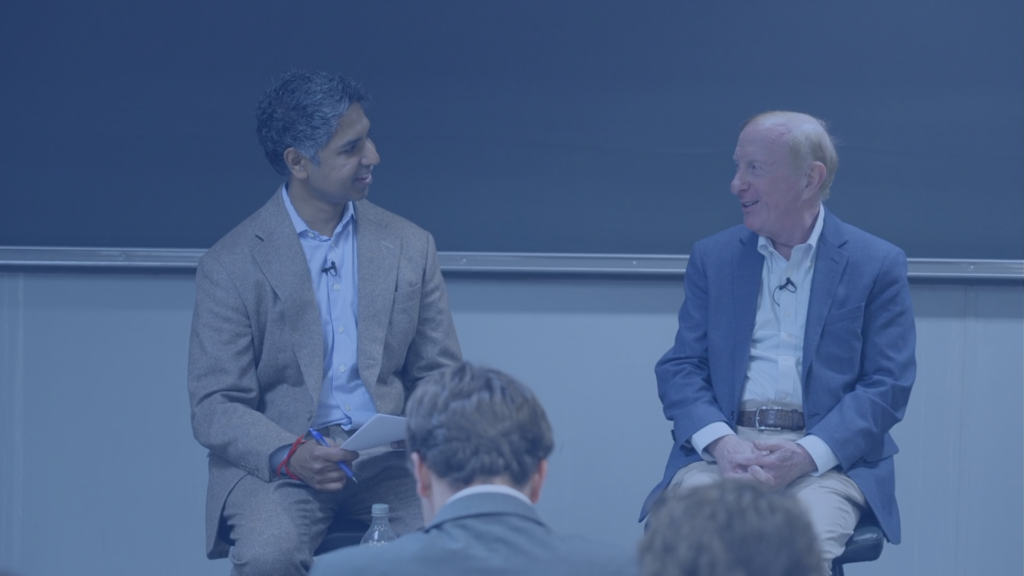


Our Address
117 Kendrick Street, Suite 300
Needham, MA 02494
Send us an email
info@worldlypartners.com
All rights reserved.